
Board holds public hearing on 2025-26 code of conduct as community members demand stronger survivor protections
Get AI-powered insights, summaries, and transcripts
Subscribe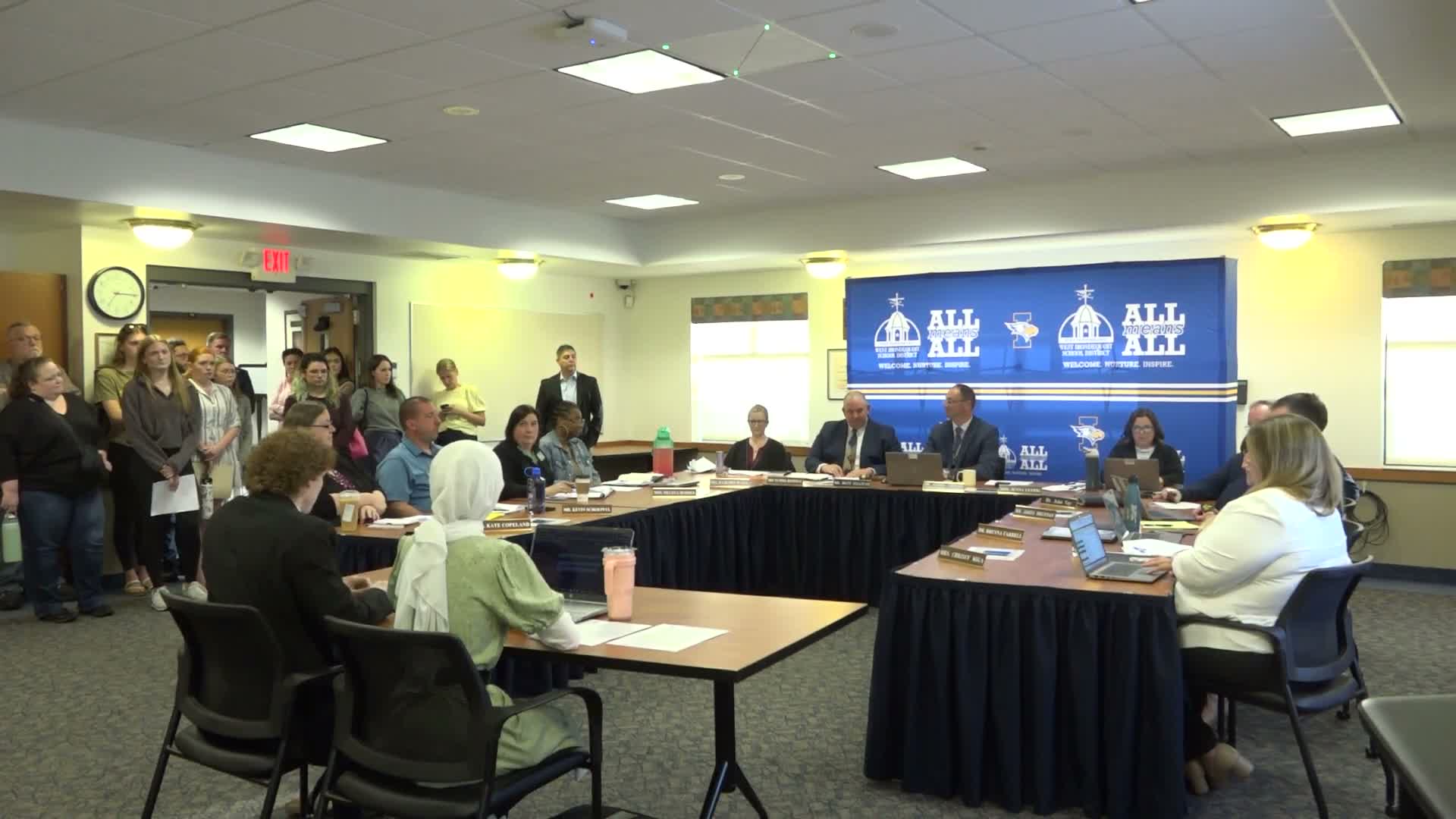
Summary
The West Irondequoit Board of Education held a public hearing May 29 on its required annual review of the 2025–26 district Code of Conduct, during which staff described committee-led edits and several community members delivered sharply critical public comments alleging the district failed to protect a student and demanding policy and practice changes.
The West Irondequoit Board of Education held a public hearing May 29 on its required annual review of the 2025–26 district Code of Conduct, during which staff described committee-led edits and several community members delivered sharply critical public comments alleging the district failed to protect a student and demanding policy and practice changes.
The hearing, presented by Doctor Farrell and conducted under a committee that included administrators, teachers and students, outlined edits intended to improve clarity, add cultural competence language, strengthen restorative practices and better align the code with state law and district policies. Doctor Farrell said New York State education law requires districts to have a comprehensive code of conduct and that the committee met over six to eight weeks to gather feedback and revise definitions, accessibility and implementation procedures.
The timing of the hearing drew sustained public comment: Haley Traub, identified as a public commenter, told the board the district has “a pattern” of failing to protect students and called the district’s response to a reported assault “a systemic failure.” Charlotte Traub, also a public commenter, said, “When a student says I feel unsafe at school, it is not a suggestion. It is a cry for help,” and urged the board to “center survivors.” CJ Trop, another public commenter, accused administrators of stonewalling the family and said the district’s conduct will force “a reckoning” in court.
District presenters said the code revisions seek to make language more accessible, add page numbers and strengthen alignment with board policies such as suspension, nondiscrimination, bullying and Title IX processes. Doctor Farrell noted additions to a student bill of rights, new references to cultural competence and improved definitions to support equitable application across grade bands. The draft also references restorative interventions and clarifies the use of therapeutic crisis intervention and life-space interviewing techniques in K–6 settings.
Board members asked how the district distributes the code to families and whether translated copies are available. Doctor Farrell said the code is shared at the start of the school year in each building and posted on the district website and social media; she said she would check which languages it is translated into and confirmed printed copies can be provided at the district office and in school main offices. Several trustees pressed for clarity about how the code is taught and implemented, and whether supports are available for students whose families lack internet access.
No adoption vote on the revised document occurred at the hearing; the hearing concluded after questions from trustees and public comment. Several trustees and staff signaled that the board will continue reviewing the revisions and the public comments will be part of the record.
The board did not take formal disciplinary or personnel action at the hearing. Public commenters asked for specific personnel accountability and legal remedies; district staff said those matters, when personnel or confidential investigations are involved, are handled through separate procedures and referenced Title IX and district investigatory processes.
Next steps: the code revisions will remain under administrative review and the board will consider formal adoption at a future meeting after legal review and additional refinements.