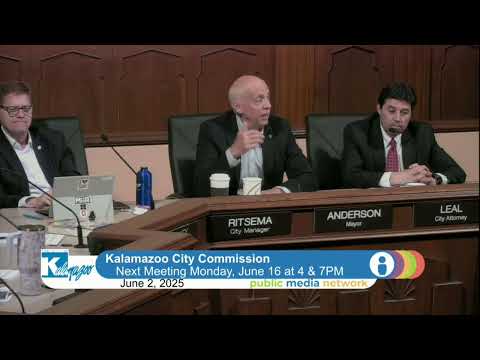
Commission approves rezoning for five‑story mixed‑use project after neighborhood debate
Loading...
Summary
The City Commission adopted an ordinance rezoning six parcels on South Burdick and West Vine to Downtown‑3, moving regulatory approval forward for a proposed five‑story mixed‑use project after residents raised environmental, traffic and affordability concerns.
The Kalamazoo City Commission voted Monday to adopt an ordinance rezoning six parcels at 802–824 South Burdick Street and 107–115 West Vine Street from LiveWork‑1 to Downtown‑3, clearing a regulatory step for a proposed five‑story mixed‑use project the developer says will include housing, ground‑floor commercial space and an early‑learning center.
Why it matters: The designation change increases the allowable height and impervious coverage on the block and opens the way for a developer to pursue a project that supporters say will bring housing, childcare and commercial activity to an underused site. Neighbors urged commissioners to slow the process, seek more neighborhood engagement, and protect green space and affordability.
What commissioners approved: Planning staff and the applicant said the D‑3 zoning closely matches intended future uses; the planning commission recommended approval. The City Commission adopted the ordinance after a public hearing and a roll‑call vote.
Resident concerns: Multiple residents who live near the proposed site in the Vine and Rose Street blocks urged the commission to deny or table the rezoning and to require more outreach. A resident who identified herself only as Victoria said, “We are not an empty lot to be taken over,” and asked commissioners to deny the rezoning or give developers more time to consult the neighborhood. Karen Williams, who lives at 805 South Rose Street, said residents on her block were not adequately looped into discussions and urged stronger neighborhood coordination.
Environmental, traffic and affordability questions: Speakers raised concerns about environmental impacts, stormwater and flooding, neighborhood green space loss, noise and light pollution, increased traffic at the Vine and Rose intersection and potential gentrification driven by higher property taxes. Kaye, a resident who described housing‑cost statistics, said the city must be “intentional when it comes to community concerns,” particularly for households paying more than 30% of income for rent.
Developer response: Jamari Bogan, whose firm will pursue the project, told the commission he and his partners have conducted outreach for years and will continue to engage residents. "This is not a buzzword. This is what we do," Bogan said, adding the development team held community meetings, has met with neighborhood association leaders and plans to appear before the Vine Neighborhood Association on June 17. He said the proposal includes missing‑middle housing, an early‑learning center, a gym and ground‑floor commercial uses.
Zoning, approvals and next steps: Rezoning is a land‑use change only; any specific building proposal still must pass site‑plan review and historic‑district review, both of which include public notice and additional opportunities for comment. Staff reminded the commission that site‑plan review examines stormwater compliance, infrastructure impacts and detailed design standards; stormwater retention and maintenance agreements are required before final approvals.
Commission discussion: Commissioners voiced both support for the developer’s neighborhood engagement pledge and concern that rezoning alone does not guarantee affordability at the lower income levels residents requested. Commissioner Hoffman urged the developer to seek deeper affordability for households at 50% of area median income and below, and asked for tangible commitments. Commissioner Cooney and others voiced confidence in the developer’s community focus but urged continued outreach.
Vote: The commission voted to adopt the ordinance; roll‑call results were recorded in the meeting minutes and the measure passed.
Looking ahead: Rezoning does not automatically authorize construction. Subsequent site‑plan and historic‑district reviews must address stormwater, traffic, building design, and affordability commitments before construction could begin.