Get Full Government Meeting Transcripts, Videos, & Alerts Forever!
Get email alerts on the Campaign Finance topic
No spam. Unsubscribe anytime.
Legal counsel tells Lansing Charter Commission public funds may not be used to advocate ballot votes
Summary
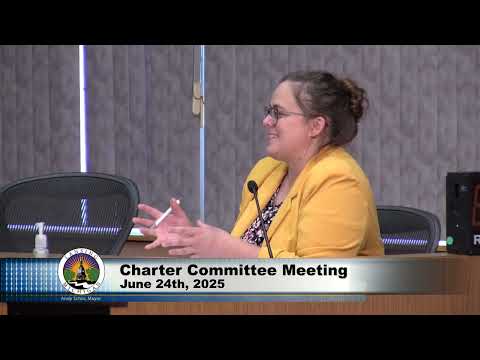
At its June 24 meeting, legal counsel gave the Lansing Charter Commission an overview of the Campaign Finance Act, advising that the commission may use public resources only for neutral, factual information and that individual commissioners retain First Amendment rights but cannot use government property for campaigning.
Lansing Charter Commission legal counsel Kristin told commissioners June 24 that the Michigan Campaign Finance Act bars public bodies from using government funds or property to ‘‘expressly advocate’’ for or against a ballot question.
The guidance explained what the commission may do and may not do as it prepares charter language for the November ballot, and why neutral wording and legal review of any information distributed by the commission are important.
Kristin said an ‘‘express advocacy’’ prohibition in the statute prevents a public body from using municipal resources for materials or statements that include statutory advocacy phrases such as ‘‘vote for’’ or ‘‘vote against,’’ and that the provision is broadly construed to include money, goods, services, logos, staff time and some uses of property. She warned commissioners that verb choice and tone matter: ‘‘You cannot use commission or really governmental resources or governmental property to expressly advocate a vote for or against a ballot question.’’
She told commissioners the body may use public funds to distribute factual, neutral information about a ballot proposal — for example, the election date and what a charter change is — so long as the material does not contain language that could be read as advocacy. ‘‘The commission as a public body is permitted to issue communications using public dollars if those communications provide factual information in a neutral manner about the elections,’’ she said.
Kristin also said a widely cited 60-day restriction in the statute on factual communications before an election had been struck down by a court and is therefore not enforceable despite remaining in the text of the law. She advised that any commission-produced mailer, webpage copy or robocall be reviewed by counsel before distribution.
On public forums, Kristin said a government body may host informational forums or debates funded with public resources so long as ‘‘views of all sides are treated equally’’ and the availability of space and staff does not advantage one side. She noted the commission does not own meeting property and would need permission to use other entities’ spaces.
Kristin distinguished rules that apply to the commission as a public body from what individual commissioners may do. She said commissioners, as private individuals, may express personal opinions, join advocacy committees and spend personal funds on campaigning, but must not use municipal phones, email accounts, logos, stationery or staff time to do so. She recommended commissioners who use personal social media add a clear disclaimer that the account is private and expressions are personal.
Commissioners asked practical questions about neighborhood meetings and informational guides, and Kristin repeatedly recommended legal review of any materials the commission funds or posts.
The counsel’s remarks are part of the commission’s preparation to place charter revisions before voters in November and reflect the legal limits on how the commission may inform residents about proposed changes.