Get Full Government Meeting Transcripts, Videos, & Alerts Forever!
Get email alerts on the Internal Auditor topic
No spam. Unsubscribe anytime.
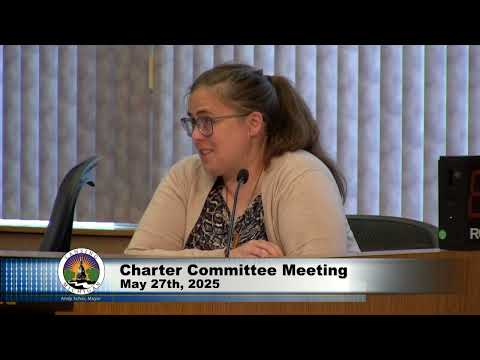
Charter Commission creates independent internal auditor office; some commissioners urge ordinance rather than charter mandate
Summary
The commission approved language to create an independent internal auditor with a risk‑based audit plan, appointment by the mayor and council, and reporting duties; one commissioner voted no preferring the office be created by ordinance rather than enshrined in the charter.
The Lansing Charter Commission voted May 27 to add charter language establishing an independent internal auditor’s office charged with conducting a risk‑based audit plan, providing financial analyses, and reporting audit findings to the mayor and city council.
Why it matters: the change creates a permanent, chartered office with specified qualifications and reporting duties that could broaden oversight of city operations if funded and staffed.
The proposed Article (Internal and External Audits) requires the internal auditor to be a certified public accountant and a certified internal auditor, to prepare an annual risk‑based audit plan (delivered to the mayor and council by August 1 and February 1 each fiscal year), and to have authority to investigate city agencies and access records. The charter language allows the internal auditor to appoint a deputy and to hire staff as approved through the normal budget process; it also preserves the separate external audit requirement.
Commissioner Bauer moved to adopt the language, and the commission approved the provision after discussion and two small edits (a typographical fix and a clarification that Board of Water & Light audits would be performed only when requested by that board and paid for by it). Commissioner Washington said she would not support embedding the full audit office in the charter and preferred creation by ordinance to preserve later flexibility. The roll-call vote approved the provision by eight yeas and one nay.
Commissioners and staff discussed implementation realities: several members said the office would need staffed positions and a funded budget to be effective; others noted that while the charter can require the office, budget approval and staffing remain subject to the mayor and council’s budget process.
Next steps: approved charter language will be included in the draft the commission prepares for governor/AG review. The commission asked staff to check for cross‑references elsewhere in the charter and to identify any ordinance language required to operationalize the office.