Get Full Government Meeting Transcripts, Videos, & Alerts Forever!
Get email alerts on the Housing Development topic
No spam. Unsubscribe anytime.
Commission approves sale of four vacant city lots for $200 each to developer proposing sub‑$200,000 starter homes
Summary
The commission approved land contracts selling four long‑vacant city lots to a developer who said he will build three‑bed, one‑bath starter homes listed under $200,000; city staff said the $200 price follows an internal policy for small lots and aims to bring properties back on the tax roll.
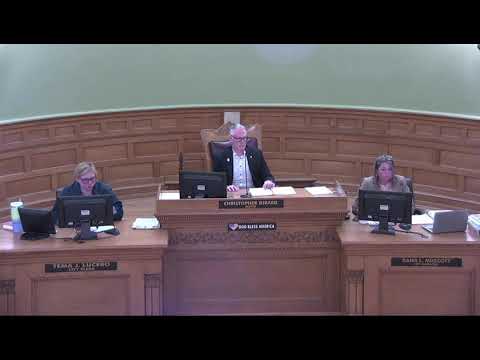
The Bay City City Commission voted June 16 to approve land contracts selling four city‑owned vacant lots to a developer who said he plans to build market‑rate starter homes priced below $200,000.
The properties are listed in the staff packet as 308 High Street; 1805–1801 South Mountain; 201 East North Union; and 220 South Sherman. City staff said the properties have been city‑owned for many years and that the city’s policy sets a $200 minimum for lots 6,000 square feet or smaller when the city seeks to spur construction and return properties to the tax rolls. City staff and the city manager emphasized maintenance savings and the long period with no property tax revenue as reasons to sell for redevelopment.
The applicant, who identified himself in the meeting as Mike Spencer and said he represents an LLC, told commissioners he plans to build three‑bedroom, one‑bath homes with an expected listing price in the $175,000–$180,000 range and an anticipated sale price “under $200,000.” Spencer said the product is intended for first‑time buyers and that he has built similar units in Lansing that sold quickly. Commissioners asked whether the houses would be for sale (Spencer: “They're all gonna be for sale”) and whether they would be rentals (Spencer: “They are market rate houses,” and “I would call them affordable living”).
Commissioner Tenney and others had asked earlier why the lot price appeared low; staff explained the $200 figure derives from the city’s long‑standing policy for small lots and the cost of carrying vacant lots (mowing, maintenance and lost tax revenue). Commissioners voted to approve the land contracts; the clerk’s roll call shows the motion adopted by a unanimous recorded vote.
Why it matters: The transactions convert long‑vacant city parcels into expected new housing stock and generate future property and utility tax revenue. Staff said the move is intended to attract small‑scale homebuilding and reduce city maintenance costs on nonproductive parcels. The commission approved the land contracts at this meeting.