Get Full Government Meeting Transcripts, Videos, & Alerts Forever!
Get email alerts on the Courts And Judiciary topic
No spam. Unsubscribe anytime.
Van Zandt DA urges higher pay for court reporters, cites jury costs and cramped courthouse space
Summary
The Van Zandt County district attorney told the commissioners court during the June 30 budget workshop that shortages of court reporters, rising juror-related costs and constrained courthouse space are straining the county’s court system and budget.
The Van Zandt County district attorney told the commissioners court during the June 30 budget workshop that shortages of court reporters, rising juror-related costs and constrained courthouse space are straining the county’s court system and budget.
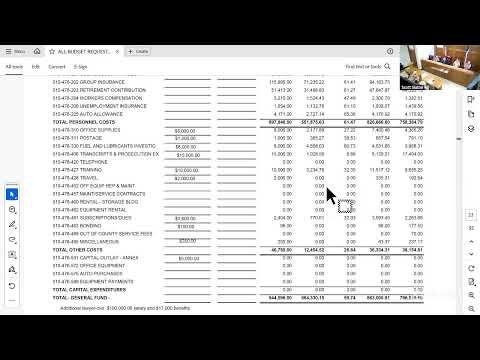
The DA (name not specified in the transcript) said the office is asking the court to consider increased pay for court reporters (a suggested competitive salary figure of $99,000 was discussed) and requested funding for a dedicated civil attorney position (the DA said a $100,000 budget item would be appropriate). The DA said those moves are intended to retain reporters and to expand legal capacity as the county’s caseload returns toward historical levels.
The DA described several drivers of cost pressure: juror pay increases (the transcript said jury first-day pay rose from $8 to $20 and that reimbursements to counties changed), higher fees for psychiatric evaluations and translation needs, and the use of day-rate court reporters when permanent reporters are unavailable. The DA said the county previously budgeted lower levels and has recently relied on day-rate reporters at higher per-day rates; he warned those ad-hoc expenses can ‘‘obliterate’’ the employees budget if the county must pay more for reporter services at scale.
On facilities, the DA said the courthouse lacks adequate jury-assembly space and that grand jury proceedings currently use a probation training room with poor Wi-Fi and limited seating; he said the courtroom and juror holding areas are cramped, creating access and comfort issues for jurors and other courtroom users. He described the practical consequences: crowded jury rooms, jurors with mobility or medical needs forced into small spaces, and parking complaints from local businesses when panels assemble.
The DA said the district handled about 1,100 county arrests last year (down from roughly 1,500 in prior years) and estimated roughly 400 district-court cases per year, with jury-trial availability limited to about 12 criminal jury trials per year. He argued adding a court dedicated to trials would reduce jail population pressure and speed prosecutions, but noted that adding a court would require two prosecutors and one legal assistant and that his office lacks physical office space to add staff.
The DA described translation services and other supports: the Office of Court Administration (OCA) provides telephone translators for many Spanish-language needs, which he said has reduced translator costs; sign-language or in-person translators still generate expense and travel costs. He also discussed workforce development for court reporters, noting local training programs (Trinity Valley and others) have few students and that technology—automated transcription and AI—was not yet reliable enough, in his view, for courtroom records when accuracy and timing are required.
Commissioners asked questions about space, pay levels and possible sponsorship of reporter training; the DA said county sponsorship of training might be possible but government-code licensing rules would shape appointment processes. No formal budget appropriation or personnel action was recorded in the transcript; the DA said he would like to pursue the reporter salary and the civil-attorney funding as part of the budget process.