Get Full Government Meeting Transcripts, Videos, & Alerts Forever!
Get email alerts on the School Budget Referendum topic
No spam. Unsubscribe anytime.
Ellington School Board debates targeted cuts and messaging after failed budget referendum
Summary
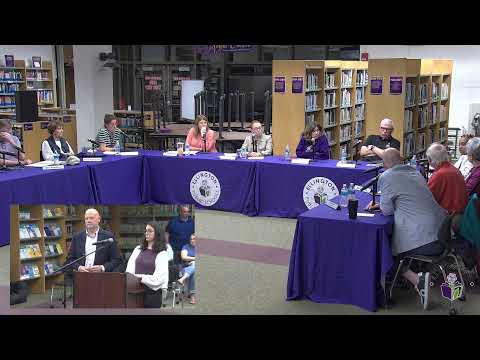
The Ellington School District Board of Education met in a special session to discuss next steps after voters rejected the district's budget in a referendum and to prepare recommendations for the Board of Finance.
The Ellington School District Board of Education met in a special session to discuss next steps after voters rejected the district's budget in a referendum and to prepare recommendations for the Board of Finance.
Superintendent Dr. Scott Nickel said the district had “worked extremely hard” to limit the requested increase to 2.75 percent on the Board of Education side (2.2 percent overall) and that turnout in the referendum — roughly 1,058 voters out of about 12,000 registered — fell far short of what the district expected. “I stand here not wanting a single staff member to lose their job,” Nickel said, adding that the district must now consider options that reduce spending while minimizing harm to instruction.
Nut graf: The board reviewed two sets of options the administration prepared: Option 1 uses newly available state and year-end funds to reduce the gap, and Option 2 adds a temporary freeze on discretionary purchases. Administrators and board members stressed that the choices carry trade-offs — including possible delays to planned curriculum purchases and exposure to higher-than-expected special-education or health-insurance claims — and asked the superintendent to present a concise statement of those trade-offs to the Board of Finance at its meeting tomorrow.
Nickel described two revenue or one-time items that were not in the original budget: an estimated Education Cost Sharing (ECS) hold-harmless payment of $144,539 that he said is “pretty much a sure thing,” and a special-legislative appropriation to the excess cost (special-education) fund that yielded about $163,000 for the district. He proposed returning those amounts to the town general fund if the Board of Finance requires additional reductions so the town can offset the mill-rate calculation.
As potential onetime savings, administrators identified roughly $69,439 in planned end-of-year curricular and facilities purchases that could be delayed or forgone; the superintendent said most of that line is curriculum-related and that using it now saves money in future years by enabling multi-year purchasing commitments. Nickel also described a proposed reduction in the district's self-insured health plan budget — he said administrators believe a $200,000 reduction is feasible based on current claim trends but warned that doing so increases the risk that the district would need to draw on the medical reserve fund if high-cost claims occur.
Board members questioned the prudence of some proposals. “Three does scare me,” Board member Steve said of the option to freeze purchases, citing the risk that new enrollments or unexpected special-education costs could force deeper cuts later. Several members urged a focus on communication and turnout rather than immediate program cuts; Board member Marsha and others said the timing of the referendum (held the day after a holiday weekend) likely suppressed turnout and that better outreach could change the result in a second vote.
Administrators warned that deeper or sustained cuts could affect instruction and extracurricular programs over time. Oliver (staff member) explained that the $69,439 line primarily represents curriculum purchases (about 80 percent, by his estimate) and some facilities items; delaying those purchases would slow implementation of planned materials (including Amplify reading and Illustrative Mathematics for specified grades) and could increase costs in later years. Nickel said that if the board is forced into larger recurring cuts, future budgets could require program reductions — for example, fewer teachers, fewer course offerings, or reduced middle-school athletics — though the board had not directed any such cuts at this meeting.
Direction and next steps: Board members agreed to have Dr. Nickel present the board’s concerns and the administration’s options to the Board of Finance at its meeting tomorrow and to continue deliberations in upcoming scheduled sessions (board members referenced meetings tomorrow at 6 p.m. at Town Hall, a meeting on June 2 and a possible June 3 session, and the town's referendum date on June 10 under the current schedule). The board asked to review and comment on the superintendent’s statement before he delivers it.
The board took one formal procedural vote at the meeting’s end: a motion to adjourn was seconded and carried.