Get Full Government Meeting Transcripts, Videos, & Alerts Forever!
Get email alerts on the School Closure Budget topic
No spam. Unsubscribe anytime.
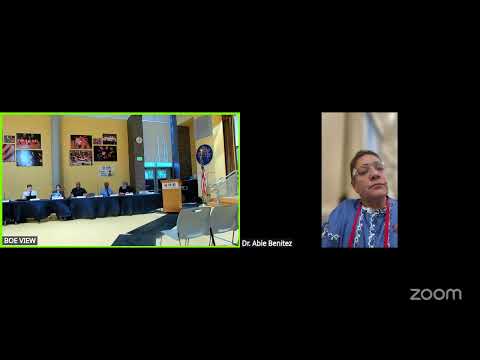
Superintendent flags possible closure of Brendan Rodgers as part of budget cuts; parents, teachers urge board to keep school open
Summary
Superintendent María Negrón said closing Brendan Rodgers is under consideration to help close the district's projected budget shortfall; speakers at public comment described the school as a neighborhood lifeline and urged alternatives. No vote on closure was taken; board members asked for more time to seek additional revenue and options.
Superintendent María Negrón on Monday presented a revised budget-mitigation plan that would keep the district on track to balance its books but would put the Katherine Brendan (Brendan) Rodgers K-8 school on a list of possible closures if additional revenue is not secured.
The recommendation, which Negrón described as a last-resort option after weeks of searching for savings, comes after the district's projected deficit fell from about $23.2 million to roughly $14.6 million because of new city and state commitments and grant awards. Negrón said further reductions and restructuring choices could reduce the remaining gap to about $6 million; closing the school would account for about $2.2 million of that amount, leaving roughly $3.8 million still to be addressed.
Why it matters: Parents, teachers and community groups said Brendan Rodgers is more than a building and warned that shuttering the neighborhood school would disrupt 132 students currently enrolled for next year, increase transportation burdens, and remove local after-school and family-resource services that residents said are essential to stability and children's well-being.
Supporters filled the public-comment period to oppose closure and to press for alternatives. Teacher Kristen Kazakovich, who described 15 years at Brendan Rodgers, said the school provides stability for students coping with trauma. Solar Youth interim operations lead Kathy Trinh said her organization's after-school and summer programs rely on the site. Several speakers described the school as a multigenerational anchor for West Rock and nearby neighborhoods.
Negrón told the board she has sought to protect positions that directly serve students: she said arts positions could not be cut without breaking schedules and contractual obligations, and the district will preserve library/media services by reducing three centrally held positions rather than eliminating school librarians. To reach savings, her recommendations included $1.8 million from vacant teaching and paraprofessional positions (22 full-time equivalents), $1.7 million from combining classes and schedules across K-8 and high schools (25 FTEs), and roughly $1 million from an assumption of ongoing vacancies. She also proposed cuts to certain contract lines and non-instructional spending, including reductions in custodial/security overtime and part-time activity stipends.
Negrón said the district already had reduced the projected shortfall after the mayor proposed $5 million, the state signaled an expected $1.7 million in excess-cost special-education funding, and a separate special-education grant of about $1.9 million was secured — moving the district from the $23.2 million figure to the lower amounts.
Board response and next steps: Board members asked for more time. Finance committee chair Michael Wilcox and other members urged continued work with the city and state and requested a special meeting in early July to allow "last-ditch" mitigation efforts before any final action. Wilcox noted that closing a school does not produce immediate savings for some programs because of magnet funding, transportation logistics and staffing rules; he said any closure and reassignments would take time to implement.
Negrón said that if the board votes to close the school, the district would run a special placement lottery for the 132 registered students, with sibling preference and staff support for families navigating placements. She also said that because many of the cuts she proposed come from vacancies and central-office positions, the district could implement them without immediate layoffs in some scenarios.
What was not decided: The board did not vote on closure Monday. Board members and the superintendent agreed to schedule additional review and to seek more revenue or alternative savings before taking formal action. A special meeting was discussed to occur around the start of July to give staff and the community time to pursue options and for the board to consider a final recommendation.
Community context: Speakers repeatedly said that a mix of long-term disinvestment, school choice and declining neighborhood enrollment had contributed to the school's precarious position. Several commenters urged reinvestment rather than closure and asked the city and state for more equitable school funding.
Ending: The Board of Education left the matter open for further study and a possible special meeting; parents and staff said they would continue to press elected officials for additional funds and for alternatives to closure.