Get Full Government Meeting Transcripts, Videos, & Alerts Forever!
Get email alerts on the Facility Grant Encumbrance topic
No spam. Unsubscribe anytime.
Committee approves city sign-off on state grant negative pledge tied to Albertus Magnus ice-rink improvements
Summary
The committee approved signing a state grant-related negative pledge that would secure a state grant to Albertus Magnus College for locker-room and rink improvements; presenters said the encumbrance would be coincident with the college’s lease term and improvements would remain with the city if the college ceases use.
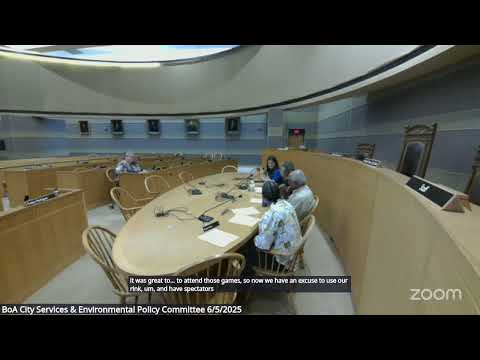
City economic-development staff and Albertus Magnus College representatives told the aldermanic committee the city must sign a state grant-related negative pledge because the grant agreement encumbers city-owned land where the Roth Walker ice rink sits.
Michael Piscatelli, the city's economic development administrator, and John Ward, special counsel, said the college applied to the Connecticut Department of Economic and Community Development for state funds to support on‑campus and rink improvements tied to the college’s women's ice-hockey program. Ward described the state’s standard requirement for grants that invest in physical assets: "It's a 10 year negative pledge that's coincident with Albertus' ... time contractually with us now."
Ward and Piscatelli told the committee the negative pledge is a standard tool that preserves the state's security interest in financed improvements and that the agreement has two parts: a land-encumbrance document and a companion agreement that holds Albertus accountable consistent with the lease and partnership. They said the documents had been reviewed by city counsel and that the pledge would run concurrent with the college’s current contractual term (a 10-year extension in the city’s earlier action).
Albertus Magnus athletic director Michael Kovalanski said the partnership has helped stabilize ice-rink revenues and supports the college’s new women’s hockey program. Presenters said the state would require notification and may seek remedies, including repayment, if the property were sold or if the funded use ceased.
Alders asked what would happen if Albertus ended the program. City counsel and staff said the physical improvements would remain city property and the city would work to repurpose or re-operate the rink, including seeking new operators, running an RFP or otherwise preserving public access. Committee members emphasized they expect Albertus to continue the program but acknowledged contingency planning was appropriate.
The committee moved and approved the item. Staff noted the rink’s continued public use and the longstanding city investment in the facility; members discussed outreach to city schools and youth programs to expand participation and awareness of learn-to-skate and other programs at the rink.