Get Full Government Meeting Transcripts, Videos, & Alerts Forever!
Get email alerts on the Charter Revision topic
No spam. Unsubscribe anytime.
Norwalk holds public hearing on charter revision amid debate over term length, representation and compensation
Summary
At a June 24 public hearing, Norwalk residents and council members discussed proposed charter revisions including a proposed four‑year term, expansion of council seats, minority‑party representation, remote voting, compensation language and the mandated frequency of charter review. No votes were taken; a council vote is scheduled for July 8.
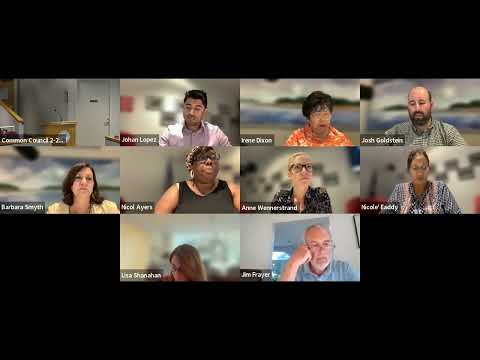
The Norwalk Common Council held a public hearing and follow-up discussion on the Charter Revision Commission’s recommendations on June 24, 2025, drawing several public commenters who urged changes to term lengths, council size and ballot structure.
The hearing drew residents who criticized parts of the commission’s package and urged separate referendum questions. “I do think it’s customary to have separate questions,” said Diane Loracella, of 21 Little Fox Lane, who told the council she favors separating the four‑year term question from other charter items and asked the city to offer more public outreach and workshops before a vote.
Other public speakers pressed for changes to representation. Lisa Britton, identified as the Independent Party town chair, argued that single‑party control excludes nearly half of Norwalk voters and warned voters would oppose the package if it did not address minority‑party representation. “Power corrupts and absolute power breeds mediocrity,” Britton said. Rich Bonifant, a resident, criticized remote voting for council members, saying, “You shouldn’t be allowed to vote remotely,” and raised concerns about officials being absent during key budget votes.
Council members discussed several specific commission recommendations. Majority Leader Mr. Goldstein said the last major charter rewrite made the document more readable and suggested extending the mandatory review interval from five to 10 years to reduce expense and churn. “Since we’re in a different place now, I think it’s something that we could consider once a decade as opposed to once every five years,” Goldstein said.
Other council members disagreed. Council member Chris Dwyer (online) and members who supported a five‑year mandate argued that frequent mandated reviews preserve institutional memory from the recent multi‑year revision process and keep the charter responsive to technological and structural changes.
Attorney Mednick advised the council that the revised charter is designed to move many operational details into ordinance so the council can address departmental organization and other governance matters without repeated charter amendments. He also noted the Home Rule Act and state law limit actions that would eliminate charter functions. “When you’re doing major structural things like that, you need a ruling from your corporation counsel that you’re not eliminating a charter function,” Mednick said.
Council discussion also covered several discrete charter text changes recommended by the commission: formalizing the practice of documenting reapportionment of council districts by ordinance; recodifying or repealing sunset departments and obsolete sections and clarifying the capital budget reinstatement language (the council discussed whether the council can ‘reinstate’ projects moved between capital and operating budgets and whether the administration must implement a reinstated item).
The council will continue discussion at a possible additional workshop early next week and will take a vote on the commission’s package at its July 8 common council meeting. No formal council votes were taken during the June 24 session.