Get Full Government Meeting Transcripts, Videos, & Alerts Forever!
Get email alerts on the Stakeholder Compensation topic
No spam. Unsubscribe anytime.
Connecticut advisers, advocates push PURA to simplify stakeholder compensation and lower barriers to participation
Summary
Consultants and community advocates outlined problems and proposed fixes for the Public Utilities Regulatory Authority’s stakeholder group compensation program at a technical meeting held as part of the EASE docket on equity, accessibility and stakeholder engagement.
Consultants and community advocates outlined problems and proposed fixes for the Public Utilities Regulatory Authority’s (PURA) stakeholder group compensation program at a technical meeting held as part of the EASE docket on equity, accessibility and stakeholder engagement.
The consulting team leading the EASE effort said the program — created by legislation in June 2023 and launched by PURA in January 2024 under docket number 230934 — is designed to use ratepayer funds to help eligible residential, environmental justice and small‑business groups participate in PURA dockets. The program authorizes up to $1,200,000 annually, with limits of $100,000 per party per case and up to $300,000 per case, and requires an independent evaluation after three years, due in January 2027.
Why this matters: PURA decides utility rates and other rules that affect electricity, gas, water and telecommunications across Connecticut. Consulting team member Tanya, speaking for the EASE consultants, said the program is meant to “bring more voices into their decision making spaces” but that outreach and process barriers have limited takeup.
The meeting laid out how the compensation program currently works and where participants say it fails to deliver. Lauren McNutt, a member of the consulting team, described the statutory constraints and the program workflow: eligible groups file a notice of intent, submit an application with an itemized budget (typically in a roughly two‑week window), sign an agreement committing to provide evidence of “substantial contribution,” participate in the docket, then submit documentation and receive payment at the end of the proceeding minus any advance payments.
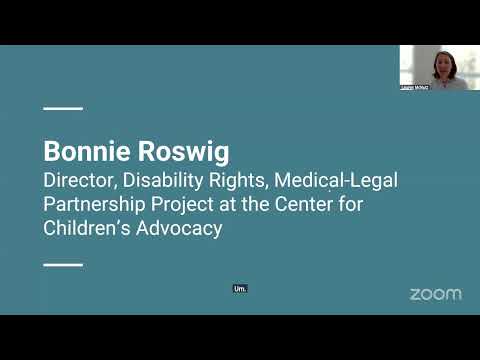
Participants at the meeting said that sequence creates problems in practice. Bonnie Rosewig, who identified herself as a representative of the Center for Children’s Advocacy, said the program has made it possible for her small nonprofit to participate but warned that many community needs are urgent and cannot wait for a final decision or for reimbursement.
"Clients who are in crisis need assistance now today," Rosewig said, citing families facing shutoff notices or medically fragile children who rely on electricity for life‑support equipment.
Other recurring concerns raised by participants: - Awareness and navigation: Several participants said many Connecticut residents do not know PURA exists or how to engage. The PURA website and docket filing system were frequently described as hard to search and confusing to newcomers. Kathy, a member of the public, said she needed multiple calls with PURA staff to learn how to file in two separate dockets required by the compensation process. - Timing and midstream entry: Speakers said application windows for compensation open early and close quickly, preventing groups that learn about a docket later from participating. Participants and consultants discussed whether midcycle applications could be allowed in uncontested dockets where PURA may have more procedural flexibility, while acknowledging contested dockets are more constrained by statute. - Definition of substantial contribution: Multiple participants said the program’s requirement that groups make a “substantial contribution” to the record is ambiguous and creates financial risk for applicants. Jamieson (participant) said the lack of a clear standard “disincentivizes” professionals and small organizations from participating because there is no assurance of reimbursement. - Reporting and confidentiality burdens: Small businesses and nonprofits said the itemized reporting requirements — for example, disclosing staff time and compensation — are unfamiliar and can be sensitive. Rosalyn, representing a small consulting business, said some applicants worry about sharing salary information publicly and asked for clearer guidance on protective orders and redaction practices.
Participants offered concrete fixes. Jamieson urged a two‑tier payment structure (for example, 50% upfront upon approval and the remainder on documented engagement or six months later) and clearer, example‑based guidance on what counts as substantial contribution. Dr. Mitchell recommended negotiating and agreeing on scope and deliverables at the outset so reimbursement follows a clear, predictable plan.
PURA staff and the consulting team acknowledged which changes can be made internally and which would require legislative change. Lauren McNutt noted many program details — including the funding caps, eligible group definitions, the requirement that similar‑interest groups may have to apply jointly, and the timetable for a three‑year evaluation — are prescribed by statute and not quickly alterable.
Other items raised at the meeting included: - Advance payments: The program allows advance payments for groups demonstrating financial hardship; participants asked for clearer, faster access to those funds and for broader, easier rules on advanced disbursements. - Apportionment of payment responsibility: By statute, the public service companies involved in a docket pay approved compensation; when multiple companies or sectors are involved, costs are apportioned by load or customer counts. - Outreach and training: Attendees praised local training and workshop efforts — notably those by the Nonprofit Accountability Group (NAG) and others — for helping community members understand PURA and docket participation. Several speakers urged sustained funding for those trainings and better translation and accessibility support.
What participants asked PURA to consider next: clearer examples of acceptable substantial contributions, simplified application and reporting templates, formalized midcycle entry rules where legally possible, clearer instructions and promotion of protective orders for confidential budget items, and options for partial or faster payouts to reduce the up‑front financial burden on community groups.
Next steps: The consulting team said it will refine recommendations for the EASE strategy and continue stakeholder outreach; the program is scheduled for an independent evaluation required by January 2027. PURA staff asked participants to submit additional written comments into the docket so those suggestions can be part of the record.
The meeting combined technical explanation and community testimony and left open several practical questions — especially about how to balance statutory limits with the program’s equity goals — that the consultants and PURA staff said they will test further before finalizing recommendations.