Get Full Government Meeting Transcripts, Videos, & Alerts Forever!
Get email alerts on the Capital Projects topic
No spam. Unsubscribe anytime.
PURA questions Yankee Gas on pipe‑replacement work orders, cost reclassifications and project controls
Summary
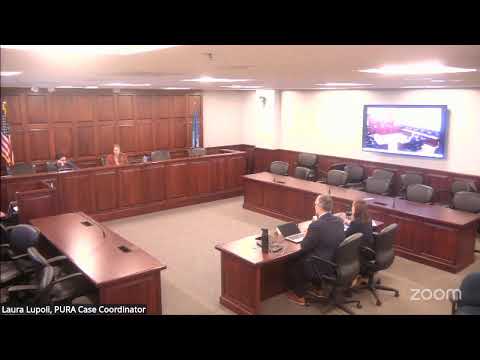
During cross‑examination, PURA staff and the Office of Consumer Counsel pressed company witnesses on specific pipe replacement work orders, accounting splits between new construction and cost‑of‑removal, and the company’s sanctioning/approval process. The company agreed to supplements with work‑order level details for five late‑filed exhibits.
Company witnesses told the authority that waterway and municipal projects, engineering design changes and municipal permitting drove a number of reclassifications and scope changes for specific pipe replacement projects.
Why it matters: Several late‑filed exhibits (LFEs 103–107, 104) included project‑level invoices and work‑order detail for replacement projects. Staff and intervenors sought clarity on the length and type of retired mains, the year of installation of retired pipe, and why cost‑of‑removal amounts were shown in certain FERC accounts.
Witnesses said work orders commonly include both the new construction and removal activities for the same scope; contractors’ daily activity reports (DARs) and CTE (contractor time and expense) invoices are processed into the company’s work‑order system. The company explained that accounting splits (the FERC classification that allocates costs between new plant and cost of removal) are established at estimate time but are subject to an "as‑built" review that may reclassify costs when field conditions differ from estimates.
For one project (a Waterbury bridge relocation and horizontal directional drilling), the company described multiple iterations of engineering scope after municipal design changes forced re‑routing and additional horizontal drilling; that change produced a reclassification in January 2025 that moved roughly $1.8 million from cost of removal into plant in service for that project, the company said. The company said the change was presentational and resulted in no net change to utility plant in service on a system basis.
The Office of Consumer Counsel asked for work‑order‑level details (lengths of 4‑inch and 5‑inch cast‑iron main removed, and original in‑service dates) for a set of five LFE projects (LFE 103–107). The company agreed to provide those details as supplements; at the hearing they converted a read‑in request to a written supplement and the authority recorded the company’s commitment.
The company also produced a separate dataset drawn from its PowerPlan project approval system showing projects that were rejected or returned for correction during the internal approval process; witnesses said the entries demonstrate management review points where approvers asked for more detailed estimates, better documentation, or corrected cost elements before a request moves to formal sanctioning.
Ending: The company will file supplements (work‑order lengths, retired‑asset in‑service dates, and a breakdown of cost components) for the five referenced LFEs and confirmed that project sanctioning notes and PowerPlan rejections are part of its internal cost‑control and approval process.