Get Full Government Meeting Transcripts, Videos, & Alerts Forever!
Get email alerts on the Professional Licensing Discipline topic
No spam. Unsubscribe anytime.
Referee suggests six-month unsupervised visitation after clinician admits crossing boundary with patient
Summary
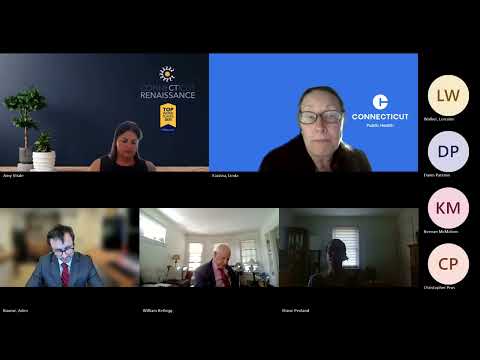
At a licensing hearing before the Department of Public Health, panel members heard testimony that a clinician, Diane Penland, crossed professional boundaries with a patient by responding to romantic, suggestive text messages and urged action on her license.
At a licensing hearing before the Department of Public Health, panel members heard testimony that a clinician, Diane Penland, crossed professional boundaries with a patient by responding to romantic, suggestive text messages and urged action on her license.
The panel discussed whether the respondent’s conduct warranted revocation, with a Department representative telling the panel that “the department is asking that the license be revoked.” A member of the hearing panel recommended placing Penland on six months of unsupervised visitation and erasing the record if no further reports of misconduct appear at the end of that period.
The matter centers on a short series of text-message exchanges that panel testimony described as “romantic and suggestive.” Panel members and witnesses agreed the messages occurred in a relatively brief time window. Testimony recorded at the hearing indicates Penland acknowledged she “stepped over the line” and conceded the boundary crossing. Panel discussion repeatedly emphasized Penland’s stated motive: she wanted to help a patient with substance use issues and feared reporting him would remove him from treatment or put him at risk of incarceration.
Panel members and an expert witness discussed professional standards prohibiting clinicians from engaging in sexual or romantic relationships with patients. One panel member said the expert’s opinion rested on that prohibition and described the messages as “romantic and suggestive and a bit disgusting.” At the same time, several panel speakers described the clinician’s past record as largely positive: testimony and an employer evaluation from Renaissance were described as favorable and the panel noted Penland has been out of practice doing similar work for more than two years without further complaint.
During argument about an appropriate sanction, a hearing-panel member urged a remedial approach rather than immediate license revocation, saying the equities favored a probationary remedy because the conduct, while a breach, did not appear to have caused documented harm. The panel member summarized the proposal: a six-month unsupervised visitation period, and if no reports of further boundary stretching occurred, the record would be expunged. The panel member characterized Penland as contrite and as having “learned a lesson.”
No final disciplinary order was issued at the hearing. The referee closed the record and said the office would review the evidence and issue a written decision to the parties in a few weeks, advising parties to contact the PHHO email address for questions. The referee told those present, “I’m going to review the evidence and draft a decision within a few weeks and then they’ll be mailed to the parties.”
The hearing record reflects a formal distinction between discussion, suggested directions, and final action: panel members debated facts and appropriate sanctions and made recommendations, but the matter remains under review pending the referee’s written decision.