Get Full Government Meeting Transcripts, Videos, & Alerts Forever!
Get email alerts on the Labor And Workers Compensation topic
No spam. Unsubscribe anytime.
Senate passes Industrial Commission budget, citing accessibility and lower request; 32–0
Summary
The Senate unanimously approved House Bill 80, the appropriation for the Ohio Industrial Commission for the 2026–27 biennium. Supporters described the commission’s caseload and online hearing policies; the budget totals about $107.4 million over the biennium.
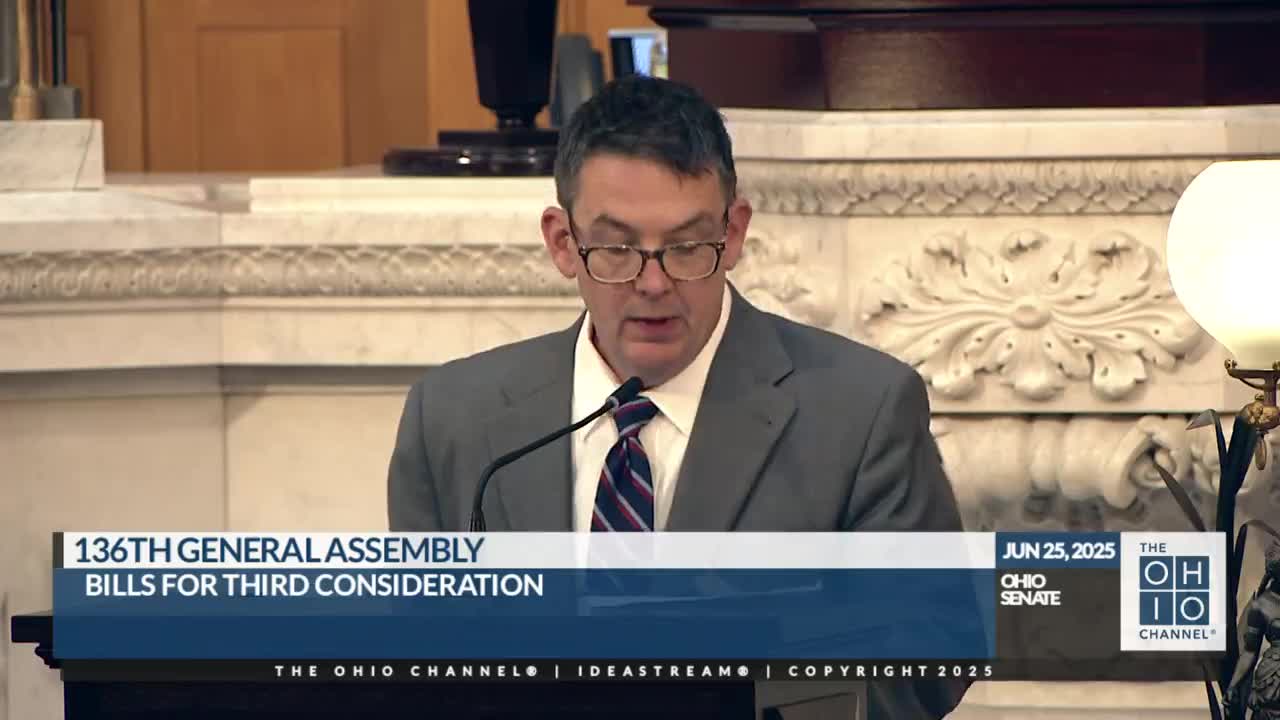
The Ohio Senate unanimously passed House Bill 80 on third consideration to fund the Ohio Industrial Commission for the 2026–27 biennium. The vote was 32 yeas and 0 nays.
Senator Wilson, sponsor in the Senate, described the Industrial Commission’s role as the impartial appeals body for workers’ compensation and said the commission adjudicates roughly 85,000 claims annually across three hearing levels. Wilson noted the commission continues to offer in‑person hearings at one of its 12 local offices to ensure accessibility despite increased online hearings.
The budget described on the floor totals $53.1 million for fiscal year 2026 and $54.3 million for fiscal year 2027 — $107.4 million over the biennium. Senate remarks itemized three line items: operating expenses (about $98.6 million over the biennium), rent for the William Green Building in Columbus (about $2.3 million), and payments to the Ohio Attorney General’s office for legal services (about $6.5 million). The budget request is funded from an administrative cost fund surcharge applied to employers’ workers’ compensation premiums and not from the general revenue fund, the floor transcript notes.
Senator Craig, the committee ranking member, spoke in support and urged colleagues to approve the measure, calling it a necessary investment in a fair and functioning workers’ compensation appeals system. The bill passed on a roll call with 32 yeas and 0 nays.