Get Full Government Meeting Transcripts, Videos, & Alerts Forever!
Get email alerts on the State Budget topic
No spam. Unsubscribe anytime.
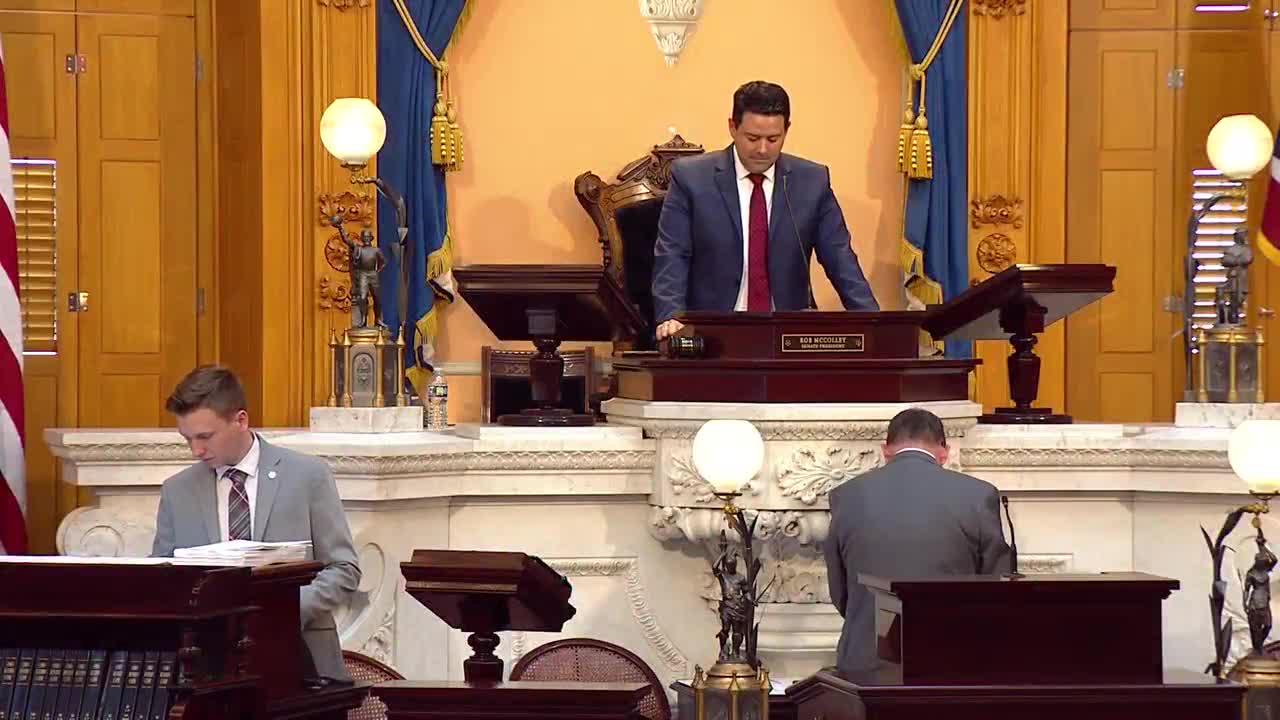
Senate approves conference report on biennial budget after hours of debate; 23 yeas, 10 nays
Summary
The Ohio Senate voted 23–10 to adopt the conference committee report on House Bill 96, the two‑year state budget, after hours of floor debate over tax changes, school funding, housing investments and several high‑profile development projects.
The Ohio Senate voted 23–10 on Wednesday to agree to the conference committee report on House Bill 96, the biennial state budget that sets spending, tax policy and program priorities for fiscal 2026–27.
Supporters called the package a bipartisan compromise that phases in a flat income tax, increases school funding through the fair school funding formula and invests in housing, research and economic development. Opponents said the measure shortchanges low‑income families, trims some social programs and uses state resources to back large private projects.
The conference report was brought to the floor for immediate consideration after a motion to that effect. Senator Serino urged colleagues to accept the report, calling it a compromise reached after resolving “over 800 differences” with the Ohio House and saying the bill delivers tax relief, education funding and economic development. Senator Hicks Hudson and other Democrats opposed the report, citing procedural concerns about limited time for review and substantive objections including reduced support for food assistance, weakened agency authority and an alleged shift of power to the legislature.
Supporters highlighted several specific provisions. The budget includes a move toward a simplified flat income tax and a phase‑in of the fair school funding plan, which proponents say funds the student‑centered formula that had previously been only partially implemented. The package allocates money for housing programs the sponsors described as significant: a residential economic development district grant ($25 million), a $100 million rural residential development revolving loan fund, and continued support for the Welcome Home Ohio program. Conference supporters also pointed to funding for university research (including a Miami University quantum computing initiative), expanded film and theater tax incentives, and increased funding for Parkinson’s and stroke registries.
Opponents focused on other line items and the process. Senator Smith and several Democratic senators criticized the budget’s tax changes, saying the largest share of benefits would go to higher‑income households and that the pace of changes lacked full deliberation. Several members objected to substituting unclaimed state funds for other priorities and raised constitutional and legal questions about using unclaimed funds as a vehicle for financing a proposed development related to the Cleveland Browns. Senator Weinstein said the budget cuts pediatric cancer research funding from the governor’s proposal and called that cut unacceptable. Senator DeMora described late amendments she said favored energy market participants at the expense of residential customers.
Floor debate included narrower policy disagreements as well: language affecting local control over property tax levies and levy transparency rules; provisions altering how some school officials’ retirement contributions are handled; and the creation of a new “election integrity unit” and other structural changes supporters said will improve election oversight. Procedural objections from the minority emphasized the compressed schedule: Senator Hicks Hudson said members had insufficient time to vet “838 action items” and urged a no vote; she closed by saying she could not be silent and urged rejection.
After the roll call, President Macaulay announced the result: 23 ayes and 10 nays, and the conference report was agreed to. Members immediately adopted a set of resolutions and the Senate adjourned.
The passage sends the finalized budget forward for the usual enrollment and signature steps required before it becomes law. Members on both sides urged voters and local officials to watch implementation closely, noting that multiple items (stadium financing, some regulatory changes and certain program rollouts) may require future statutory or administrative action or face legal challenges.
Sources: floor debate and roll call on the Senate floor, June 24, 2025. Quotes and attributions appear in the public floor transcript of the Ohio Senate session.