
Advocates: 18–21-year-olds incarcerated with adults are not receiving legally required education; bill would require six hours daily instruction and IEP parity
Get AI-powered insights, summaries, and transcripts
Subscribe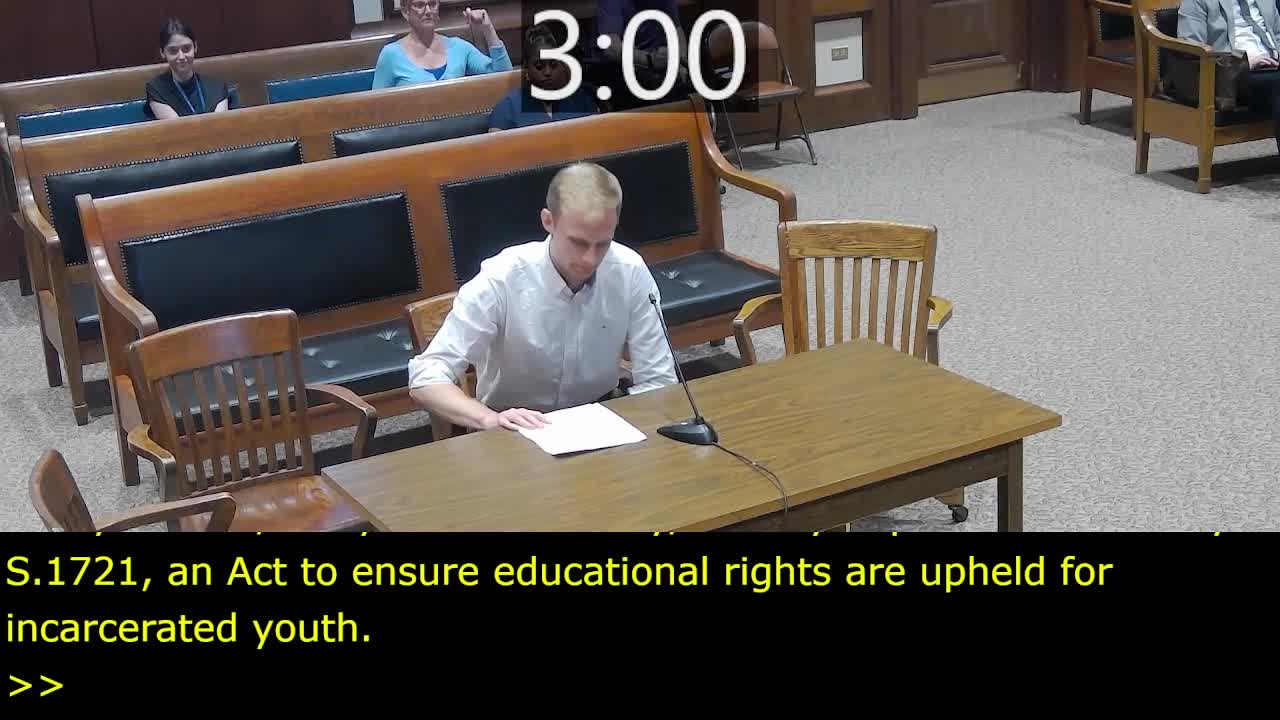
Summary
Citizens for Juvenile Justice urged the committee to pass S1721 to ensure 18–21-year-olds incarcerated in adult jails and state prisons receive the same daily instruction (six hours) and special-education supports (IEPs) they would get in juvenile custody.
A legal fellow from Citizens for Juvenile Justice told the Joint Committee on Public Safety and Homeland Security that Senate Bill 17‑21 would require that 18‑ to 21‑year-olds incarcerated in local houses of correction and the Department of Correction receive the same educational hours and special-education protections they would have in the custody of the Department of Youth Services.
The witness noted that Massachusetts has not enacted "raise the age" fully, so many 18‑ to 21‑year-olds remain in adult facilities despite being legally school‑aged until their 20th birthday. The organization’s analysis cited in testimony found these young adults receive “severely deficient” education in adult facilities compared with the six hours per day provided under Department of Youth Services programming.
The testimony highlighted stark disparities in special-education services: while about one in two students in DYS are served by individualized education plans (IEPs), the witness said fewer than one in 10 incarcerated 18‑ to 21‑year‑olds in houses of correction receive IEP support, and in the Department of Correction the figure is closer to one in 100. S1721 would clarify processes and legal obligations so that HOCs and the DOC provide IEP supports required under federal law.
Citizens for Juvenile Justice asked the committee to report the bill favorably so that the educational and disability-support gaps for incarcerated youth can be addressed. The transcript records no committee vote on the measure during the hearing.