
Advocates press committee to expand Architectural Access Board authority to require adaptable and accessible workspaces and housing
Get AI-powered insights, summaries, and transcripts
Subscribe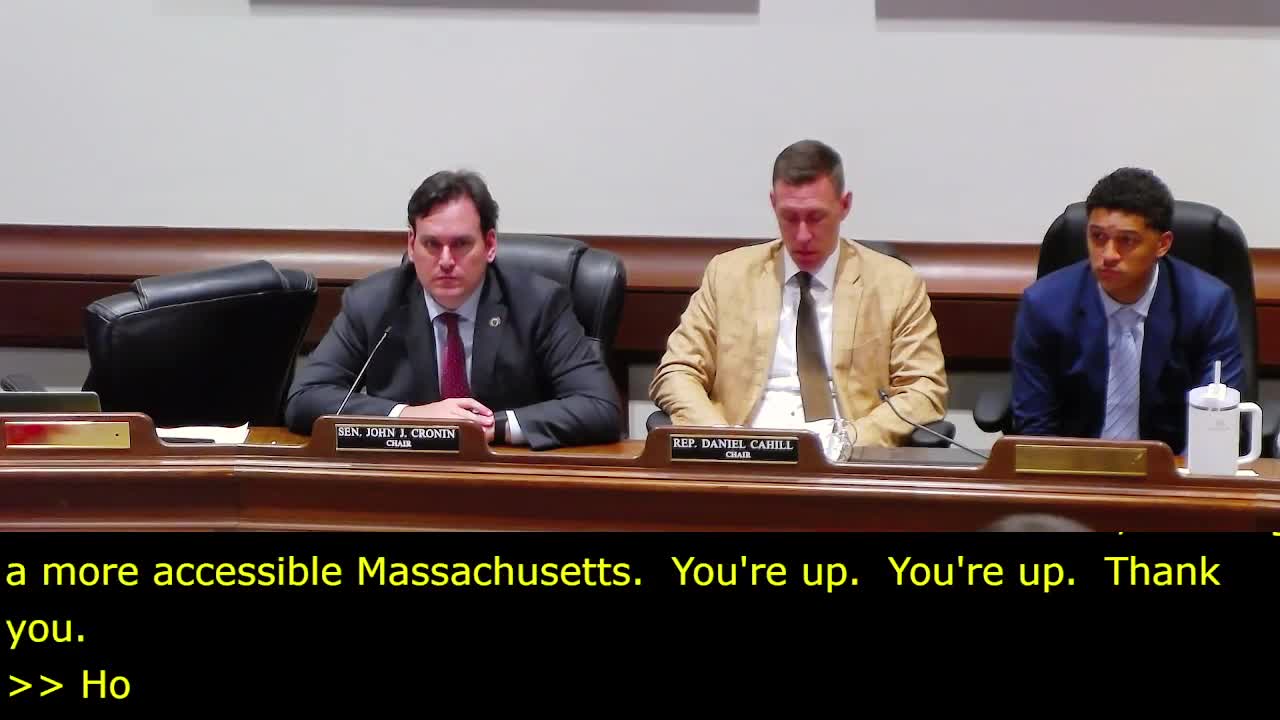
Summary
Advocates, independent living centers, and disability-rights groups testified for Senate Bill 17‑33 to expand the Architectural Access Board's jurisdiction to cover pre-1991 building renovations, require adaptable housing units, and include employee-only areas, arguing it would increase accessible housing and employment opportunities.
Advocates and independent living organizations urged the Joint Committee on Public Safety and Homeland Security to support Senate Bill 17‑33, titled in testimony as "An Act: Building a More Accessible Massachusetts." Witnesses said the bill would expand the Architectural Access Board's authority to require accessibility in building renovations for structures built before 1991, add requirements for adaptable housing units when older buildings are converted, and cover employee-only work areas.
Chris Ho described the bill as a way for the state to "meet the promise of the ADA and our promise for accessibility" by giving the Architectural Access Board authority to regulate accessibility at the permitting stage rather than addressing violations only after construction. Benji Kemper of the Center for Living and Working told the committee that wait times for accessible housing are extraordinarily long; he cited an estimate from a housing authority director that non-elder applicants may wait decades for an accessible unit.
Joe Beale of Easterseals Massachusetts and other witnesses said requiring accessible and adaptable workspaces would reduce unemployment among people with disabilities. Joe Beale testified that only 22 percent of people with disabilities are in the labor force and said making workplaces accessible is cheaper if done during initial construction or renovation. Testifiers argued that adaptable units would free fully accessible units for tenants who need all features and would help seniors age in place.
No adverse testimony from state building regulators appears in the hearing record; the transcript includes no committee vote or formal action on S17‑33 during this session. Supporters requested a favorable report to advance the bill.