
Committee hears unified push for bills to direct capital and reporting to micro and disadvantaged businesses
Get AI-powered insights, summaries, and transcripts
Subscribe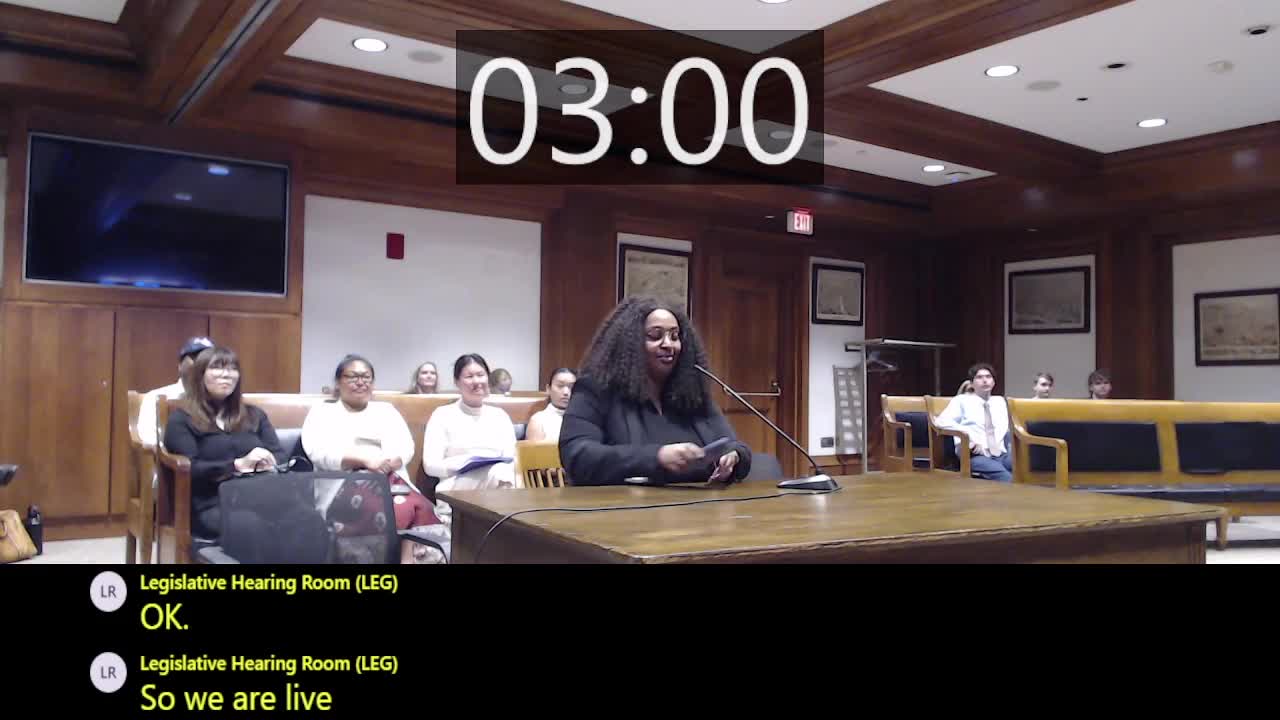
Summary
Members of the Joint Committee on Community Development and Small Business heard testimony on March 12 urging swift action on a cluster of bills intended to improve access to capital for micro businesses and socially or economically disadvantaged firms.
Members of the Joint Committee on Community Development and Small Business heard testimony on March 12 urging swift action on a cluster of bills intended to improve access to capital for micro businesses and socially or economically disadvantaged firms.
Proponents said the bills would “create a stronger, more transparent, and more just economic ecosystem” and would address barriers that leave many small business owners unable to access or wait for state contract payments.
The bills under discussion included S.179 and H.312 (prioritizing capital assistance to socially and economically disadvantaged and micro businesses), S.178 (which proponents said would set minimum allocation percentages to micro and disadvantaged businesses), S.184 and H.312 (transparency and reporting requirements for agencies that distribute small-business assistance), and H.315 (bridge loans and upfront payments to help contractors perform state contracts).
Alyssa Banelfu Ramos, chief of policy at the Black Economic Council of Massachusetts (BECMA), told the committee: “All of these, if passed into law, would create a stronger, more transparent, and more just economic ecosystem in our neighborhoods and across the state.” Ramos said S.179 and S.178 would direct capital assistance to micro businesses, worker-owned firms and socially or economically disadvantaged firms so they can “stabilize and or grow.”
Testimony detailed common barriers. Marissa Ferrola, owner of 9 Winters Companies LLC, described working-capital limits and said H.312 and S.179 “would be an invaluable change for businesses like mine.” Several witnesses described a frequent problem in which small contractors wait 30, 60 or more days for payments after completing state work and lack reserves to bridge that period.
QJ Hsu of the Asian Business Empowerment Council at the Boston Foundation said transparency provisions in S.184/H.312 are essential. “Without clear reporting on who is receiving support, what programs are working, and which businesses are still being left behind, we cannot fix what we cannot see,” Hsu said, urging anonymized regular reporting and published goals for programs that serve micro and small businesses.
Witnesses offered concrete numbers cited in testimony. One speaker described S.178’s proposed allocation floors as: “no less than 25% of all financial assistance across the agency goes to micro businesses, no less than 50% go to small businesses, and no less than 67% go to socially or economically disadvantaged businesses.” Supporters said those floors would codify equity as a measurable requirement rather than an aspiration.
Supporters also stressed regional differences in need. Lena Redd, co-owner of Soul Out Kitchen and First Saigon in Springfield, told the committee that Western Massachusetts faces different challenges than Boston and that programs should reflect regional input.
No formal vote or committee action occurred during the hearing. Several speakers said they stand ready to help implement reporting and program changes should the committee favorably report the bills.
The committee did not announce a date for further action on the bills.