
Senate passes bill extending prevailing-wage rules to some off-site manufactured public-works components
Get AI-powered insights, summaries, and transcripts
Subscribe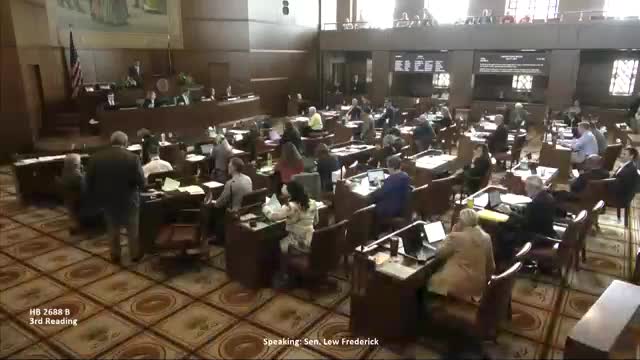
Summary
House Bill 2688 passed after heated debate over whether prevailing wage should apply to off-site, premanufactured or bespoke components used in public works; supporters argued fairness and worker protections, opponents warned of higher costs and project delays.
The Senate on June 28 passed House Bill 2688, a measure that extends Oregon’s prevailing-wage law to certain work performed off site for use in public-works projects, sponsors said.
Supporters argue the bill closes a gap in prevailing-wage law that allowed contractors to move work into factories to avoid prevailing-wage obligations. Senator Frederick, who carried the bill, said it is narrowly targeted to bespoke, project-specific off-site construction and includes carve-outs, a delayed implementation date and direction for rulemaking to clarify exclusions.
Why it matters: The bill affects public-works procurement, factory-based modular construction and manufacturers that produce project-specific components. Supporters say it raises wages and funds apprenticeships and benefits; opponents warned it could raise costs, slow recovery from disasters and reduce the use of prefab solutions for urgent housing needs.
On the floor: Senator Frederick defended the measure’s scope and said prevailing-wage rules create jobs and economic benefits. “Oregon’s prevailing wage laws create 5,400 jobs, improve the state economy by $752,000,000 and generate $35,000,000 in state and local tax revenues every year,” Frederick said on the floor. Opponents including Senator Brock Smith and Senator Lythicum said the bill was broader than intended and would harm manufacturers and local projects; Senator Golden said he opposed the bill because it could impede housing recovery in wildfire-affected areas that rely on factory-produced housing.
Vote and outcome: The clerk recorded the roll call and the presiding officer declared House Bill 2688 passed. The measure received the constitutional majority needed to be declared passed on the Senate floor.
Implementation: The bill’s language includes a delayed implementation date, direction to the Bureau of Labor and Industries (BOLI) for rulemaking to define exclusions, and reporting requirements for how the law will be applied to in-state projects and manufacturers.
Less critical details: Sponsors said the bill would not apply to off-the-shelf items and that it’s focused on bespoke components custom-made for a particular public-works project.