Senate approves delay and local-control provisions tied to Measure 114 implementation
Summary
The Senate concurred in House amendments to a bill that adjusts the implementation timeline for voter-approved Measure 114 and returns certain local authority over carrying restrictions to cities and counties; the measure passed after floor debate about public safety and local control.
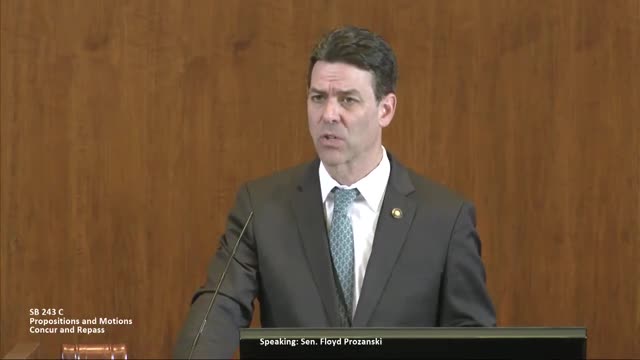
The Oregon Senate on June 28 concurred in House amendments to Senate Bill 243 C, a bill that modifies implementation details for Measure 114 and gives cities and counties authority to set limits on where concealed-handgun license (CHL) holders may carry in public buildings.
Sponsor remarks explained that the bill’s amendment delays an effective date tied to the state supreme court’s review of Measure 114 and moves that effective date to March 15, 2026, if the court upholds the voter-approved measure. The sponsor described the bill as focused on prohibiting “rapid-fire activators” and on enabling local governments to make building-specific decisions.
Why it matters: Measure 114 — passed by voters — changes aspects of firearm regulation; the bill on the floor changes timing and implementation mechanics and restores local decision-making for carrying rules in public buildings. The debate on the floor highlighted deep divisions over public-safety policy and constitutional rights.
What senators said: Sponsor Senator Brzezinski said the bill “will in fact make certain that we are ready and equipped to actually take care of ... the operative measures under Measure 114” and said the amendment pushes an effective date to allow further implementation work if the Oregon Supreme Court upholds the measure. Senator Reynolds said the chamber’s work was intended “to prevent gun deaths and injuries” and noted firearms are a leading cause of death for children; Reynolds wore a pin to honor victims. Senator Robinson objected on grounds the bill targets law-abiding owners and argued it would make it harder for citizens to defend themselves, saying “Guns don’t kill people. It is bad people behind guns.” Senator Golden clarified a point raised during debate, saying “We are not gonna be putting a sign anywhere on this bill” and that the bill instead empowers local governments to decide.
Vote and outcome: The clerk recorded the roll and the presiding officer declared Senate Bill 243 C repassed after receiving a constitutional majority.
Next steps: The bill’s delayed effective date (if the court upholds Measure 114) and the new local-authority provisions require administrative work by state agencies and local governments to implement the changes and determine building-level limits where localities choose to act.
Less critical details: Sponsor comments referenced mass-casualty events and said the bill targets devices that enable rapid, mass lethality; supporters described the measure as not infringing on lawful gun ownership but targeted at high-risk devices.