
Committee advances House Bill 2087A to extend and modify a dozen tax expenditures
Get AI-powered insights, summaries, and transcripts
Subscribe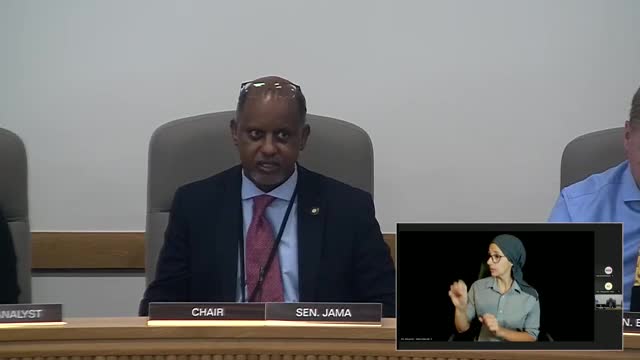
Summary
On June 27, a legislative committee voted to send House Bill 2087A to the floor with a "do pass" recommendation. The bill would extend or modify 12 tax expenditures affecting income, weight-mile and fuel taxes and raise limits on several tax-credit programs, with a minimal fiscal impact reported.
A legislative committee voted June 27 to move House Bill 2087A — the 2025 General Fund Tax Expenditure Omnibus — to the floor with a "do pass" recommendation, advancing a package that extends or modifies 12 tax expenditures and raises several tax-credit limits.
Leslie, a committee staff member, told the panel, "House Bill 2087A is the 2025 General Fund Tax Expenditure Omnibus." The bill, she said, "extends and/or modifies 12 tax expenditures affecting personal and corporate income taxes, the weight‑mile tax, or fuel taxes."
The bill would extend the sunset dates, without changing policy, for several subtractions and credits, including the earned income tax credit, the pension income credit, a manufactured dwelling park closure credit, a manufactured dwelling park capital gain subtraction, the first‑time homebuyer savings account subtraction and the vehicle used for testing emissions tax exemption. It would expand and extend the crop donation tax credit and the rural voluntary emergency medical services providers credit, and it would expand the affordable housing lenders tax credit without changing that credit's sunset. The bill also raises the aggregate amount of tax credits auctioned to generate proceeds for the Oregon Production Investment Fund and increases the cap on donations to the state‑selected fiduciary agency that funds Individual Development Accounts (IDAs).
An economist's revenue impact statement was issued and, according to Leslie, the measure has a "minimal fiscal impact." The bill is written to take effect on the 90th day following adjournment.
Senator Golden said the periodic review was important. "These are tax expenditures and I think it is really a good system that we insist on reviewing them periodically and see if they still serve the public interest or not," Golden said, noting that tax expenditures represent general fund dollars that deserve periodic scrutiny.
Mr. Hayden, a committee member, said he supports the review schedule and singled out IDAs for praise, but questioned the framing of tax credits as expenditures. "These tax credits and things, it's difficult for me to consider that an expenditure because the reality is this is people's money," Hayden said. He added that he nevertheless supports the bill's provisions.
There were no public witnesses signed up to testify, and committee members asked no substantive changes on the record. Vice Chair Bono moved to send the bill to the floor with a due‑pass recommendation; the motion passed. Chair Jarman said he would carry the measure to the next step. The committee then closed the work session and adjourned.
The bill package consolidates a range of routine extensions and adjustments that the committee said warrant periodic legislative review; specific fiscal figures beyond the statement of "minimal fiscal impact" were not provided in the hearing record.