
House Rules committee adopts dash‑3 amendment to HB 3402 to avert ODOT layoffs; cities, transit and safety advocates oppose
Get AI-powered insights, summaries, and transcripts
Subscribe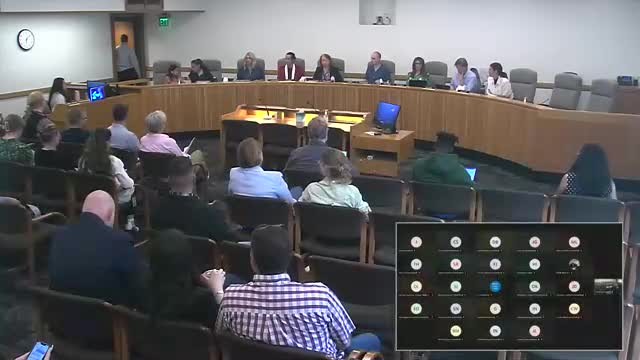
Summary
On June 27, 2025, the Oregon House Committee on Rules adopted the dash‑3 amendment to House Bill 3402, a stopgap measure that raises fuel taxes and vehicle fees to avert immediate layoffs at the Oregon Department of Transportation.
SALem — On June 27, 2025, the Oregon House Committee on Rules adopted the dash‑3 amendment to House Bill 3402, a narrow, stopgap revenue package that increases fuel taxes and vehicle title and registration fees to provide immediate funds to the Oregon Department of Transportation and avert planned layoffs. Vice Chair Pham moved both the amendment and the subsequent measure to send the bill to the House floor with a due‑pass recommendation; the committee adopted the amendment and approved sending the bill as amended.
The measure provoked broad opposition at the hearing from mayors, county commissioners, transit unions and safety and environmental advocates who said the amendment concentrates new revenue at the state level and leaves cities, counties and transit agencies without funding. Governor Tina Kotek told the committee she supported the amendment to prevent an immediate round of layoffs, saying, “I will need to lay off 600 to 700 workers who provide essential services right now.”
Supporters of a larger package argued the dash‑3 amendment is a Band‑Aid that preserves ODOT operations but fails to fund transit, local maintenance, safety programs such as Great Streets and jurisdictional transfers, or other items in the broader House Bill 2025 package. Opponents said that will shift the burden to local governments and to rural residents who drive long distances.
The amendment’s text as summarized at the hearing directs new revenue to ODOT and includes increased fuel taxes and higher vehicle title and registration fees and added accountability measures such as more frequent performance audits and reinstating gubernatorial appointment of the ODOT director subject to Senate approval. Representative Bobby Levy described the fee increases in the dash‑3 as follows: a 3‑cent per gallon gas‑tax increase, passenger vehicle registration fees “by nearly 50%,” and a jump in the title fee “from $77 to $168.”
Hundreds of individuals and dozens of organizations registered their positions. Witnesses who spoke in opposition included local elected officials from Portland, Beaverton and numerous counties, transit unions such as ATU Local 757 and the Oregon Transit Association, and advocacy groups in the Move Oregon Forward coalition. Cassie Wilson of 1000 Friends of Oregon urged rejection of the replacement bill in favor of the broader package that moved through committees earlier: “We urge rejection of this bill in favor of a package that truly invests in safe, reliable, and fair transportation.” Bill Bradley of ATU said the amendment “will inflict irreparable harm” on transit service and estimated job losses.
Several local officials said the amendment abandons the long‑standing 50/30/20 distribution for new transportation revenues (state/county/city), leaving cities and counties without expected funding. Benton County Commissioner Gabe Shepherd and multiple city mayors described local projects that would be delayed or canceled without the more comprehensive package. Portland Mayor Keith Wilson said the city could lose more than 60 employees and be unable to repair streetlights and maintain traffic safety work.
A number of witnesses offered specific, smaller funding fixes that they said should be included. Daryl Fuller of the Oregon State Snowmobile Association asked the committee to raise the snowmobile registration from $10 to $30 so the snowmobile fund receives net revenue after ODOT’s processing costs. Multiple witnesses urged reconvening the broader House Bill 2025 negotiations or holding a special session to craft a more comprehensive, equitable package.
After public testimony, the committee moved into a work session. Vice Chair Pham moved to adopt the dash‑3 amendments; the transcript records several individual roll‑call entries and then shows the committee adopting the amendments. Pham then moved that HB 3402 as amended be sent to the floor with a due‑pass recommendation; the motion passed. The transcript includes roll‑call lines recorded by committee staff identifying individual members’ votes as transcribed in the hearing record.
The vote moves HB 3402 forward as a short‑term solution to stabilize ODOT’s budget. Legislators and witnesses repeatedly said it is not a permanent fix. Governor Kotek urged lawmakers to use this action only to buy time, saying the state must return to the table to craft a comprehensive transportation package that funds transit, local maintenance and safety programs in addition to state highways.
Committee action and the broader debate do not change the status of the larger negotiations; several speakers and local leaders said they will continue to press for a comprehensive package in the remaining days of the session or in a special session.
Votes at a glance (as transcribed in the committee record): the committee adopted the dash‑3 amendment and, in a subsequent roll call, approved sending HB 3402 as amended to the House floor with a due‑pass recommendation. The committee record includes roll‑call lines naming members and their recorded responses; those lines are captured in the formal actions array below.