
Commission reviews updated Eisenhower report, hears arguments that state jurisdiction generally prevails over federal lands
Get AI-powered insights, summaries, and transcripts
Subscribe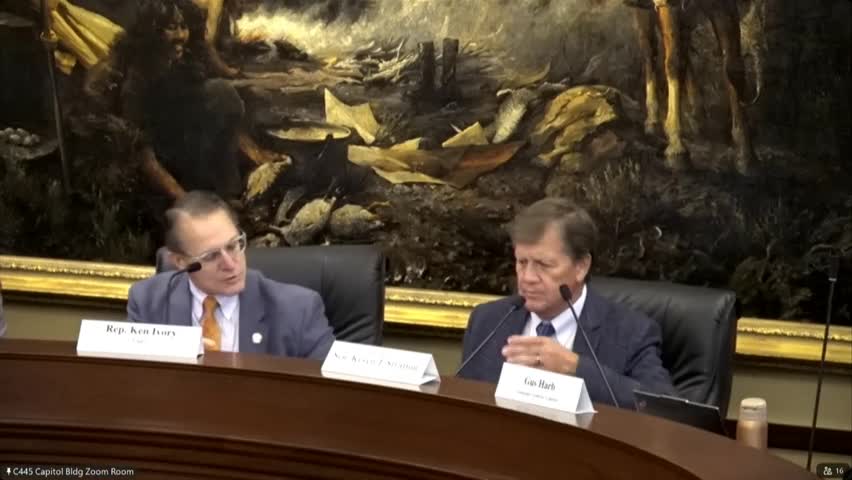
Summary
The Utah Federalism Commission heard an updated study of a 1957 federal report on jurisdiction, legal analysis of case law that commissioners said supports state authority over lands within state borders, and reactions from federal and state officials about practical implications including roads, grazing and potential transfers.
The Utah Federalism Commission on Thursday reviewed an updated version of the 1957 ‘‘Eisenhower’’ interdepartmental study of federal areas within states and heard legal and policy testimony arguing that state jurisdiction generally prevails across federally-managed lands unless Congress or federal law specifically ousts it.
Attorney John Howard, presenting the update, told commissioners the committee’s core finding: “state sovereignty and jurisdiction extends to all land within the borders of the several states unless federal legislation consistent with enumerated constitutional powers or constitutional mandate placed state law in conflict with federal authority on federally controlled lands.” The report and presentation traced legal changes since 1957 and cited Supreme Court decisions the presenter said had shifted jurisprudence back toward stronger state authority.
Why it matters: Utah officials said the findings could affect land use, taxation, law enforcement, road access and other daily-government functions on public lands that federal agencies manage. Commission members and state officials said the report provides a starting point for defining where state regulatory authority applies and where federal primacy remains, and they asked for more time to digest the legal analysis and map practical consequences.
Howard, an attorney with J.W. Howard Attorneys in San Diego, reviewed the original 1957 study, its conclusion that states generally retained plenary jurisdiction over most lands inside state borders, and legal developments since then. He walked commissioners through cases the team used to update the analysis — citing Bonelli, Oregon v. Corvallis Co., California v. United States, United States v. New Mexico, Granite Rock (California Coastal Commission v. Granite Rock Co.) and U.S. v. Morrison — and said recent opinions and footnotes in cases including Loper Bright reinforced the view that states retain primary regulatory authority unless Congress has acted to preempt state law.
Commissioners and state officials pressed for practical detail. Reg Johnson, director of Utah’s Public Lands Policy Coordinating Office (PLIPCO), told the commission the update is “very significant” to on-the-ground management and cited examples: “Road closures. We’ve seen road closures in the state of Utah. Over 2,000 miles of roads have been closed,” he said, and he listed recurring state concerns about travel-management planning, areas of critical environmental concern (ACEC) designations, and coordination on wildlife and resource-management plans.
Utah’s solicitor general, Purser, described the state’s recent Supreme Court filing seeking clarity about the federal government’s authority to retain so-called ‘‘public lands’’ and said the court’s decision not to take the case left open options to refile in federal court. Purser said the suit focused narrowly on the question “what is The United States’ authority to indefinitely retain what we call public lands,” and that the state would continue exploring legal avenues.
U.S. Rep. Kennedy, who joined the meeting, said he supports returning more local control where appropriate and cited the Moab UMTRA cleanup as a model where the federal government performed remediation with eventual transfer plans. “We should make sure that the, the lands are in control of the locals,” he said, describing federal-state cooperation on specific parcels as the kind of work members of the delegation support.
Commission members urged more work to translate legal principles into practical rules and asked staff to identify specific domains (roads, law enforcement, grazing permits, taxation, emergency response, and monuments/landscape designations) where shifting the governing assumption could change routine operations. Several commissioners volunteered to serve on subgroups that will scope the practical impacts and consult with federal counterparts, county officials, and tribal governments.
The commission emphasized that the inquiry focuses on governance and regulatory jurisdiction, not ownership. Multiple speakers — including Howard and the solicitor general — said the study and the state’s work are meant to clarify who governs these lands, not to claim tribal, park or congressionally designated lands.
Next steps: commissioners asked staff and legal counsel to detail the report’s implications for statute, rulemaking, and administrative agreements and to return with proposals for further study on road and access management, RS 2477 rights-of-way, travel-management plans, and the interplay of state resource plans with federal agency decisions.
Ending: Commissioners said they want more time to review Howard’s written report and invited additional briefings from federal agency representatives and members of Utah’s congressional delegation as the commission defines follow-up tasks.