Get Full Government Meeting Transcripts, Videos, & Alerts Forever!
Get email alerts on the Alternative Dispute Resolution topic
No spam. Unsubscribe anytime.
Committee opens bill file to extend alternative dispute resolution statute after court briefing
Summary
The committee voted to open a bill file to extend the Alternative Dispute Resolution Act after Administrator and program director testimony describing long‑running court ADR programs, child welfare mediation volume and a statewide mediator roster.
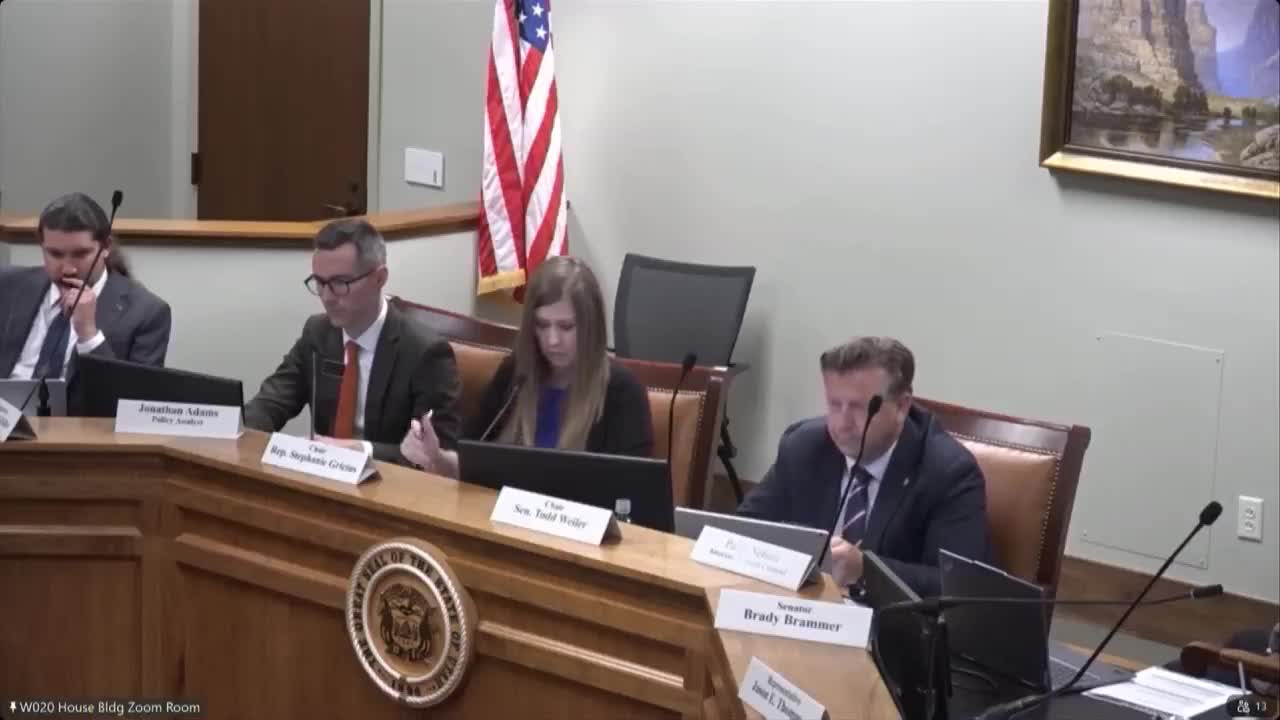
The committee voted to open a bill file that would extend the Alternative Dispute Resolution Act after a briefing from court officials and a discussion of the statute’s role and performance.
Michael Drexel, assistant state court administrator, and Nini Rich, director of dispute resolution for the Utah courts, described ADR programs established under the act and urged continued statutory authority. Drexel said the act has supported “30 years” of dispute resolution work that helps parties resolve civil disputes outside of court and conserves judicial resources.
Rich described the courts’ child welfare mediation program and the statewide roster of neutrals. “Our largest program is the child welfare mediation program. We receive about 1,400 referrals each year,” Rich said, and added that about 75% of those cases are pre‑adjudication, giving the court an early opportunity to involve parties in problem‑solving. Rich said the court roster includes about 160 mediators and 10 arbitrators and that roster members provide pro bono service; the roster reported about 570 pro bono mediations in the most recent year.
Why it matters: ADR is used across civil case types to reduce litigation time and cost. Supporters told the committee the statutory framework and court rulemaking have produced durable programs with judicial oversight, roster standards and community access to pro bono services.
Committee action and next steps
Senator Wyler moved to open a committee bill file to extend the ADR act for ten years. The motion passed unanimously. The committee did not adopt statutory language at the hearing but instructed staff to draft an extension and provide a fiscal and policy analysis.
Discussion highlights
- Supporters emphasized ADR’s efficiency and higher reported party satisfaction compared with trials. Drexel said ADR “reduces attorney and court costs” by avoiding protracted litigation.
- Child welfare program specifics: Rich noted statutory timelines for child‑welfare mediations require in‑house ADR staff mediators to meet scheduling needs; approximately 75% of referrals occur pre‑adjudication.
- Credentials and quality controls: The courts maintain a roster with training, experience, background checks and annual requalification requirements; divorce mediators receive additional domestic‑violence related training.
Ending note: The committee’s motion to open a bill file will prompt staff to prepare draft language to either extend the sunset date or remove the act from the sunset schedule; members asked for a ten‑year extension as a practical compromise to allow future legislatures to review ADR’s operation.