Get Full Government Meeting Transcripts, Videos, & Alerts Forever!
Get email alerts on the Public Assistance Fraud topic
No spam. Unsubscribe anytime.
State prosecutors describe restitution-focused approach to public assistance fraud
Summary
An assistant attorney general told the Legislature the state prosecutes large public-assistance fraud cases to recover taxpayer funds and generally uses probation and restitution rather than prison for most defendants.
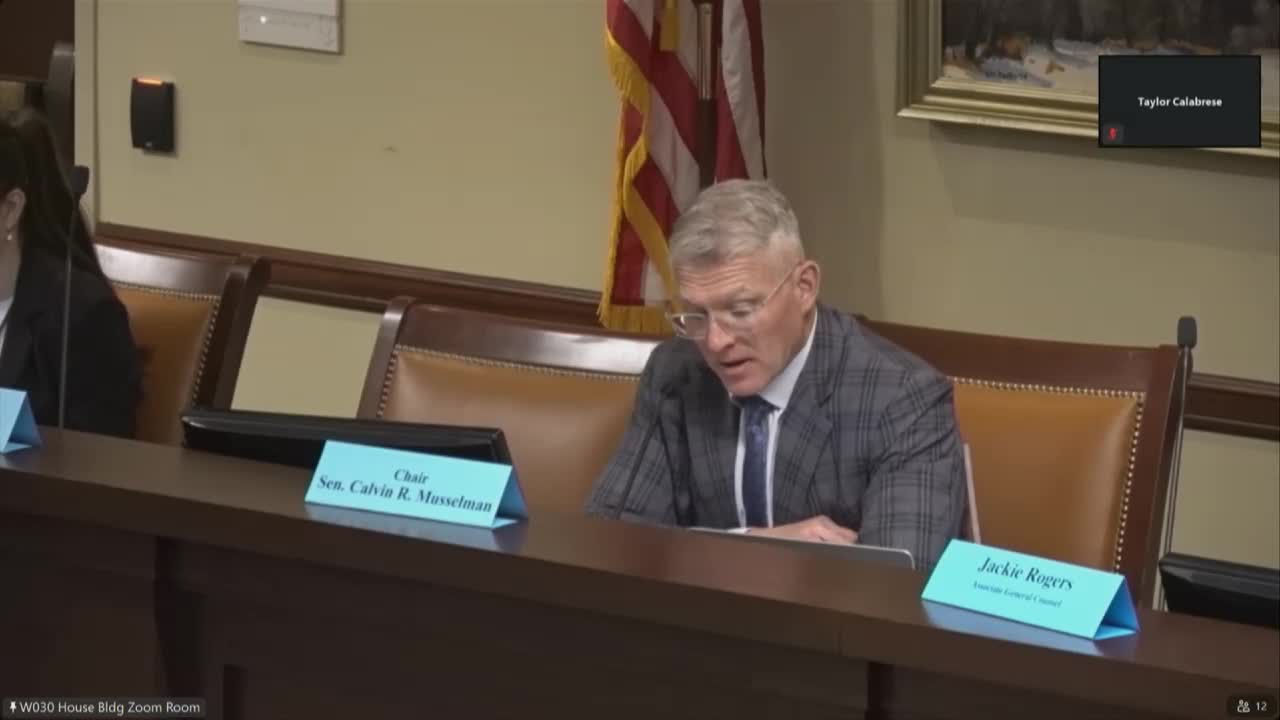
Assistant Attorney General Wes Stapley told the Law Enforcement and Criminal Justice Committee on June 26 that prosecutors prioritize restitution and avoiding jail time for most public assistance fraud cases while pursuing felony prosecutions when overpayments exceed statutory thresholds.
Stapley, who prosecutes public-assistance fraud for the Office of the Attorney General, said the Department of Workforce Services (DWS) investigates suspected fraud in programs that include TANF, SNAP and the Child Care and Development Fund, and that DWS refers cases to his office when alleged overpayments exceed a felony-2 threshold.
Stapley said: “If it is less than $5,000, it is only dealt with administratively at the Department of Workforce Services.” He added that where the overpayment is larger “that’s going to be an excess of $5,000” and “the typical case that I see is anywhere from 5,000 to a $100,000.”
Stapley described the common elements investigators look for — undisclosed bank accounts, undisclosed household members with income and other misrepresentations on applications — and said DWS keeps extensive written records on contacts with clients. He told the committee prosecutors routinely receive “between 3 and 5,000 pages, sometimes 9 to 10,000 pages of records” in a case.
He said most cases screened are first-time offenses, typically involving people with no felony history. “One of the things the Department of Workforce Services has made it clear that the primary thing they’re looking at is, a, getting restitution back for the state,” Stapley said, adding DWS also seeks to push people toward employment by disqualifying them from some benefits for defined periods: “For a first time offense, it’s 12 months. For a second, it’s 24 months. And on a third offense, that is a lifetime disqualification from the associated program.”
When he can, Stapley said the attorney general’s office negotiates plea-in-abeyance offers that require full restitution and supervised probation; if the defendant complies the charge is dismissed after the supervision period. He said the office collected “something like half a million a year” in restitution from these prosecutions and that, in more serious or flagrant cases, different prosecutorial offers are made.
Representative Dan McPherson asked about recidivism; Stapley replied that repeat offenses are “incredibly low,” that most screened cases are first offenses and that second offenses often occur many years later. Committee members also asked whether fines or interest are added to restitution; Stapley said courts can impose routine fines and fees but the collected restitution is routed directly to DWS under a recent state code change so DWS is made whole first and additional civil collection fees are rare.
The committee did not take formal action on the presentation. Stapley answered questions from members and the chairs moved on to the next agenda item.