
Hyde Park board adopts HMH 'Into Reading' K–6 curriculum after yearlong review
Get AI-powered insights, summaries, and transcripts
Subscribe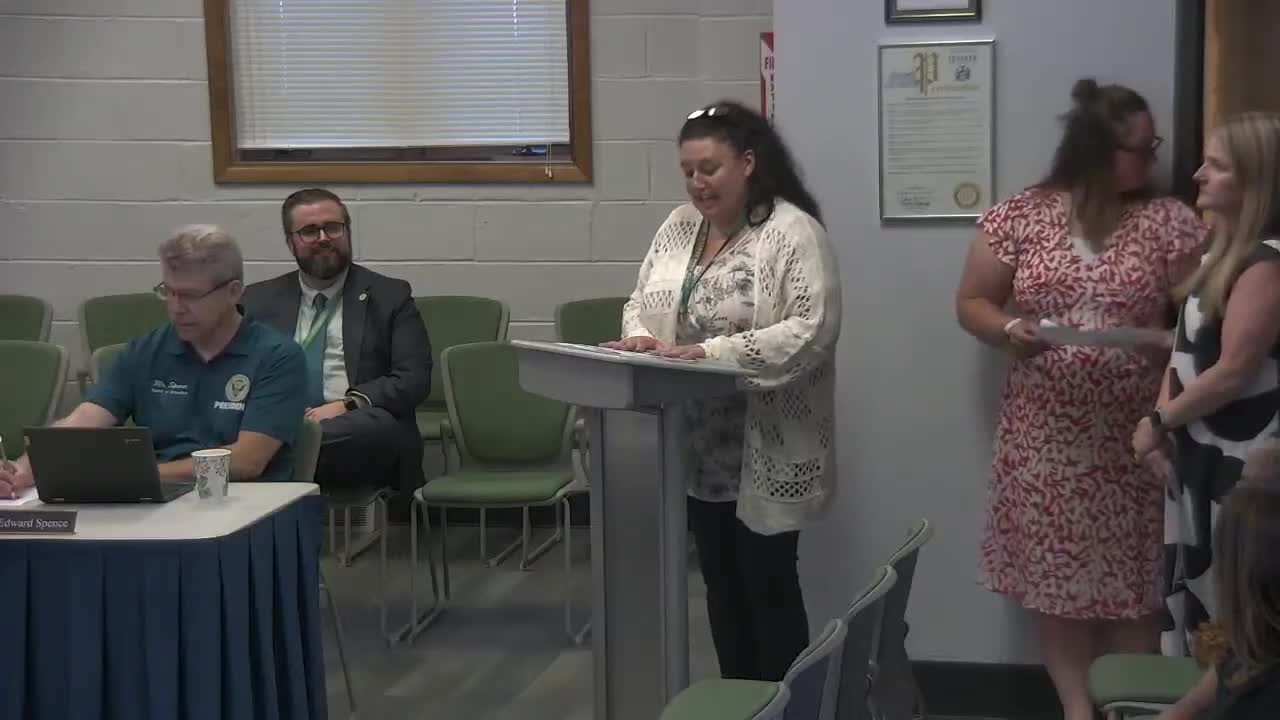
Summary
The Hyde Park Central School District board voted June 12 to adopt Houghton Mifflin Harcourt’s Into Reading K–6 program after a literacy innovation team, teacher pilots and a teacher vote favored HMH over competitors; the district plans phased implementation, professional learning and initial funding from district reserves.
Hyde Park Central School District board members voted June 12 to adopt Houghton Mifflin Harcourt’s Into Reading K–6 (version 3) program after a district literacy team reviewed vendors, conducted classroom pilots and surveyed teachers.
District leaders said the adoption follows a year of work by a literacy innovation team that used state guidance and a teacher vote to narrow choices. The board approved the adoption on a voice vote during the June 12 meeting.
The adoption matters because New York state recently strengthened reading requirements and districts must show alignment with the science of reading. Kim Bridal, director of math and science for the district, told the board the team used two New York State Education Department documents—PreK–3 instructional best practices and the New York State Council of the Reading report on the science of reading—to build its rubric and decision process.
Teachers piloted the two finalists and provided feedback. Bridget de Primo, one of the district’s literacy coaches, said teachers’ ballot results were lopsided: “It was 91.2 to 8.8,” she said, reporting the 102-teacher ballot in favor of HMH. The team cited HMH features that influenced the choice: an online data platform tied to NWEA growth measures, a gradual-release lesson design, explicit vocabulary instruction, decodable texts, and built-in supports for multilingual learners and special education.
Classroom teachers who piloted the program described positive student engagement and concrete instructional fit with existing phonics work. “One of the things I’m most excited about with HMH was that I am a huge supporter of our UFLY phonics program,” said Kim Bridal. She said Into Reading “fits beautifully” with the district’s UFLY phonics block and that pilot students were “very engaged.”
District staff outlined a staged implementation plan: a pre-launch in spring/summer 2025 to build teacher knowledge, optional curriculum writing and a proposed two- to three-day summer literacy institute; year-one actions include initial professional learning, distribution of teacher manuals and baseline assessment set-up. The district said it is negotiating a five-year implementation plan with the vendor and intends to follow board policy for disposal or resale of legacy materials.
Funding questions were raised at the meeting. Presenters said the year-one purchase would be financed from available district funds (identified as DHIC funds in the presentation) and that consumable items (student take-home books, “my books”) would be an ongoing annual cost. One board member noted the proposal’s headline cost was about $500,000; staff clarified the initial, one-time component includes print materials and a six-year digital license and that recurring annual costs thereafter would be materially lower. The board heard the district has asked the vendor for year-over-year cost estimates to present before final purchase.
Board members and presenters said they will set up an annual literacy committee, consistent with state law, and maintain a feedback loop from teachers and coaches. District coaches and administrators will monitor implementation fidelity and data annually and report back to the board.
Next steps: the board approved the second consideration and adoption of Into Reading K–6; staff said they will finalize contracts and sequence teacher professional learning over the summer and into September conference days.
Less-critical details: the literacy team also visited model programs in other districts, completed micro-credentials in the science of reading, and plans to offer family- and community-facing resources tied to the new program.