Get Full Government Meeting Transcripts, Videos, & Alerts Forever!
Get email alerts on the Active Transportation topic
No spam. Unsubscribe anytime.
Princeton approves pilot road diet, buffered bike lanes on North Harrison Street
Summary
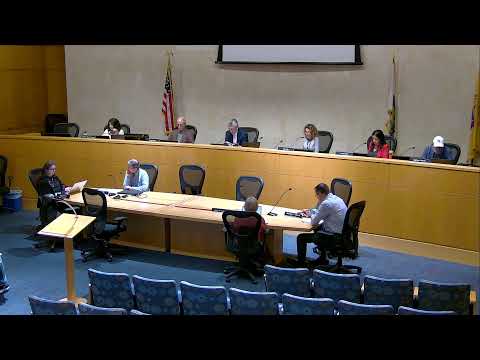
Princeton’s mayor and council voted June 9 to install an interim road diet on North Harrison Street, reducing the roadway from four travel lanes to two and adding buffered bicycle lanes and other striping treatments as a pilot.
Princeton’s mayor and council voted June 9 to install an interim road diet on North Harrison Street, reducing the roadway from four travel lanes to two and adding buffered bicycle lanes and other striping treatments as a pilot.
Council members and municipal staff said the interim work will include a five-foot painted buffer, bicycle boxes at signalized intersections, striped median extensions to create pedestrian refuges, diagonal buffer markings at driveways and reflective delineators approaching right-turn areas. The pilot will remain in place while the town evaluates data and until a schedule is set for permanent curb and sidewalk improvements.
Council and staff justified the pilot by citing the Harrison Street corridor study completed by Michael Baker International, which recommends repurposing excess pavement to improve pedestrian and bicycle safety. Jim (municipal staff) told the council, “we are proposing that we reduce it to 2 travel lanes and install the interim bicycle facility,” and said the town will conduct before-and-after speed and volume counts and run a user survey to measure lane use and community response. He also said the project is expected to exceed the local bid threshold and will be put out to competitive bid.
Supporters and staff described how the pilot will connect to existing bicycle facilities: Franklin Avenue and parts of Terhune Road and Valley Road already form bicycle boulevards or lanes that would link with the proposed buffered lanes. The plan includes skip-line transitions at the southern terminus near Clearview Avenue, sharrows in shared-lane sections, and green/white bicycle crossing markings at major intersections.
Residents who spoke during public comment urged caution about neighborhood spillover. Dale Mead (48 Oakland Street) asked the council to run the pilot under realistic traffic conditions that include school and commuter peaks and said, “Don’t run this pilot program in the summer when the traffic is light,” because diversion to parallel streets such as Ewing Street can increase neighborhood congestion. Donna Polenza (354 Ewing Street) told the council she is “very concerned about the amount of traffic on Ewing, resulting from this,” and asked that the town monitor surrounding streets as part of the evaluation. Council members said the pilot’s intended evaluation period will include multiple seasons and the opening of new housing at the shopping center, and that staff will collect data while the interim striping is in place.
The council moved to approve the pilot; Councilmember Michelle moved and Councilmember Mia seconded. Approval was by voice vote (“Aye”). The minutes record that permanent curb, raised bike facilities and sidewalks would only be installed after the pilot demonstrates positive results and after funding is identified.
Next steps listed by staff: solicit competitive bids for the striping work; perform baseline and follow-up traffic and speed counts; distribute a public survey; monitor speeds, bicycle counts and neighborhood cut-throughs; and report back to council with findings before any permanent construction is scheduled.