Get Full Government Meeting Transcripts, Videos, & Alerts Forever!
Get email alerts on the Nato Summit 2025 topic
No spam. Unsubscribe anytime.
Senate hearing on NATO summit: experts urge 5% defense-spending target, stronger deterrence and continued U.S. support for Ukraine
Summary
At a Senate Foreign Relations Committee hearing, two foreign-policy experts told senators that Europe must raise defense spending and the United States must remain the security enabler for NATO. Witnesses recommended a 5% defense-spending target, tighter industrial cooperation, and measures to deter Russian hybrid attacks.
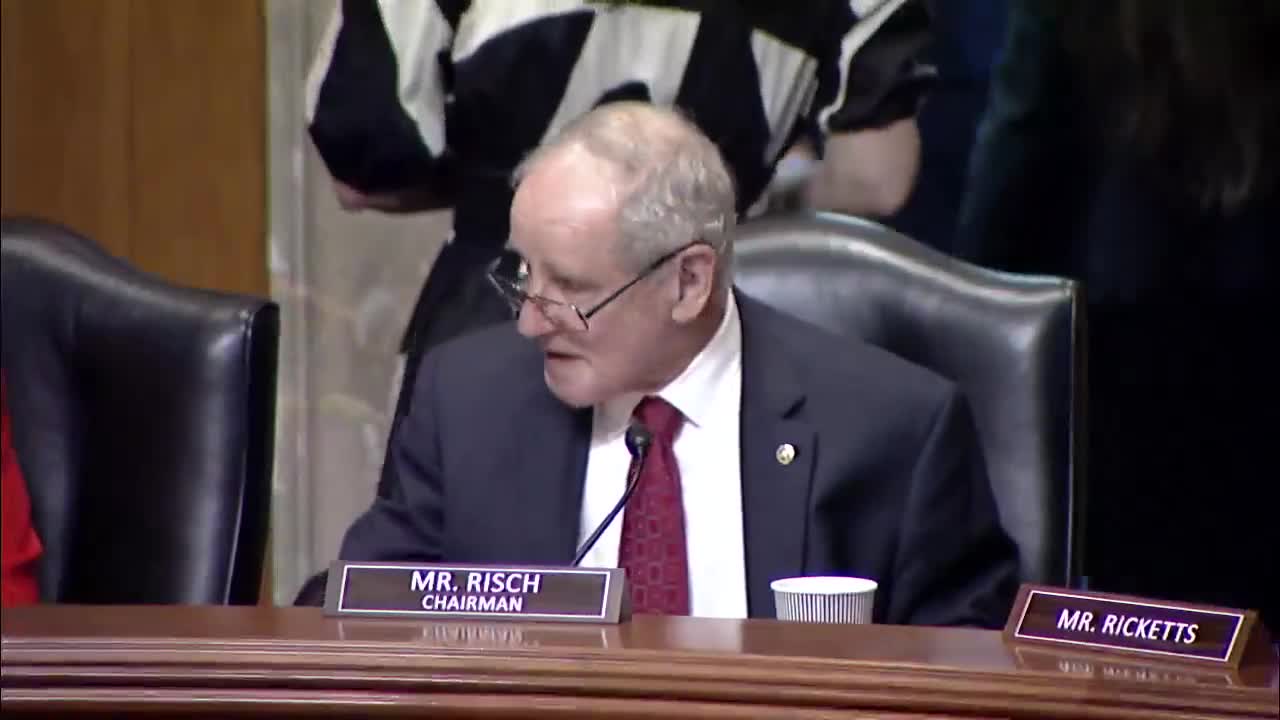
At a policy hearing on the 2025 NATO summit, the Senate Foreign Relations Committee heard bipartisan warnings about a strengthened Russian threat and calls for a faster, deeper European rearmament backed by continued U.S. leadership.
Peter Rau, director of the Center on Europe and Eurasia at the Hudson Institute, told the committee that Europe remains central to U.S. national interest and must increase defense investment. "Europe remains of vital importance to the United States," Rau said, citing two-way foreign direct investment in 2023 of about $7.5 trillion. He and other witnesses urged NATO leaders to back a new collective defense investment pledge of 5% of GDP, with a recommended split of 3.5% for core military spending and 1.5% for related costs such as cyber and infrastructure.
Alina Polyakova, president and CEO of the Center for European Policy Analysis, echoed that stance and emphasized that European spending must translate into deployable capabilities. "Europe is indeed stepping out but U.S. leadership and commitment in people and resources remain critical for NATO's continued success," Polyakova said. Both witnesses recommended faster procurement, joint development with allies, and steps to accelerate industrial production of key equipment rather than relying on decade-long timelines.
Witnesses and senators flagged several priority areas for the Hague summit and immediate U.S.-European cooperation: collective deterrence measures on NATO's eastern flank, bolstering air and missile defenses for partners such as Ukraine, addressing Beijing's role in supplying dual-use technologies to Moscow, and improving NATO–Indo-Pacific coordination on defense production. Rau suggested creating a NATO finance ministerial so allied finance ministers could set concrete plans for the spending increases; Polyakova said finance ministries typically control the purse strings and would be central to delivering the commitments.
On the threat from Russia, witnesses described a wide spectrum of pressure from conventional rearmament to hybrid and "shadow" warfare, including attacks on undersea cables and other critical infrastructure. Polyakova warned of the "militarization of Russian society" and of the long-term strategic danger if Russia were able to absorb Ukraine’s battle-tested forces and defense-industrial gains. Rau testified that Russia’s partnership with China, Iran and North Korea has materially aided Moscow’s war effort and made diplomatic containment harder.
Senators pressed witnesses on practical steps. Senator Jeanne Shaheen asked about the implications of Russian societal militarization and the risk of absorbing Ukraine; Polyakova said that stronger, united messaging at the summit and continued U.S. support for Ukraine were essential. Senator Ricketts, Senator Van Hollen and others asked how lessons from Ukraine — particularly rapid iteration on counter-UAS, electronic warfare and modular procurement — can be shared faster across NATO and with Indo-Pacific partners.
Witnesses recommended concrete measures members can pursue: authorize third-party transfers so European allies can buy U.S. systems and re-transfer them to Ukraine, simplify foreign military sales and export controls to speed co-development, and expand exercises, logistics and communications for cold-weather and Arctic operations. Rau also highlighted the vulnerability of undersea cables in the Baltic and urged stronger countermeasures and legal enforcement when suspicious repair vessels operate in allied waters.
The hearing concluded with senators and witnesses urging that the Hague summit produce a clear message of allied unity, concrete financing and procurement steps, and tangible measures to harden the alliance against hybrid and conventional Russian threats. Committee leaders said they would follow the summit’s outcomes in subsequent oversight and legislative activity.