Nominee to Lead CDC Pledges to 'Restore Trust,' Prioritize Data Modernization and Rapid Decision‑Making
Get AI-powered insights, summaries, and transcripts
SubscribeSummary
Dr. Menares, President Trump's nominee for director of the Centers for Disease Control and Prevention, told the Senate Health, Education, Labor and Pensions Committee she would focus the agency on restoring public trust, modernizing data systems and improving outbreak response if confirmed.
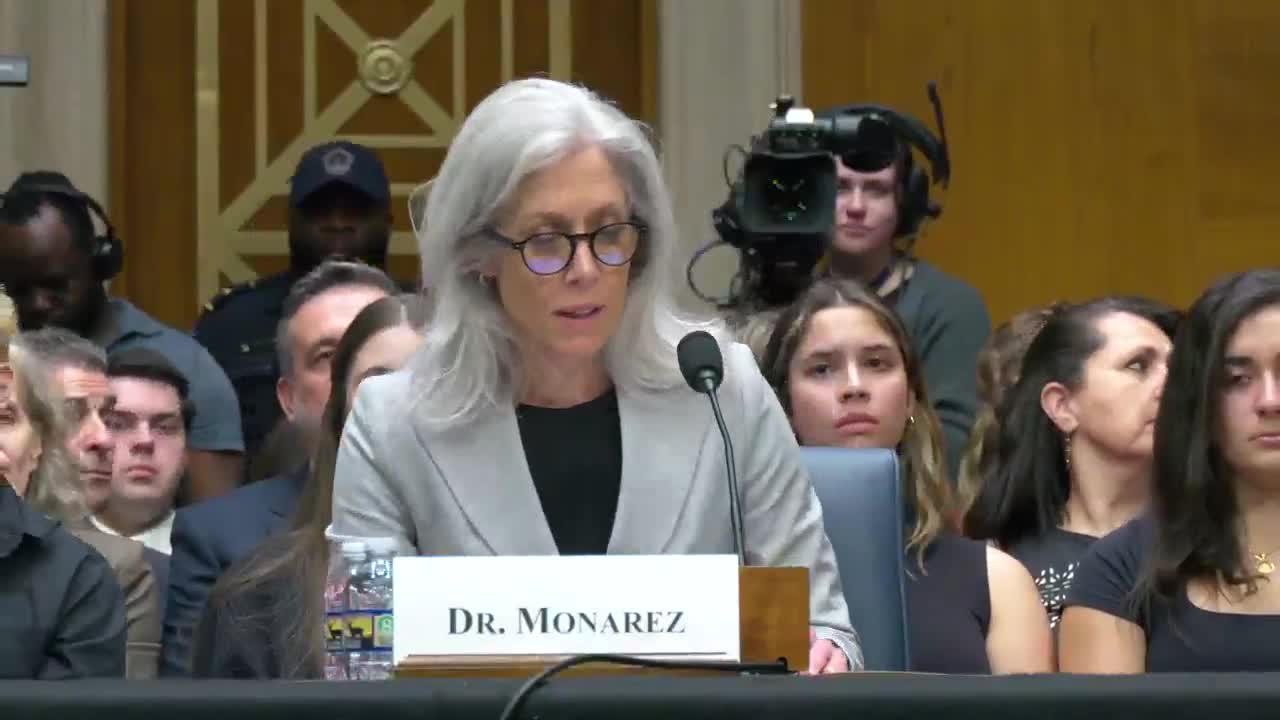
Dr. Menares, President Trump's nominee to lead the Centers for Disease Control and Prevention, told the Senate Health, Education, Labor and Pensions Committee on June 25 that she would prioritize restoring public trust, modernizing CDC data systems and strengthening the agency's ability to detect and respond to infectious threats.
In an opening statement, Dr. Menares said, "Good public health saves lives," and described three top priorities if confirmed: rebuilding credibility through public-facing leadership and transparency; strengthening public health infrastructure and laboratory capabilities; and implementing "evidence‑based rapid decision making" with predefined protocols to avoid confusion in crises.
The nominee recounted her scientific and public‑health background, including a Ph.D. in microbiology and immunology, postdoctoral research and work at agencies that developed medical countermeasures and supported outbreak responses. She told senators she would make data transparency a priority while protecting patient privacy and stressed bringing state‑of‑the‑art technologies, including diagnostics and artificial intelligence, into CDC operations.
Senator Bill Cassidy, the committee chair, opened the hearing and thanked Dr. Menares for appearing. Senators across the aisle pressed her on how she would handle public messaging, program continuity and staffing while the agency changes direction.
Dr. Menares repeatedly framed her approach as operational and evidence driven: she described restoring CDC credibility by making leadership more "public facing and accountable," improving near‑real‑time situational awareness and ensuring recommendations are “backed by publicly available gold standard science.” She said she would work with state and local public health officials to modernize infrastructure and support a precision preventive health model.
The nominee declined to second‑guess specific management decisions made prior to her arrival but said, if confirmed, she would examine workforce and programmatic issues raised by senators and follow up on items such as the status of grant awards and staffing for particular CDC programs.
Committee members signaled broad interest in the nominee's technology agenda; Dr. Menares described using AI both to support operations (workforce optimization, IT and fiscal tracking) and to enhance public‑health functions such as surveillance and diagnostics. She said any AI deployment would require problem definition, disciplined evaluation and ongoing monitoring to avoid unintended harms.
The hearing continued with senators asking detailed questions about programs, ethics vetting for advisory committees, staffing changes and the agency's role in vaccine guidance. Dr. Menares answered that she would be an "active listener" at advisory committee meetings and pledged to follow up with senators on specific programmatic concerns.
Dr. Menares concluded by reiterating that CDC must be prepared for known biological threats and those not yet seen, and that she would lead "with integrity, transparency, and purpose" if confirmed.