Nominee for critical technologies vows rapid transition of AI, hypersonics and microelectronics
June 26, 2025 | Armed Services: Senate Committee, Standing Committees - House & Senate, Congressional Hearings Compilation
This article was created by AI summarizing key points discussed. AI makes mistakes, so for full details and context, please refer to the video of the full meeting. Please report any errors so we can fix them. Report an error »
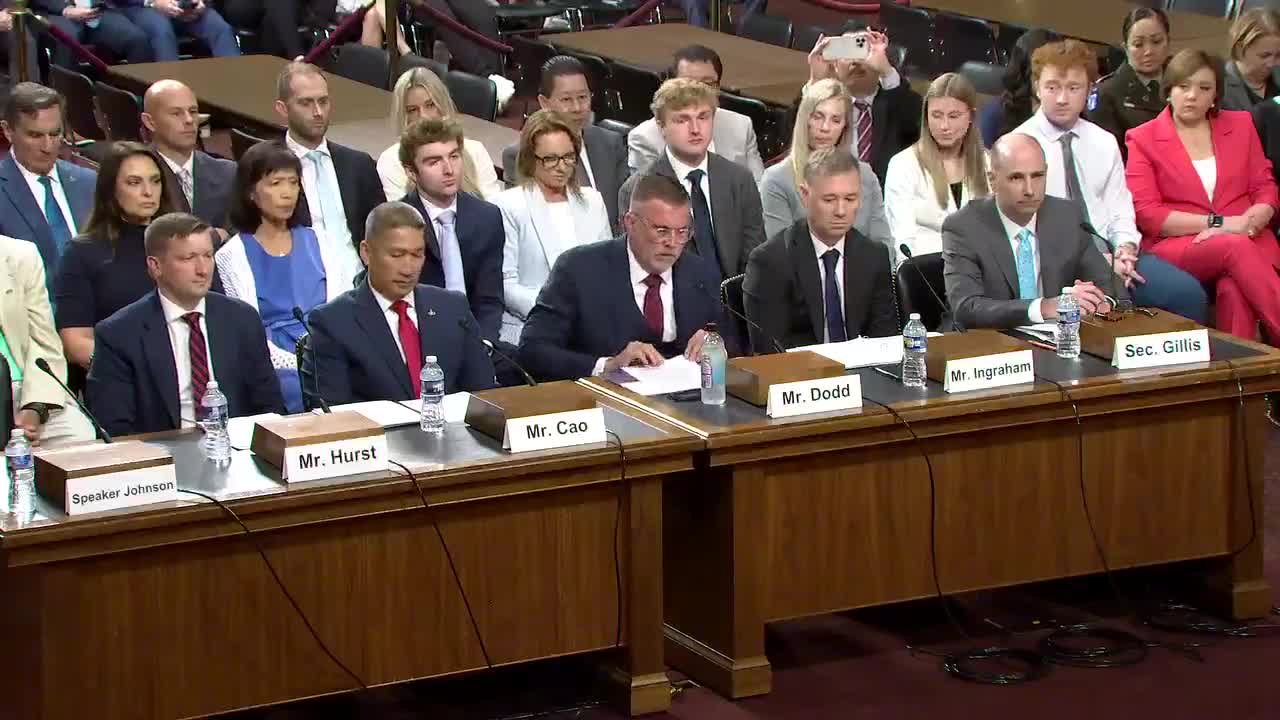
Michael F. Dodd, the administration's nominee for Assistant Secretary of Defense for Critical Technologies, told the Senate Armed Services Committee he would make rapid transition and fielding of critical technologies his top priority if confirmed.
In opening remarks Dodd said the United States faces an unprecedented pace of technological modernization by competitors and that his office would pursue three strategic priorities: support defense acquisition reform to deliver capabilities at speed and scale; strengthen the department's adoption of critical technologies including artificial intelligence, microelectronics and quantum science; and plan for transition at the outset of every technology project so that every effort is tied to a military service or program gap.
Dodd told senators he would use existing authorities, including other-transaction authorities and innovation on-ramps, to buy and field systems faster. He said the office would work with services and combatant commands to create technology roadmaps and tie research to budget cycles. "We will ensure the critical technologies our war fighters need are in their hands as quickly as humanly possible," Dodd said.
Senators pressed Dodd on hypersonics and directed energy. Dodd described existing efforts such as the Joint Hypersonics Transition Office and the Mach TB rapid testing and evaluation concept, which he said aim to accelerate testing and reduce costs. He also described directed energy and high‑power microwaves as maturing capabilities with prototyped platforms now under test. On microelectronics, Dodd highlighted trusted microelectronics efforts and warned of counterfeit or malicious components in supply chains; he said the portfolio would support secure microelectronics and leverage university and industry partnerships.
Dodd and committee members discussed barriers to transition, which Dodd and senators traced largely to acquisition processes and to the "valley of death" between research and procurement. He proposed aligning transition offices with service customers and planning transition steps at project inception. Dodd committed to work with the committee on staffing and hiring authorities to bring technical experts into the department.
No formal votes were taken in the critical‑technologies portion of the hearing; senators said they would send follow-up questions for the record and expected continued oversight and coordination between the committee and the department.
In opening remarks Dodd said the United States faces an unprecedented pace of technological modernization by competitors and that his office would pursue three strategic priorities: support defense acquisition reform to deliver capabilities at speed and scale; strengthen the department's adoption of critical technologies including artificial intelligence, microelectronics and quantum science; and plan for transition at the outset of every technology project so that every effort is tied to a military service or program gap.
Dodd told senators he would use existing authorities, including other-transaction authorities and innovation on-ramps, to buy and field systems faster. He said the office would work with services and combatant commands to create technology roadmaps and tie research to budget cycles. "We will ensure the critical technologies our war fighters need are in their hands as quickly as humanly possible," Dodd said.
Senators pressed Dodd on hypersonics and directed energy. Dodd described existing efforts such as the Joint Hypersonics Transition Office and the Mach TB rapid testing and evaluation concept, which he said aim to accelerate testing and reduce costs. He also described directed energy and high‑power microwaves as maturing capabilities with prototyped platforms now under test. On microelectronics, Dodd highlighted trusted microelectronics efforts and warned of counterfeit or malicious components in supply chains; he said the portfolio would support secure microelectronics and leverage university and industry partnerships.
Dodd and committee members discussed barriers to transition, which Dodd and senators traced largely to acquisition processes and to the "valley of death" between research and procurement. He proposed aligning transition offices with service customers and planning transition steps at project inception. Dodd committed to work with the committee on staffing and hiring authorities to bring technical experts into the department.
No formal votes were taken in the critical‑technologies portion of the hearing; senators said they would send follow-up questions for the record and expected continued oversight and coordination between the committee and the department.
Don't Miss a Word: See the Full Meeting!
Go beyond summaries. Unlock every video, transcript, and key insight with a Founder Membership.
✓
Get instant access to full meeting videos
✓
Search and clip any phrase from complete transcripts
✓
Receive AI-powered summaries & custom alerts
✓
Enjoy lifetime, unrestricted access to government data
30-day money-back guarantee
