
Senate Armed Services Committee hears five civilian defense nominations; motion advances 7,861 military nominations
Get AI-powered insights, summaries, and transcripts
Subscribe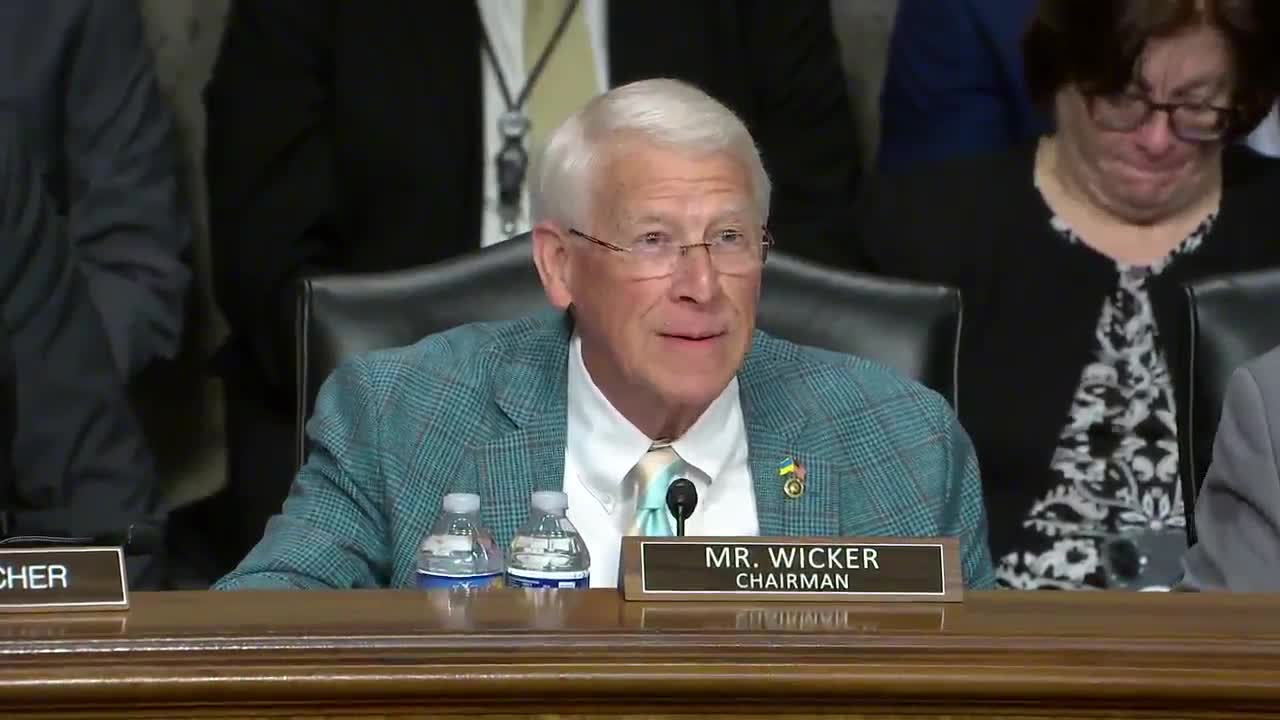
Summary
The Senate Armed Services Committee convened a confirmation hearing for five senior Department of Defense civilian nominees and advanced a package of 7,861 pending military nominations by voice vote.
The Senate Armed Services Committee convened a confirmation hearing for five senior Department of Defense civilian nominees and, during the session, advanced a package of 7,861 pending military nominations by voice vote.
The committee considered Hung Kao for Under Secretary of the Navy; Michael F. Dodd for Assistant Secretary of Defense for Critical Technologies; Jules J. Hurst III for Assistant Secretary of the Army for Manpower and Reserve Affairs; Brent G. Ingram for Assistant Secretary of the Army for Acquisition, Logistics, and Technology; and William J. Gillis for Assistant Secretary of the Army for Installations, Energy, and Environment. Committee members heard 5‑minute opening statements from each nominee and then questioned them on priorities such as shipbuilding and maintenance, acquisition reform, artificial intelligence and hypersonics, talent management for the Army, and installations funding and energy resilience.
Why it matters: These nominees would occupy civilian leadership positions that shape personnel policy, procurement and acquisition decisions, weapons and technology transition, and the management of Army facilities. Committee scrutiny focused on whether nominees would accelerate the fielding of critical technologies, restore fleet availability, protect spectrum and microelectronics access, and sustain installations and housing for service members and families.
During opening remarks the committee chair introduced the slate of nominees and the hearing proceeded to standard committee questioning. A voice vote to proceed on a list of 7,861 pending military nominations passed after a motion and second; the committee recorded that "the ayes have it" and returned to the public hearing portion for nominee testimony and questioning.
Nominees emphasized common themes. Michael Dodd said his office, if confirmed, would prioritize accelerating technology transition so "the critical technologies our war fighters need are in their hands as quickly as humanly possible." Jules J. Hurst III said the Army must become "an employer of choice" and pledged to improve talent management and family services if confirmed. Hung Kao described acquisition and maintenance shortfalls in the Navy and pledged to address shipyard backlogs and sustainment. Brent Ingram and William Gillis emphasized acquisition speed, industrial base revival, and installations funding priorities respectively.
Committee members asked nominees to commit to common statutory and congressional priorities. Several senators pressed nominees about the fiscal tradeoffs involved in diverging budget demands — for example, a referenced Defense Department reprogramming that moved approximately $1.1 billion from facilities sustainment accounts to Southwest border operations and the FY25 NDAA provision requiring the department to budget toward a commercial industry standard 4% plant replacement value by 2030.
The hearing record contains substantive exchanges on several consequential topics (see separate articles): shipbuilding and acquisition reform; critical-technology transition including AI, hypersonics and microelectronics; Army personnel policy and talent management; and installations funding, housing and energy resilience, including questions about UAS incursions and testing authorities.
Votes at a glance: The committee voted by voice to proceed with consideration of "7,861 pending military nominations." The motion was made and seconded; the record shows a voice vote and the chair announced the motion carried by ayes, but no roll-call tallies were recorded in the hearing transcript.
The committee took no final confirmation votes during the hearing; further committee action and any required roll-call votes would appear in subsequent committee records.