
Lawmakers press services on installation projects, Guam recovery, energy resilience and program escalations
Get AI-powered insights, summaries, and transcripts
Subscribe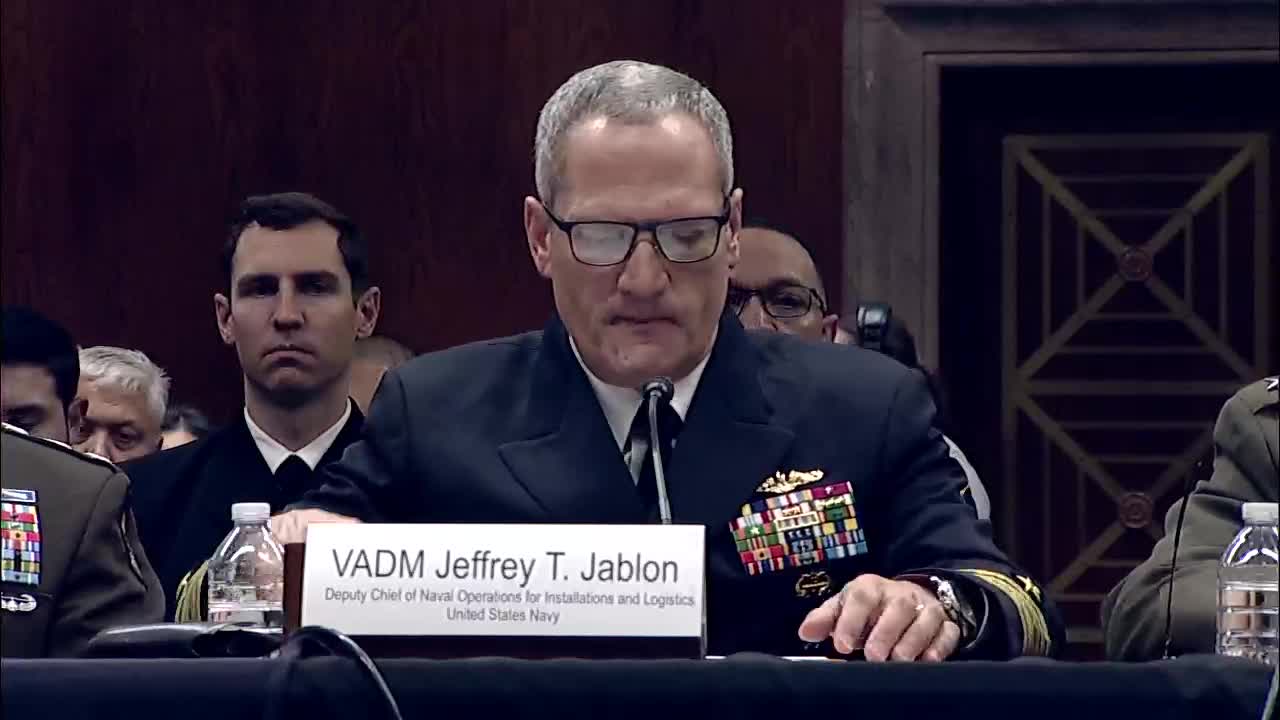
Summary
Senators secured commitments from service officials to work on base modernization and disaster-recovery projects and pressed for details about program cost escalations and energy resilience efforts, including a microreactor pilot and a $105 million power-driven escalation for the JITIC project.
Senators used the hearing to secure commitments on multiple installation and recovery priorities and pressed witnesses for details on energy resilience and cost escalations for key programs.
Georgia-focused requests: Several senators asked service witnesses to work with them on local priorities. Senator Assoff sought commitments to support Moody Air Force Base's transition to the F-35 and Robins Air Logistics Complex upgrades; Admiral Jablon and Lieutenant General David Wilson committed to work with the senators and the subcommittee to plan and accelerate relevant projects. Senator Isakson's questions about Marine Corps Logistics Base Albany prompted commitments to move planning toward construction for a consolidated communications facility.
Guam recovery: Admiral Jablon described the fiscal year 2025 disaster supplemental Congress provided — $2,200,000,000 — and said it supports typhoon recovery work on Guam, including repairs to Apra Harbor breakwater and hardening electrical feeders. He said the Navy and Air Force estimate the full backlog from Typhoon Mawar at roughly $40,000,000,000 and that the services are prioritizing critical power and dormitory repairs while seeking further funding.
Program escalations and energy resilience: The Air Force explained a cost increase for the Joint Integrated Test and Training Center (JITIC), saying power requirements drove an additional substation and a roughly $105,000,000 escalation that pushed FY26 authorization from previously reported levels to $152,000,000. On strategic modernization, the Air Force described continuing work on utility corridors and planning for Sentinel support facilities and B-21 support at multiple bases; service witnesses said some utility and design work can proceed even if program milestones are revised.
Alaska and microreactor efforts: Senators questioned energy vulnerability in Alaska and the potential for dual-use infrastructure. Witnesses pointed to a 5-megawatt microreactor project as an example of installation-level energy resilience and discussed interest in islanding mission-critical systems from the commercial grid to improve survivability.
Why it matters: Local base infrastructure and disaster recovery funding directly affect readiness and community economies. Energy resiliency projects and program cost escalations can materially change project timelines and overall MILCON requirements.
Provenance: Project-specific commitments and program escalations appear in Q&A exchanges and service opening statements (e.g., JITIC escalation discussion at 01:07:36, Guam recovery remarks at 00:36:51, and Alaska energy discussion around 01:12:16).