
Senate subcommittee raises alarm over rising MILCON costs, seeks efficiency review results
Get AI-powered insights, summaries, and transcripts
Subscribe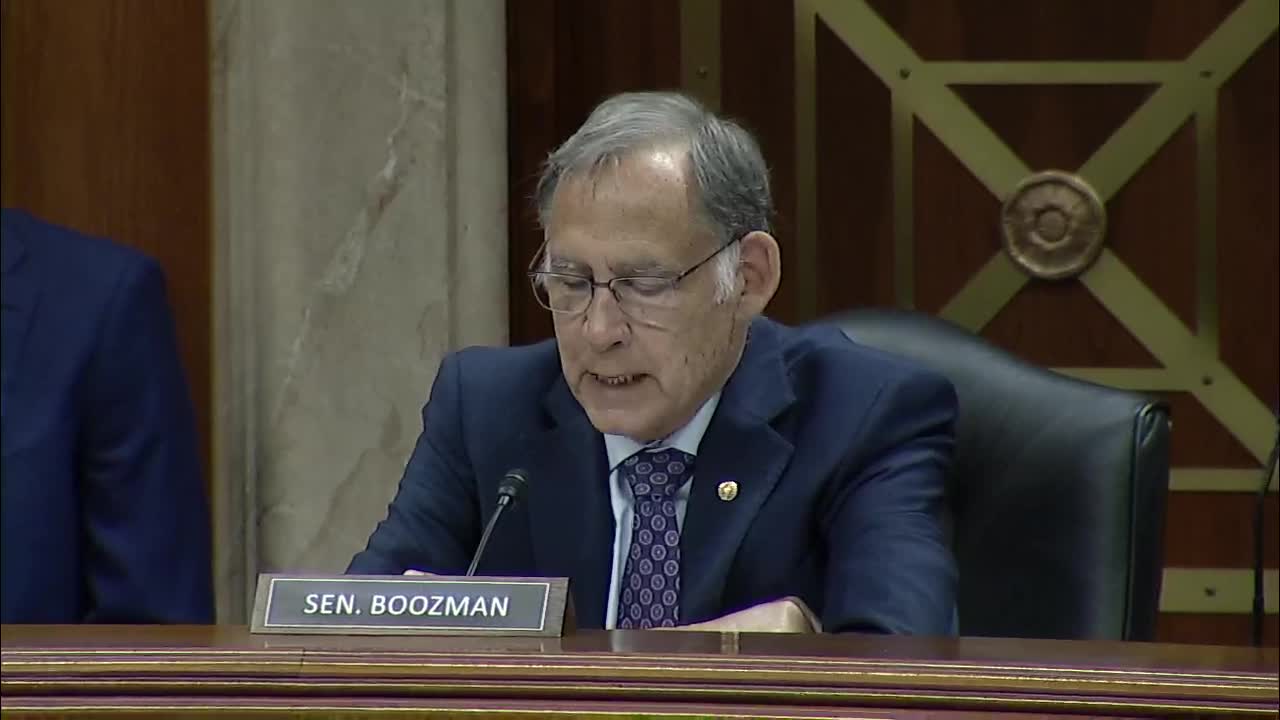
Summary
Senate subcommittee members pressed Pentagon witnesses about an $18.9 billion fiscal 2026 military construction (MILCON) request, citing a $1.4 billion increase over FY25 and roughly $6 billion in projects requiring incremental funding. Lawmakers pressed for early findings from a department review aimed at reducing cost and schedule drivers.
Senate Appropriations Subcommittee members pressed Department of Defense witnesses on escalating military construction costs and the department's effort to identify near-term efficiencies in the MILCON process.
Chairman Bozeman opened the hearing saying the fiscal 2026 MILCON request totals $18,900,000,000, an increase of $1,400,000,000 over enacted FY25 levels, and said about $6,000,000,000 of this year's request represents projects so large they will require incremental funding over multiple years. He said the trajectory of rising costs "is not sustainable" and welcomed an ongoing review directed by the deputy secretary of defense to identify reforms.
Assistant Secretary of Defense for Energy, Installations and Environment Dale Marks said the department is examining policies, procedures, and statutes that drive cost and schedule and is coordinating reviews of the MILCON and FSRM portfolios. Marks said the administration supports project labor agreements where ‘‘practicable and cost effective’’ but is assessing cases on a project-by-project basis in light of a recent court injunction reinstating PLA requirements.
Service witnesses outlined early ideas for cost control. Admiral Jeffrey Jablon said the Navy is exploring alternative construction methods, modular construction and block buys for repetitive facilities such as child development centers and barracks. Army and Air Force witnesses said they are prioritizing facility sustainment, restoration and modernization (FSRM) and pursuing public-private partnerships, energy-saving contracts and accelerated design-build approaches to shorten schedules and lower costs.
Committee members pressed whether any early findings from the deputy secretary's review could appear in the FY27 budget. Marks and service witnesses described near-term options under study, including accelerated design-build contracts, bundling similar projects, repair-by-replace approaches that reallocate O&M funds, and use of other transaction authorities for rapid procurement, but they warned many changes require time or coordination with OMB and Congress.
Why it matters: MILCON funds support critical operational infrastructure and quality-of-life facilities for service members; sustained cost growth and schedule delays can degrade readiness and increase pressure on other defense accounts.
Provenance: Transcript remarks introducing the FY26 MILCON request and cost concerns appeared throughout the opening statements and panel Q&A (see transcript spans beginning at 00:15:46 through 00:20:58 and Q&A sections where witnesses described efficiency efforts).