Lifetime Citizen Portal Access — AI Briefings, Alerts & Unlimited Follows
Army leaders defend transformation plan as senators press for details
Loading...
Summary
Secretary of the Army Dan Driscoll and Chief of Staff Gen. Randy George told a Senate appropriations subcommittee that the Army Transformation Initiative will cancel or consolidate legacy programs, reallocate funds to faster, scalable capabilities and reduce headquarters, but senators said they need a detailed analysis of the changes.
WASHINGTON — Secretary of the Army Dan Driscoll and Army Chief of Staff Gen. Randy George told the Senate Appropriations subcommittee that the Army Transformation Initiative is designed to speed modernization, consolidate headquarters and reallocate funding to faster, more scalable capabilities, but senators said the panel needs more detailed analysis to assess the plan.
Driscoll said the initiative will make the Army “lean, agile, and relentlessly focused on empowering its soldiers,” and asked the committee for flexibility to spend funds in ways that keep pace with rapidly evolving technology. Gen. George said ATI emphasizes reducing signatures, shrinking logistical tails and buying modular systems that can be updated quickly.
Why it matters: ATI proposes canceling or reducing multiple programs of record and consolidating staff at commands while redirecting an estimated $48 billion over five years. Senators warned that the committee cannot exercise oversight or approve funding without substantive analysis of why specific programs were targeted, how savings were calculated and what the consequences will be for joint capabilities and the defense industrial base.
Committee members repeatedly asked when the Army would provide those supporting materials. Driscoll said, “you will have that detail within 10 days.” Senators also asked whether the Army coordinated cancellations with other services; Driscoll acknowledged limited, high-level consultation and said the decision was synced with Pentagon leadership “the night before we announced it and then very soon after it came out loud.” Gen. George said the Army considered joint warfighting concepts when making changes but conceded some decisions would prompt adjustments across services.
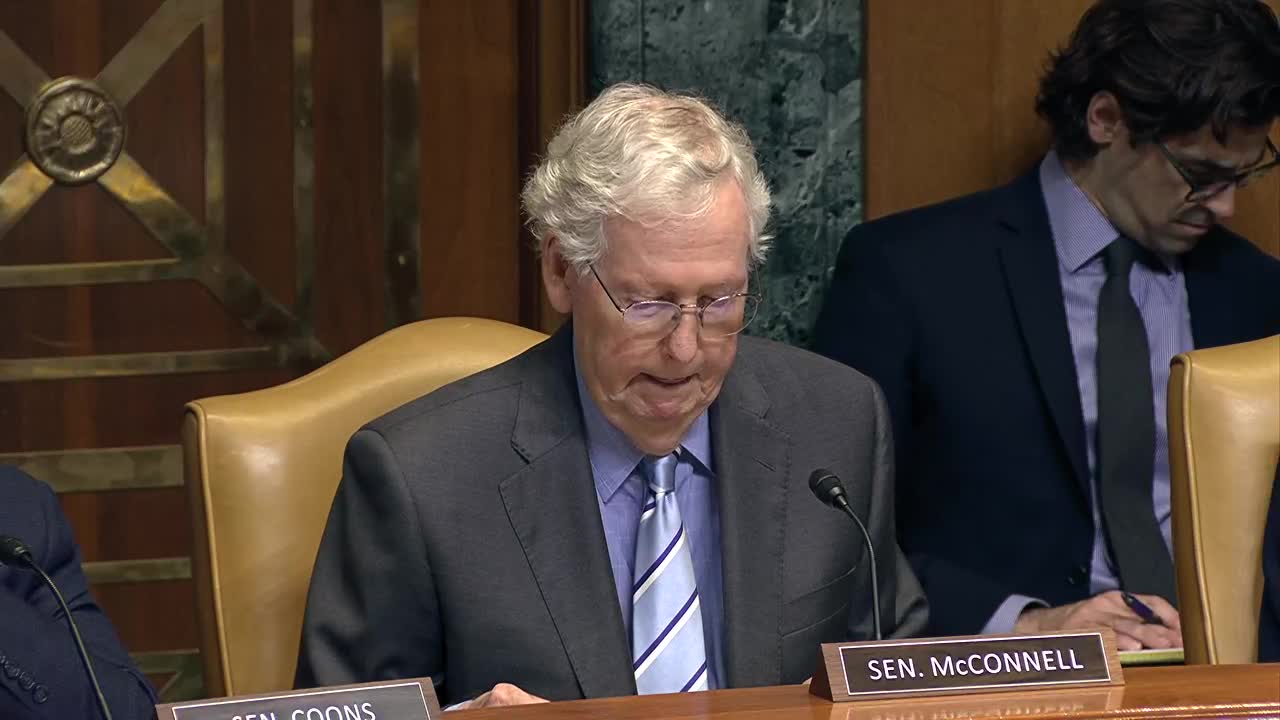
Senators pressed specific examples. Chairman McConnell and others questioned the timing of canceling platforms that were recently procured under large contracts, citing an $8 billion contract for the Joint Light Tactical Vehicle (JLTV). Senator Collins and others criticized the decision to end the robotic combat vehicle (RCV) program, saying the vehicle demonstrated promise and anti‑drone capability; Driscoll replied that the RCV’s cost curve and long development timeline made it unaffordable at scale and said the Army must prioritize scalable, lower‑cost solutions.
Driscoll and George emphasized iterative, software‑driven approaches and modular open systems architecture, and said they expect ATI to broaden opportunities for small and medium firms that can deliver rapidly. Both urged congressional partners to provide authorities and predictable funding that allow the Army to buy capabilities rather than static, program‑of‑record platforms.
What’s next: The subcommittee asked for the Army’s detailed ATI analysis and budget-level mapping. Driscoll promised to brief the committee with the requested materials within 10 days, and senators said they will use that information to consider funding and legislative options.