Lifetime Citizen Portal Access — AI Briefings, Alerts & Unlimited Follows
Senators, Navy and Marines Spar Over Shipbuilding Funding Shifted to Reconciliation
Loading...
Summary
Senators pressed Navy leaders on why roughly $25 billion in shipbuilding was proposed outside the base FY26 budget and placed in reconciliation funds, raising concerns about sustainability, industrial capacity and the ability to sustain a multi‑year shipbuilding rate.
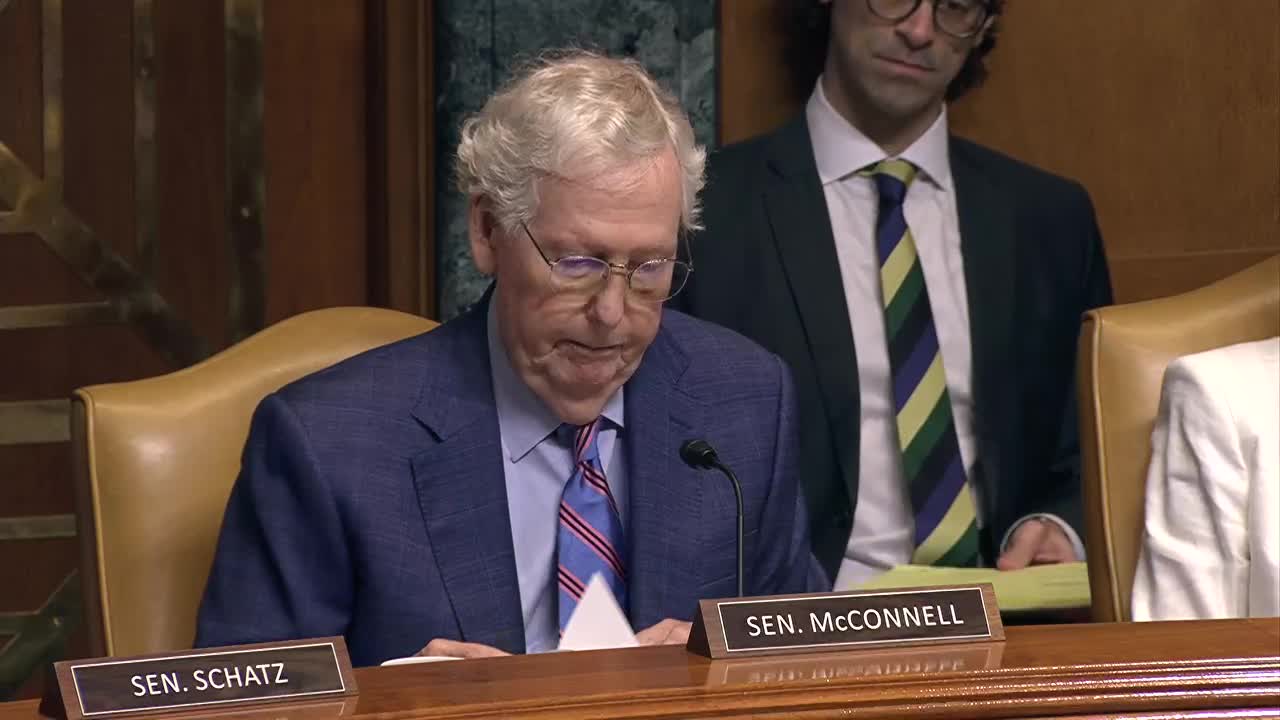
Chair and senators at a Senate Appropriations Subcommittee hearing pressed Navy leaders on why major shipbuilding investments were moved out of the department's FY26 base request and placed instead in reconciliation, warning that relying on one‑time or extraordinary authorities risks future funding cliffs and undermines the industrial base.
Why it matters: Shipbuilding is central to the Navy's ability to deter China and meet global commitments. Committee members said moving large programs into reconciliation reduces predictable, year‑to‑year funding and complicates long‑term industrial planning.
Senators focused on one specific figure cited at the hearing — about $25 billion in shipbuilding that the committee said the budget had shifted into reconciliation — and asked why those dollars were not included in the FY26 base request. Secretary of the Navy John Phelan, testifying with Commandant of the Marine Corps Gen. Eric Smith and Admiral Kilby, said the department expects to need a combination of discretionary and mandatory funding to meet its objectives and described the approach as “one budget, two bills.”
Phelan told the panel: “We need both in order to operate and meet our objectives. Every program we have is extremely important.” He said the department supports a solution that provides consistent additional funding for the Navy and Marine Corps and that both mandatory and discretionary authorities will likely be required.
Committee members pressed program specifics. Senators cited the Navy’s FY26 request for one Virginia‑class submarine (the Navy requested $816.7 million for one hull in the base), and raised that the department had assumed a larger companion appropriation would come from reconciliation. Committee members noted a discrepancy: House and Senate reconciliation text reportedly included $4.6 billion for a Virginia‑class hull while the department’s planning assumed as much as $6.5 billion in reconciliation support. Admiral Kilby said the Navy is working to raise build rates — currently about 1.1 Virginia‑class boats per year — and that the service is not satisfied with present production rates.
Chair members also sought timelines and cautioned that shifting procurement into extraordinary authorities can send mixed signals to allies and industry. Phelan acknowledged ongoing reviews of multinational efforts (including AUKUS) and said the department is evaluating those agreements and programs.
Committee members urged the department to return with clearer, predictable program funding that would sustain shipyard workloads and supply‑chain commitments. Several senators stressed that unpredictable funding hampers the department’s ability to plan workforce retention and supplier commitments.
Ending: Navy leaders said they will continue to brief the committee on reconciliation assumptions, submarine build‑rates and plans to restore industrial capacity; senators said they expect specific, updated budget details during FY26 appropriations work.