Get Full Government Meeting Transcripts, Videos, & Alerts Forever!
Get email alerts on the Shelter Policy And Funding topic
No spam. Unsubscribe anytime.
Public speakers and experts urge funding, fee-waived adoptions and spay/neuter programs for St. Louis County shelter
Summary
After testimony on the parvovirus outbreak, public speakers and a shelter-medicine expert urged the County Council to approve funding, allow fee-waived adoptions (Bill 41) and enable easier acceptance of donations and grants (Bill 116). Speakers also called for expanded spay/neuter programs and a review of household pet limits.
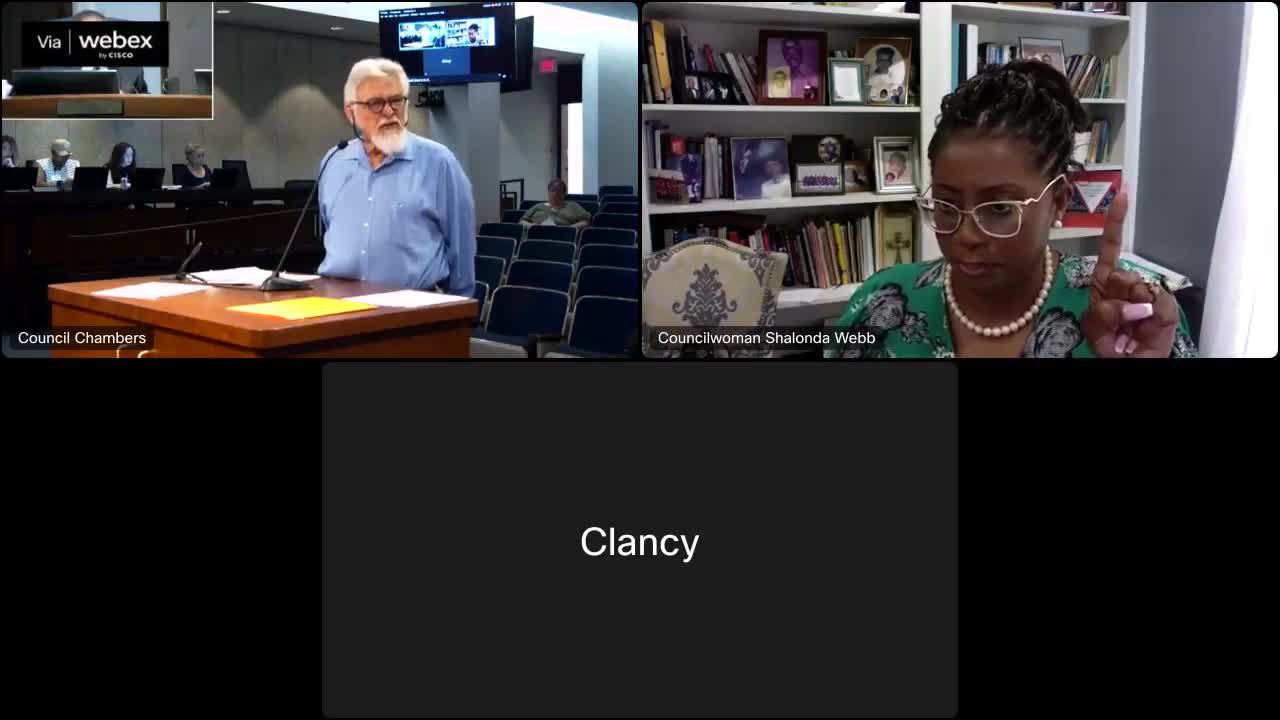
Speakers at the St. Louis County Committee of the Whole meeting on June 26 urged the council to provide immediate aid and legal flexibility to the county-run animal shelter, including support for two pending bills and expanded spay/neuter programs.
Why it matters: County-level rules on adoption fees, donation acceptance and pet limits affect shelter population size, local demand for veterinary services and the county budget for animal care.
Shannon Blatzky, a master of science in shelter medicine from the University of Florida, told the committee she supported passage of Bill 41 to allow fee-waived or reduced-fee adoptions. "There are studies that support reduced and fee-waived adoptions, and there's no published evidence of detrimental effects to the animals," she said. Blatzky also urged passage of Bill 116 to give the shelter more flexibility to accept grants, gifts and in-kind donations without time-consuming bidding procedures.
Blatzky said that while structural renovations and paid staff will be required to bring the shelter to best-practice standards, the two bills are immediate, low-barrier tools to reduce population and improve outcomes. She noted the incubation period for parvovirus can be three to 14 days, which in her view meant the first dog who presented and later tested positive likely contracted parvo inside the shelter.
Public commenters also requested a county strategy to reduce the number of unwanted litters. Cynthia Anderson, a longtime local advocate, urged the council to fund and require more spay/neuter services for county residents and to consider lifting an apparent county limit of three dogs per household (five pets total) to match neighboring jurisdictions that allow four pets of any combination. "We simply cannot adopt our way out of this problem," she said, and recommended partnerships with mobile spay/neuter providers and local clinics.
A resident from south St. Louis County spoke briefly opposing the use of RAMP (Rams?) money for shelter operations and asked the council to prioritize underserved human communities when allocating funds.
Council reaction: Several council members said they would seek more detailed budget breakdowns before approving new funding and asked the shelter to clarify why certain donated items could or could not be accepted under current county procurement rules. Chairwoman Days referenced recent legislation—passed the previous Tuesday, according to council discussion—that allowed acceptance of a particular anesthesia-related machine, and asked shelter leadership to document why other donations had been rejected.
Next steps: Supporters of Bill 41 and Bill 116 urged expedited votes; council staff said they would add the documents produced in response to subpoenas to the record and continue the committee's review of shelter funding, procurement rules and operational plans.
Ending: Speakers asked the council to prioritize concrete investments in spay/neuter, staffing and facility improvements while the committee continues its investigation into the shelter's parvovirus outbreak and operations under county control.