Get Full Government Meeting Transcripts, Videos, & Alerts Forever!
Get email alerts on the Shade Tree Commission topic
No spam. Unsubscribe anytime.
Council pulls ordinance to dissolve Shade Tree Commission after strong public opposition
Summary
An ordinance that would have replaced Sayreville’s Shade Tree Commission with an advisory committee was pulled from the agenda after commissioners and residents said the change would reduce transparency and strip authority established under New Jersey law.
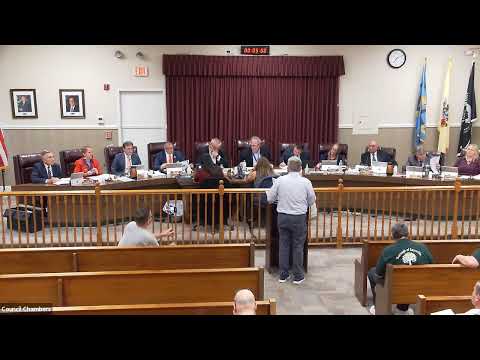
The Mayor and Borough Council of Sayreville pulled an ordinance from the agenda Tuesday that would have dissolved the borough’s Shade Tree Commission and replaced it with a quarterly advisory committee not subject to the Open Public Meetings Act.
The matter drew sustained public comment. Arthur Rittenhouse, who identified himself as chair of the Shade Tree Commission, urged the council to keep the commission intact and said the proposed change was placed on the agenda without following the council’s rules of order. "The Shade Tree Commission is charged with exclusive responsibility of planting trees and shrubs on local county, state, and federal land within the borough of Sayreville," Rittenhouse said, and he described the commission’s work on the Tree Bank, seedling distributions, memorial plantings and training for commissioners.
Multiple speakers told the council the commission’s removal would reduce transparency. "This means decisions that affect our town’s environment, the planting, care, and removal of trees can happen without public notice, without transparency, and without accountability," resident Alberto Rios said during the hearing. Rios said the proposed advisory committee would meet only quarterly and would not be governed by the Open Public Meetings Act, commonly known as the Sunshine Law.
Commissioners and residents listed specific concerns they say resulted from the borough’s handling of tree-bank funds and tree projects, including restricted access to commission records, questions about the use of funds for equipment that had not been used to plant trees, and discrepancies about which borough properties were covered for planting by insurance. Speakers asked the council to preserve the commission’s authority to review development plans, approve tree removals within rights-of-way and administer the Tree Bank.
Council members acknowledged procedural concerns and the mayor agreed to remove the ordinance from the business agenda. The chair of the Shade Tree Commission requested an agenda item at a future meeting so the council can consider the issues with the commission present and with an opportunity for public input. Several speakers also asked for written responses to emails they said had not been answered by borough staff.
The debate touched on civic and environmental concerns: commissioners noted programs such as Arbor Day seedling distributions, tree inventories required by state reporting, a memorial tree-planting program and school outreach that the commission has run. Commenters urged the council not to make the change without broader community input and suggested that preserving the commission preserves public access and oversight of tree-related decisions.
The council did not vote on the ordinance at the meeting and no formal action dissolving the commission occurred; the ordinance was removed from consideration pending further discussion.