Get Full Government Meeting Transcripts, Videos, & Alerts Forever!
Get email alerts on the Animal Shelter Parvo Outbreak topic
No spam. Unsubscribe anytime.
County witness describes parvovirus outbreak, 19 euthanized; council and public press for funding and policy changes
Summary
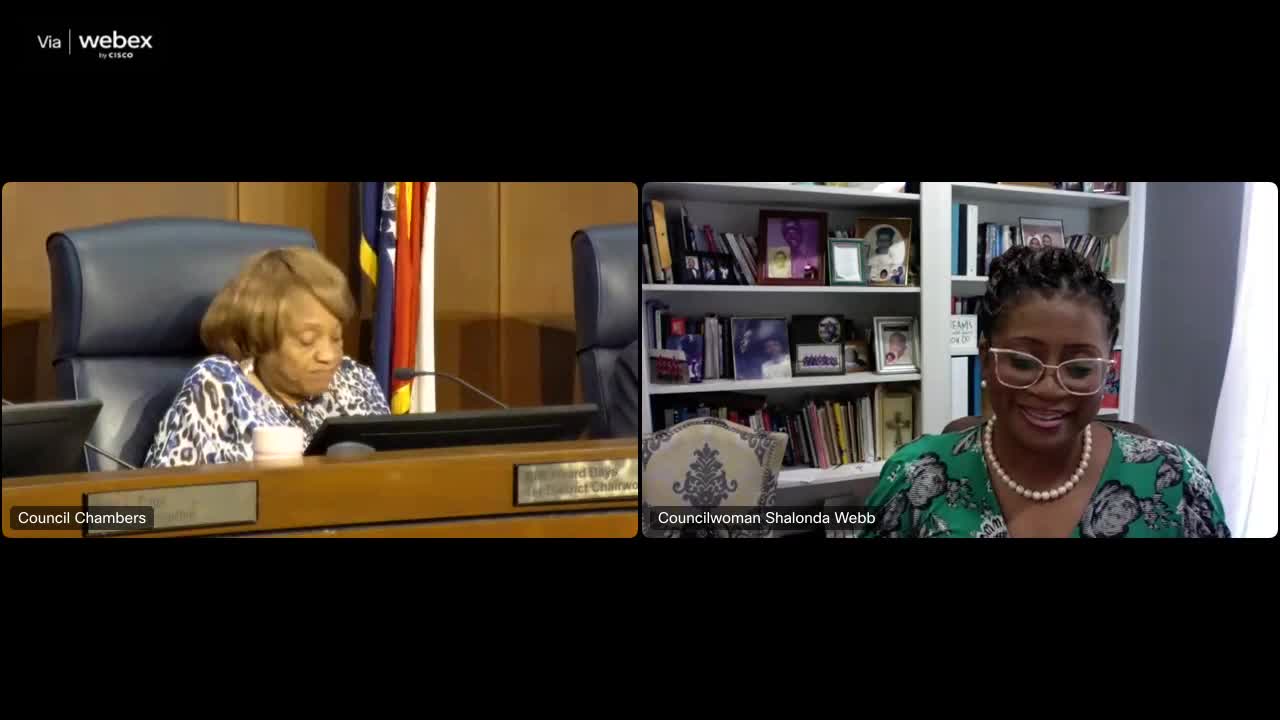
At a June 26 Committee of the Whole hearing, Dr. Douglas Pernicoff testified under subpoena about a parvovirus outbreak at the St. Louis County animal shelter that led to about 19 euthanasias; witnesses and public commenters urged clearer procedures, more staff and procurement flexibility, and support for bills to aid shelter operations.
Dr. Douglas Pernicoff, a veterinarian who testified under subpoena, told the St. Louis County Council Committee of the Whole on June 26 that a parvovirus outbreak at the county animal shelter in April and May 2025 led staff to euthanize roughly 19 animals after the facility lacked isolation capacity and treatment resources.
Pernicoff said he began working at the shelter on Jan. 21, 2025, and that the first clinically positive dog he identified tested positive around April 19–20. He told the committee, “that animal was, eradicated. We euthanized it,” and described limits on isolation space, staff and supplies that he said made treatment impractical. He told council members the shelter’s population at the time was about 240 animals.
The witness said the shelter lacked sufficient IV supplies and other treatment infrastructure and that monoclonal antibody treatment — an option he described as sometimes used for puppies — would have cost about $1,100 to $1,200 per large dog, which he said made it “not logical” for the county to use that option at scale. Pernicoff said his team prioritized protective cleaning, revaccination and cohorting to stop spread, and he described a rapid sequence of clinical cases that led to most of the euthanasias within a few days.
Why this matters: Council members said the hearing was part of an ongoing investigation into shelter operations after the county took over operations from the previous contractor earlier in 2025. The testimony highlighted operational gaps — staffing, procurement delays, missing standard operating procedures (SOPs) and unclear communications up the chain — that council members and public commenters said require policy and budget fixes to prevent future outbreaks and reduce euthanasia.
Key facts and timeline
- Pernicoff said he worked roughly 32 scheduled hours per week but often worked “50 to 60 hours a week,” and that his county employment ended May 9, 2025, after the parvovirus events.
- He identified a likely index clinical case in kennel 500 in mid- to late April and said the facility had no legitimate isolation or quarantine space for a contagious parvovirus case. He described immediate PPE and cohorting steps and said staff began intensified cleaning and revaccination.
- Pernicoff said he distributed a draft euthanasia decision tree and an abbreviated parvovirus protocol in mid- to late April but that it was not formally signed by senior leadership before the events. He told the committee, “I had submitted a parvovirus protocol when the first animal died and spread around everybody,” and later said Dr. Cunningham “never signed off on that.”
- He told council members the shelter recorded roughly 78 euthanasias some months under the prior contractor and that during March and April under county operations the shelter’s euthanasia rate was about 10% and 13% of the population in those months (figures he said he had sent to leadership).
Records, procurement and communications
Council members pressed on how the shelter documented intakes and medical care. Pernicoff said the clinic used a database called Chameleon for records and that daily intake and treatment logs should be retrievable there, but he said conversion of legacy records and consistent use of templates was still a work in progress. The committee and Pernicoff referenced a large document production (about 28,000 pages) turned over under subpoena; council staff said they will review those records and may request targeted Chameleon exports for specified date ranges.
Pernicoff repeatedly cited procurement delays and vendor constraints as operational barriers: he said multiple requests for IV supplies, an IDEXX blood analyzer and other items were delayed or not fulfilled, and he said county purchasing rules limited vendor options compared with the previous contractor. He told the committee, “we asked for an epidemiologist, never got that,” and said repeated procurement friction hindered timely response.
Decision-making and approvals
Pernicoff described a supervisory team that included licensed veterinary technician Nikki Bennett, population manager Alyssa Cataba, veterinary colleagues (including Dr. Marissa Bowers) and ACO staff. He said most euthanasia decisions during the outbreak were made by a core veterinary and supervisory group rather than by unilateral action, and that documentation was entered in Chameleon. He acknowledged, however, that he “was remiss in not calling [Dr. Cunningham] that we were gonna euthanize animals,” and apologized for that communication lapse.
Public comment and council priorities
Four public speakers addressed the committee after the testimony. Shannon Blatzky, who said she holds a master’s degree in shelter medicine, urged the council to pass two measures she said would help the shelter: a local bill to allow fee‑waived or reduced‑fee adoptions to reduce shelter population (referred to in testimony as Bill 41) and Bill 116 to allow the shelter greater flexibility to accept grants, gifts and donations. She told council members, “I fully support Bill 116 to allow greater flexibility in procuring and accepting grants, gifts, and donations.”
Other commenters called for more funding for spay/neuter programs, changes to the county’s pet limits and a clearer budget breakdown for any new money the county might provide. Cynthia Anderson said, “It is much cheaper and more ethical to spay and neuter your way out of the problem than to continually house the overwhelming amount of unwanted animals.”
What the committee did at the hearing
- The committee took sworn testimony from Dr. Douglas Pernicoff and collected documents produced under subpoena. Council staff said they will scan and distribute materials the witness brought with him and will continue reviewing the large production of records.
- No ordinance or budget appropriation was voted at the June 26 meeting. A clerical motion to adjourn was approved at the end of the session.
Outstanding questions and next steps
Council members said they plan additional hearings, further document review (including targeted Chameleon exports for specified date ranges) and potential follow-up subpoenas. The committee also discussed whether procurement rules and SOP issuance timing should be changed so operational teams can access necessary supplies and accept donated equipment more quickly.
Ending note
Council members and public commenters framed the testimony as part of a broader review of whether the county had the staffing, funding and procurement systems in place when operations transferred from the prior contractor earlier in 2025. Several council members said they will press for clearer records, faster procurement and better-defined communication channels between on-site staff and public‑health leadership during future hearings.