Get Full Government Meeting Transcripts, Videos, & Alerts Forever!
Get email alerts on the Vehicles Ordinance topic
No spam. Unsubscribe anytime.
Pike County adopts ordinance to align with state rules for street-legal special-purpose vehicles
Summary
The fiscal court adopted an ordinance to allow street-legal special-purpose vehicles in Pike County consistent with forthcoming state regulations; the county will follow whatever the state adopts and requires inspections, insurance and sheriff inspection for on-highway use.
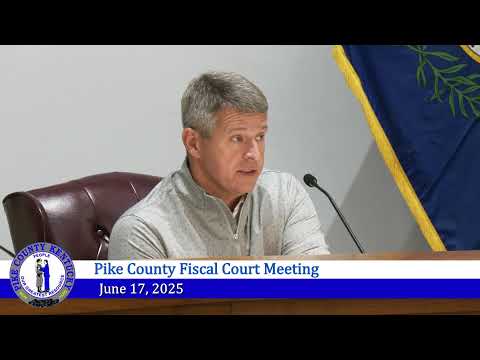
Pike County Fiscal Court adopted an ordinance to allow state-authorized street-legal special-purpose vehicles in the county, aligning local policy with the state law that takes effect in June 2025. The court’s roll-call vote approved the ordinance; commissioners voted yes and Judge Jones cast an affirmative vote.
County Attorney Roy presented the ordinance as a local adoption of the state law governing street-legal special-purpose vehicles, noting that the state’s administrative regulations were expected to be published soon and could require future local adjustments. "As it stands right now, we are adopting the state law that's in effect to do street legal vehicles," Roy told the court and cautioned that published regulations could require the court to revisit the ordinance.
Under the adopted approach, the county will accept the state’s definitions and licensing process: special-purpose vehicles used on approved roadways must have an inspection (the sheriff’s office will be involved), liability insurance comparable to motorcycle licensing, and tags issued by the county clerk according to state guidelines. County staff and the sheriff’s office said the inspection and tag systems are being prepared and that the county clerk expects the state system to be ready to accept the registrations.
County leaders emphasized limits on county authority: vehicles used solely on private property do not require registration, and the county will rely on the state regulatory framework for the detailed licensing, insurance and inspection requirements. The court did not set local exceptions beyond adopting the state’s approach; the county attorney said the ordinance “is written to accept whatever the state adopts.”
Action taken: the court adopted the ordinance by roll call; the clerk and sheriff’s office report they are preparing inspection and tagging procedures to implement the state’s process locally once administrative rules are published.
What happens next: county staff will monitor the publication of state administrative regulations and return to the court if changes to the local ordinance or procedures are required.