Get Full Government Meeting Transcripts, Videos, & Alerts Forever!
Get email alerts on the Transportation Utvs topic
No spam. Unsubscribe anytime.
Letcher County delays vote on 'special purpose vehicle' ordinance amid questions about taxes, fees and enforcement
Summary
Letcher County Fiscal Court on Monday voted to table final action on a local “special purpose vehicle” ordinance that would permit side‑by‑side utility terrain vehicles (UTVs) to operate on public roads in counties that opt in.
Letcher County Fiscal Court on Monday voted to table final action on a local “special purpose vehicle” ordinance that would permit side-by-side utility terrain vehicles (UTVs) to operate on public roads in counties that opt in.
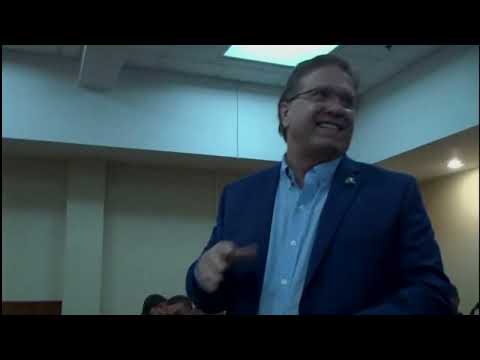
The court delayed the second reading and adoption after extended remarks from State Senator Scott Maiden and a lengthy public exchange in which officials and residents raised questions about how the state Revenue and Transportation departments plan to implement the law, what fees would apply, and how local law enforcement would enforce road use.
Senator Scott Maiden, who said he co-sponsored the state bill, told the court the measure was written as an opt-in option for counties and “was never written to as a revenue base.” He described the intent as supporting recreation and tourism rather than creating a new source of tax revenue and said the legislation limits road use (including a 20-mile maximum in many uses) and includes a required vehicle inspection and insurance when made “road ready.” Maiden said, “I think it’s really important first of all to understand that it’s 100% optional.”
Court members, however, expressed concern after the state Revenue Department circulated draft regulations that appear to treat some UTVs like motor vehicles for tax or assessment purposes. Members and several residents said the clerk’s office had been told the department’s rules could require property tax treatment and an annual plate rather than only the registration fees outlined by legislators. One magistrate urged caution, saying the court should not adopt an ordinance while the state rules remain unclear.
County officials and residents raised specific items they want clarified before final adoption: whether UTVs will be taxed as vehicles (property tax), the precise registration fees the clerk will collect, whether the sheriff’s office will receive funds for inspections, how out‑of‑county riders will be treated and whether neighboring counties’ differing decisions would create enforcement disparities. Senator Maiden referenced the draft figures that had circulated — a $25 initial sheriff’s inspection fee, a $9 tag and a $9 renewal — and said the legislature did not intend to create a significant recurring tax burden on owners.
The court also heard arguments about insurance and safety. Maiden noted the original draft requires insurance when a UTV is made road‑ready, and some riders and residents said they support that requirement as a safety measure. Others said they feared an annual plate requirement would push trail riders off local tourism routes.
After discussion, a magistrate moved and the court voted to table the ordinance until the state agencies publish implementing regulations and county officials can provide clearer written guidance to the public. The court directed staff to circulate the particulars publicly—via newspaper, radio and social media—before the next hearing so residents can review the draft regulations and local implications.
The court’s motion to delay was framed as temporary; several members and the senator said counties may opt in later if the final state rules match legislators’ intent. Senator Maiden told the court he and other lawmakers expect to revisit or clarify the regulations in the next legislative session if Revenue’s implementation diverges from the bill’s intent.
What the court did not do: the Fiscal Court did not adopt the ordinance at second reading and did not change local enforcement policy. The court will revisit the matter after regulators release guidance and staff compiles a clear public summary of fees, enforcement and cross‑county impacts.
Votes at the meeting show broad interest in deferring final action until those clarifications are available; court officials said they will re‑advertise the item and notify the public before taking it up again.