
Grant County fiscal court adopts FY2025–26 budget, approves salaries and moves July meeting
Get AI-powered insights, summaries, and transcripts
Subscribe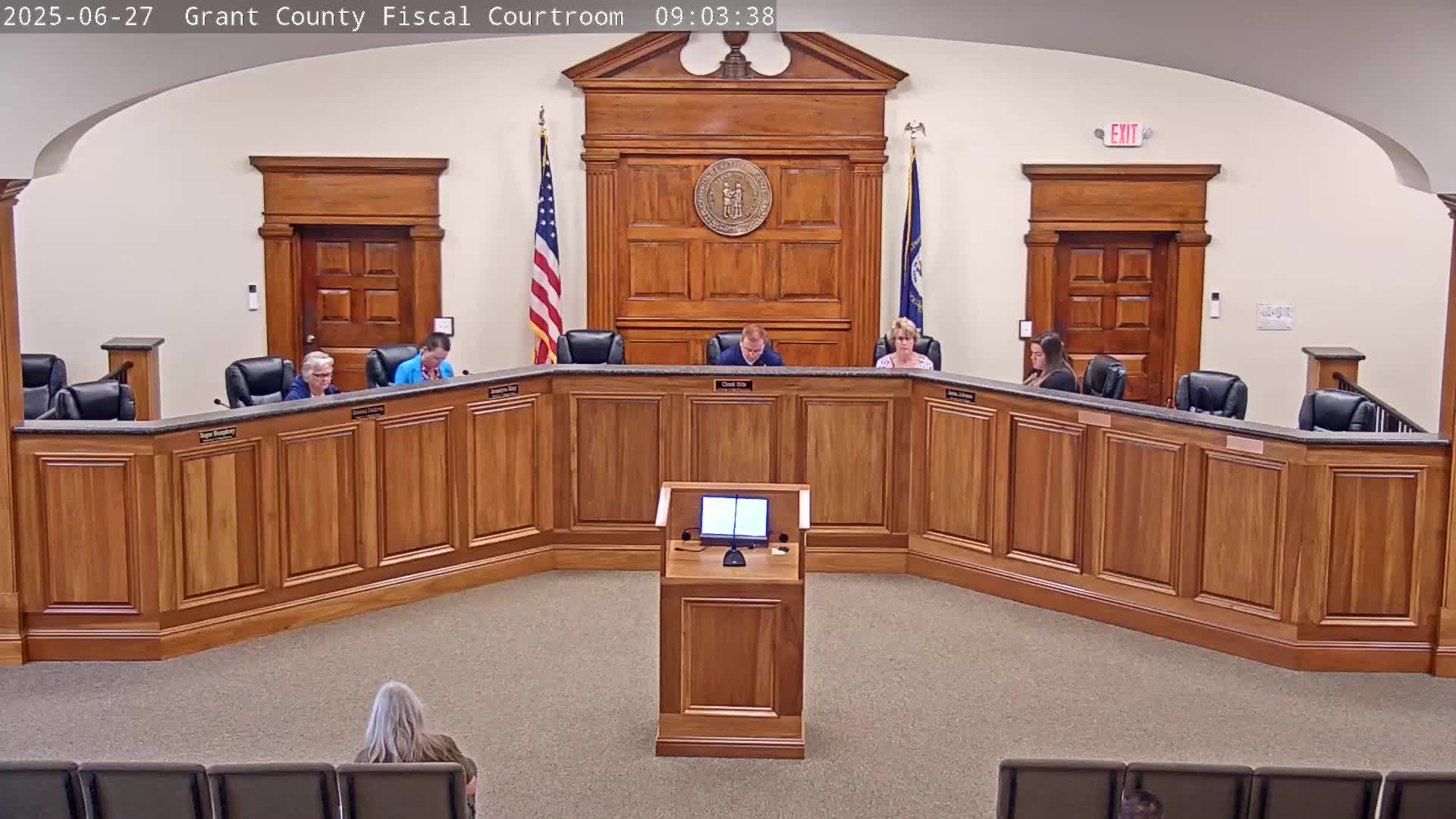
Summary
On June 27, 2025, the Grant County Fiscal Court unanimously approved Ordinance No. 005-2025-0288 (FY2025–26 budget), authorized employee salaries, discussed jail contract revenue and opioid fund spending, and rescheduled the July regular meeting to July 8.
The Grant County Fiscal Court approved Ordinance No. 005-2025-0288, the fiscal year 2025–26 budget, in a unanimous second-reading vote during a special meeting on Friday, June 27, 2025. The court also approved salaries for county employees, discussed the jail fund’s revenue from intergovernmental contracts and use of opioid funds, and voted to move the July regular meeting to July 8 at 6 p.m. in the courthouse courtroom.
The budget adoption was the second reading after being advertised; Magistrate Codar made the motion to approve the ordinance and Magistrate Riley seconded. The vote was recorded as unanimous with one member absent. The court similarly approved the minutes from the June 17 regular and public hearing meetings and approved claims for the general, road and jail funds dated June 27, 2025.
Judge Chuck Mills, presiding, said, “A lot of work went into the budget trying to do it. And I know that Peggy's put a lot of time into to get it, and we're actually in financially in good shape,” and said the court plans to revisit some items in January, including employee raises and efforts to “dial back the payroll tax.”
Court members discussed the role of jail operations and intercounty contracts in the county’s finances. A county staff member acknowledged that increased jail occupancy and contracts with other counties have boosted revenue: “From an occupancy standpoint, it's probably been how many years since it has been that occupied with paying inmates, which is drastically helping, the financial disposition of this county,” said a staff member referring to jail administration under Tanya Beagle. The court noted contracts bringing inmates from counties including Gallatin and Pendleton are routed into the jail fund as revenue.
The court addressed use of opioid-settlement funds in the budget. Judge Mills said the opioid money “is built into the budget,” and court discussion clarified that the current budget shows opioid funds supporting positions and programming inside the Grant County Detention Center. Court members and staff said there is not presently a local residential drug-rehabilitation facility; they noted outside organizations can apply directly for opioid-related grants and that statutory restrictions limit how opioid funds may be used.
A question from Sheriff Dennis sought clarification about an earlier annual order setting maximum deputy salaries. The court explained the January order establishes a maximum salary cap for the calendar year so the county will not exceed statutory limits; that cap can be amended if salaries change during the year. As the judge explained, the cap is set “as a safeguard that guaranteed that we wouldn't spend any more than that,” and the fiscal court reiterated that the fiscal-year budget is the controlling spending plan and that raises are slated for review in January.
Discussion also covered the road fund: court members said the road fund—about $4,000,000 as discussed during the meeting—comes from federal and state sources and includes pass-through grant monies for projects such as bridge work and the Heritage Trail. The court noted an internal staff reallocation after Colton Simpson left a county position; that position was not backfilled and responsibilities were redistributed rather than hiring a replacement.
The court approved salaries for employees of the fiscal court, road department, sheriff’s office and detention center as presented but said broad employee raises will be reconsidered in January. The fiscal court moved its July 1 meeting to July 8 at 6 p.m. in the courthouse; Magistrate Riley moved the change and Magistrate Codar seconded the motion, which passed by voice vote.
The court adjourned after the actions; its next scheduled meeting is Tuesday, July 8, 2025, at 6 p.m. in the Grant County Courthouse courtroom.