
Sunnyside council flags water, wells and treatment plant as urgent capital needs
Get AI-powered insights, summaries, and transcripts
Subscribe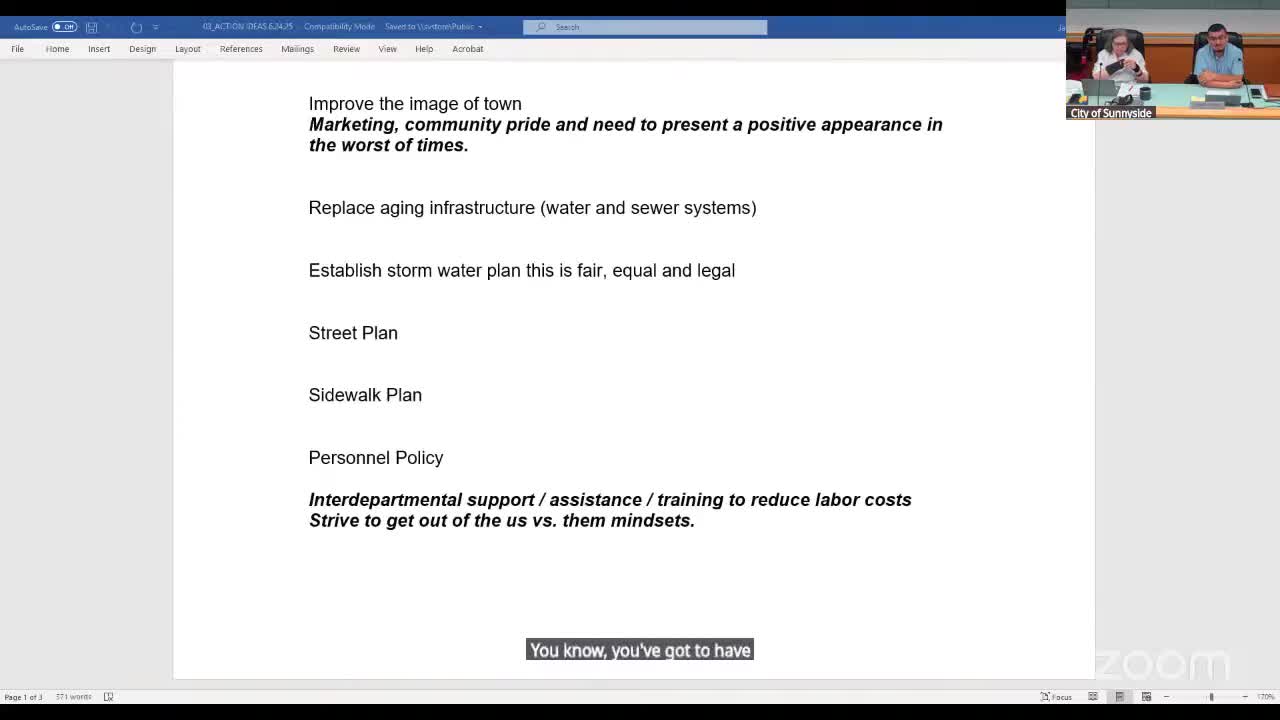
Summary
Councilors said Sunnyside’s water and wastewater infrastructure needs near-term funding and clearer long-range planning; they discussed wells rehabilitation, treatment-plant upgrades and possible federal grant support.
Sunnyside council members highlighted aging water and sewer infrastructure as a pressing budget and planning priority, saying the city must identify funding for well rehabilitation, treatment-plant repairs and long-term replacement reserves.
The workshop included a technical discussion about Wells 6 and 7, potential rehab costs and treatment-plant upgrades. Bridges said 18 years after the treatment plant opened, “it needs help,” and councilors warned that failure to set aside funds will affect utility rates and constrain future growth and development.
Why it matters: The state and federal funding environment and borrowing choices affect the city’s ability to finance capital repairs; councilors said earlier borrowing decisions (for example, bonds instead of lower-cost Public Works Trust Fund loans on a past project) increased long-term costs. Members discussed that retiring existing bonds could free up near-term capacity in coming years.
Funding and planning details: Councilors described a potential federal direct appropriation opportunity for a new well (roughly $2.1 million referenced) and discussed the need for updated long-range water and sewer plans to support grant applications. Members urged staff to present a multi-year capital needs list (5‑ to 10‑year horizons) for the treatment plant so the council could evaluate rate and reserve impacts during budget season.
What was not decided: No rate changes, loans, or grant applications were approved at the workshop. Council asked staff to present a prioritized capital plan and options for funding, including loan and grant programs, and to clarify how bond retirements will affect the operating picture.
Ending: Council emphasized the need to be proactive rather than reactive in capital planning and to build reserves for predictable infrastructure replacement rather than postponing costs and increasing future liabilities.