
Residents press council on sewer rates after city took over plant; officials cite infrastructure costs
Get AI-powered insights, summaries, and transcripts
Subscribe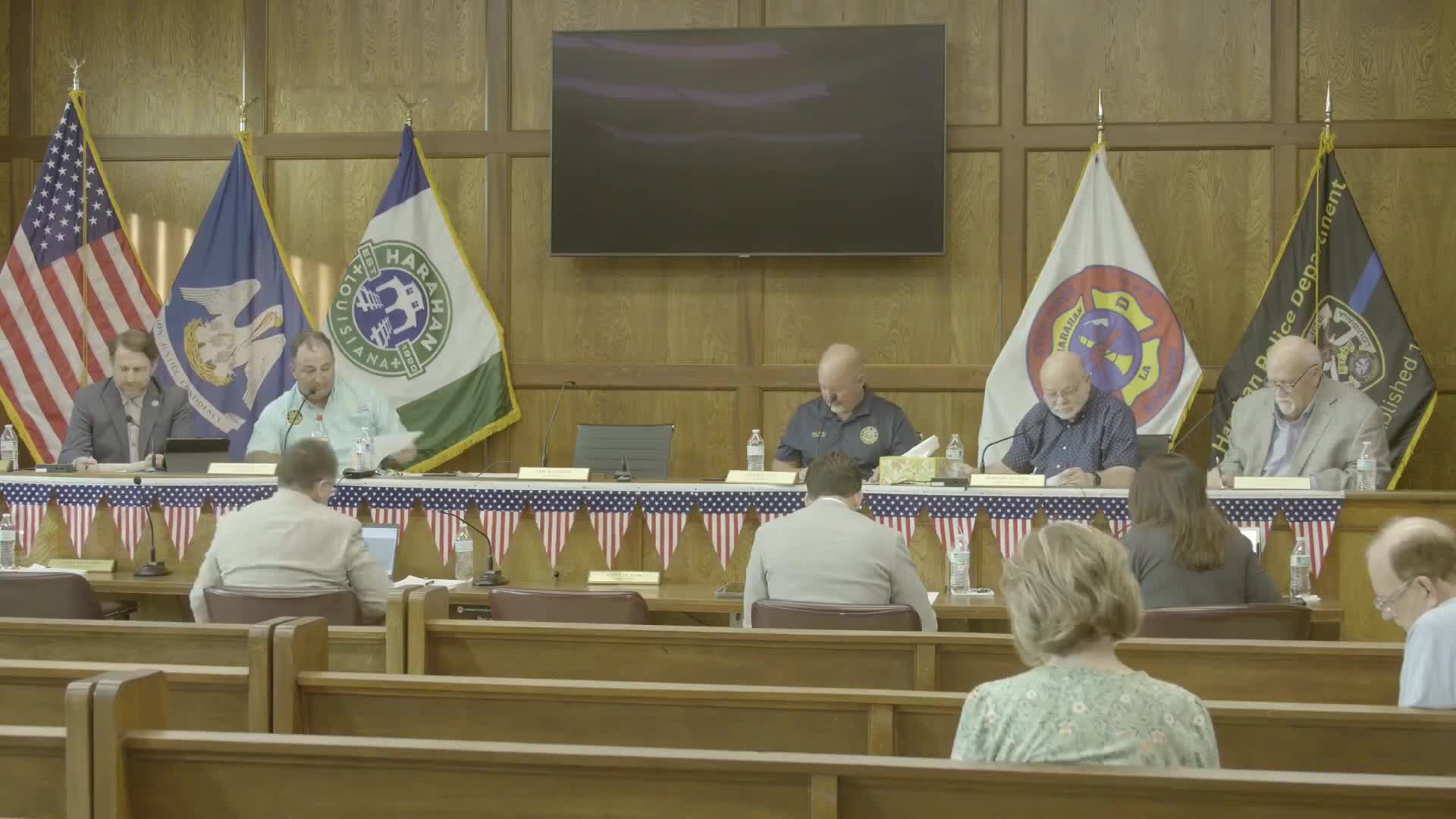
Summary
Residents asked when sewer rates would be lowered after the city took over its sewer plant. Council and staff said a third-party rate study found current rates are necessary for sustainability and that much of the city's sewer spending goes to aging underground infrastructure.
During public comment at the June 26 Harahan City Council meeting, residents pressed the council about sewer rates after the city took over local sewer operations. Barbara Harney and other residents said they had been told the city takeover would produce large annual savings and asked why sewer rates were increased and when rates might be lowered.
Council members and staff said the city commissioned a third-party sewer rate study presented at the previous meeting. ‘‘I don't foresee, and I would not be in favor of, at this point, a sewer rate reduction if we're right on par with where we need to be to maintain and sustainability for our sewer system and infrastructure,’’ a council member said during the hearing.
Speakers noted that terminating a third-party contract eliminated some contractor costs (the contract had been about $650,000 per year), but council members and staff said those savings do not translate to an equal reduction in city costs because the collection system and lift stations are aging and require ongoing capital investment. Council members described the collection system as roughly 100 years old and emphasized that repairs requiring street excavation are expensive.
Residents asked for access to the sewer rate study; staff said the report was published at the prior meeting and recommended the first page for an overview. The council encouraged residents with questions to review the study and to contact city staff for clarifications.
No change in policy or an immediate rate reduction was approved at the meeting; council members framed the discussion as a rationale for maintaining rates to ensure system reliability and to fund necessary repairs and lift-station replacements.