
Springfield City orders muzzles and conditions after two dog-incident hearings
Get AI-powered insights, summaries, and transcripts
Subscribe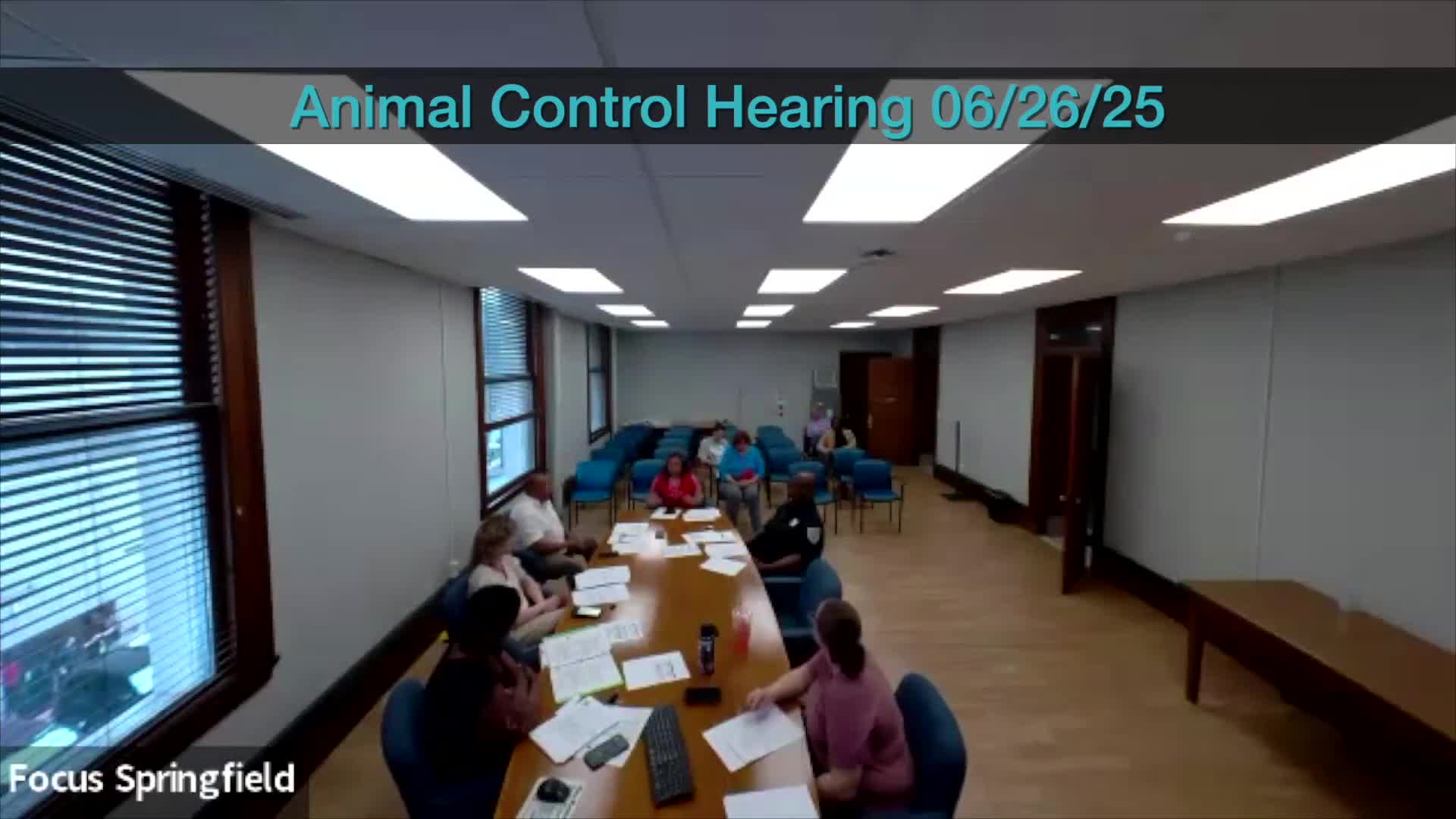
Summary
At a Springfield City animal control hearing, officials reviewed two cases involving dog attacks and noncompliance and approved orders requiring muzzling, registration and other conditions for the animals involved.
At a Springfield City animal control hearing, officials reviewed two separate cases involving dogs that city staff said had attacked or otherwise endangered people or animals and approved orders requiring muzzles, updated licensing, and other conditions, according to testimony and staff recommendations.
The hearing addressed a reported attack tied to a dog named Lily at a residence on Saxon Street and a separate noncompliance hearing for a dog named Mia at 64 California. City staff described the first matter as a dangerous-dog investigation and presented options including a safety plan, muzzle and licensing conditions; staff urged formal conditions in the second case because prior ordered conditions were not being met.
Why this matters: Animal-control orders can impose binding requirements on owners — such as muzzling, leashing, licensing, and kenneling — and, if not followed, can lead to further enforcement. At the hearing, residents described injuries and property impacts, and staff framed the orders as measures to reduce future risk.
Residents who spoke said one incident left a neighbor’s dog injured and prompted concerns for elderly household members. Theresa Williams, a resident who described the Saxon Street incident, said, "I stood with my dog, and then I reacted real quick because she saw Bonnie, the dog, and she lost control completely lost control of the dog." Williams described veterinary treatment for her dog and said she and family members fear for their safety when the other dog is loose.
The owner identified as Torres spoke in defense of his dog, Lily, saying she is vaccinated and has lived with him since he moved in. Torres said the dog had previously been abused and that he has tried to manage her behavior; he told the hearing, "She's a 100 pound dog." Torres also said he made contact with animal-control staff after the incident and provided photos and documentation.
A staff member described the hearing types and said the city treats noncompliance hearings differently from initial dangerous-dog determinations because ordered conditions already exist in noncompliance cases. The staff member said available remedies include requiring a safety plan, renewing or verifying licensing, requiring muzzling or kenneling, and other conditions to address ongoing risk. The staff member told the panel, "These options are a safety plan of the client change," and recommended conditions where orders had not been complied with.
After public testimony and staff recommendation, the hearing panel moved to impose conditions aimed at reducing risk: a muzzle requirement while the animal is in public or when off the owner’s property, verification of current city licensing, and administrative conditions addressing compliance and payment of documented veterinary bills where applicable. The panel recorded affirmative votes and the motion passed; officials also discussed applicability of conditions if the animal is moved to a different address within the city.
In the Mia matter at 64 California, staff said the case was a noncompliance hearing because the dog already was under a prior order and the owner had not met required conditions. The hearing record shows staff received photos and documentation from a complainant and that the panel considered options including continued monitoring, updated licensing, and fines or further restrictions if compliance was not achieved.
The panel set a follow-up compliance date; staff and at least one panel member referenced July 7 as a scheduled checkpoint for compliance verification. The hearing record shows that owners were directed to provide proof of licensing and to comply with muzzle and other conditions; staff indicated the city would oversee payment arrangements for veterinary bills if owners agreed to pay or disputed costs.
The hearing record contains differing accounts from neighbors and owners about how the incidents unfolded. Officials noted the proceedings distinguish factual testimony presented by residents from staff recommendations and formal orders issued by the city.
Next steps: The owners ordered to comply must provide documentation of licensing and proof of adherence to muzzle/kennel requirements by the follow-up date; staff will review compliance and may schedule further enforcement or modified orders if conditions are not met.