
Wiseburn presents annual local indicators; chronic absenteeism drops, students report steady access to materials
Get AI-powered insights, summaries, and transcripts
Subscribe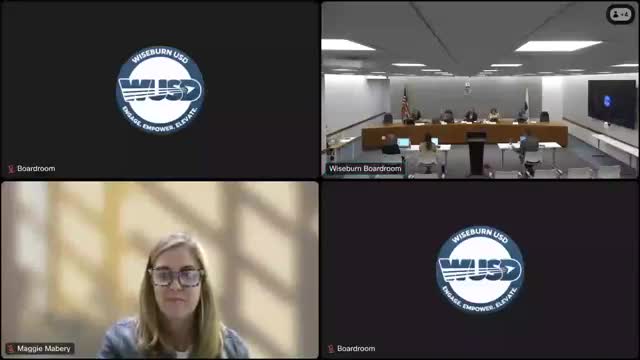
Summary
At a board meeting, district staff presented Wiseburn Unified’s annual local indicators tied to the LCAP, reporting a drop in chronic absenteeism from 16.1% to 10.3%, full access to instructional materials and mixed results on school connectedness and professional learning measures.
Maggie Mayberry presented Wiseburn Unified School District’s annual local indicators to the board, reporting several gains and areas for continued attention, including a decline in chronic absenteeism and full access to instructional materials for the district’s 2,524 students.
The local indicators are part of the district’s Local Control and Accountability Plan (LCAP) process, a self‑assessment the district uses to measure progress on the state’s priorities. Mayberry said the indicators are “a little bit of, like, a self check of how we’re doing.” The district will submit the indicators to the county and the California Department of Education after the board’s LCAP approval.
Why it matters: the local indicators feed into the LCAP, which guides how the district targets state and local funding for students, including English learners, students with disabilities and economically disadvantaged students.
Key findings presented
• Enrollment and subgroups: the district reported 2,524 students; English learners declined about 2% year over year, students with disabilities rose nearly 5%, and economically disadvantaged counts were included as part of subgroup monitoring. (Presented by Maggie Mayberry.)
• Basic conditions: Mayberry reported 0% of teachers on misassignment and that 100% of students have access to adopted instructional materials and that the district’s schools are in good repair. She clarified those figures during the presentation when numbers and labels were being read from her dashboard.
• Professional learning and standards implementation: Mayberry said 83% of staff agree district and school leaders support professional learning and 86% of staff report professional learning positively impacts students.
• School climate and social‑emotional learning: Dr. Ingram presented survey results from the California Healthy Kids Survey and district surveys: “Our elementary students, 72% of them responded positively to questions like, resolving conflicts, acting responsibly, and fostering respect,” he said, noting that was slightly down from 76% the prior year. Dr. Ingram also reported improvements in teacher responses: 95% of teachers said adults at school care about every student, up from 94% the prior year.
• Attendance and chronic absenteeism: the district reported average daily attendance around 94.5% as of the April reporting period (down slightly from 94.8% the previous year). Chronic absenteeism on the dashboard was reported at 10.3%, down from 16.1% in the prior year.
• Family and community engagement: Mayberry said the district logged more than 131 Constant Contact messages and 367 social media posts during a recent reporting window; parent satisfaction with district communication was reported at 82%, satisfaction for opportunities for input at 74% and participation opportunities at 80%.
Independent study and learning recovery
Board members asked about interaction between independent study (the district’s “learning opportunity” program) and the district’s learning recovery efforts. Dr. Ingram said compliance with Education Code requirements limited the district’s ability this year to audit teacher‑level work for every absent student: “In order to meet the requirements of Ed Code, we have to make sure that… we didn’t have the capacity to check‑in with every teacher and their individual assignments,” he said, and the district is looking at ways to improve documentation and participation for next year, especially at the middle school level.
Board action and next steps
The board considered the local indicators as part of the LCAP presentation. Mayberry said the district met the local indicator standards being reported and will include the indicators with the LCAP packet sent to the county and then to the California Department of Education after formal LCAP approval by the board.
Ending
District staff recommended the board adopt the LCAP and the accompanying indicators so the district can finalize submission to the county and state, and staff said they will continue to refine goal lines and peer comparisons on the district dashboard to help set measurable targets for next year.