
Miami Beach approves redevelopment plan for 1250 West Avenue; developer to buy Bikini Hostel, fund BayWalk work and tenant aid
Get AI-powered insights, summaries, and transcripts
Subscribe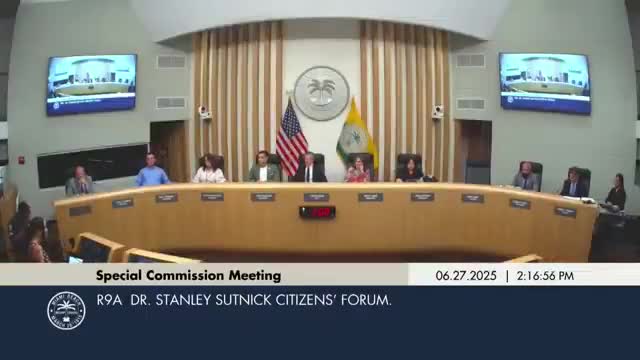
Summary
The Miami Beach City Commission on June 27 approved a package of land‑use changes and a development agreement that clears the way for redevelopment at 1250 West Avenue, including a developer‑funded purchase and demolition of the Bikini Hostel and conditions tying temporary and permanent certificates of occupancy to BayWalk construction and other public benefits.
The Miami Beach City Commission on June 27 approved a package of land-use changes and a development agreement that clears the way for redevelopment at 1250 West Avenue, including a developer-funded purchase and demolition of the Bikini Hostel and conditions tying temporary and permanent certificates of occupancy to BayWalk construction and other public benefits.
The approvals include second-reading Land Development Regulation and comprehensive-plan amendments and a development agreement that require the developer to acquire the hostel property, relocate its residents outside the city, demolish the structure and provide public benefits that the commission and administration said are intended to address public-safety and neighborhood impacts.
Why it matters: The site is an active flashpoint in Sunset Harbor and West Avenue neighborhoods; residents and business owners told the commission the hostel and nearby activity have harmed safety, property values and commerce. The redevelopment resolves a long-vacant, blighted parcel but will also terminate an existing condominium association at 1250 West (Bay Garden Manor) and requires buyouts or state-sanctioned termination of remaining unit owners.
Key details and conditions - Purchase and relocation: The development agreement requires the purchaser to buy the Bikini Hostel parcel and relocate the people living there outside the city of Miami Beach. The developer and city agreed that if the final purchase price disclosed after closing is less than $20 million, the developer will pay the city the difference to bring the public proceeds to $20 million. The agreement establishes deadlines for closing and demolition. - BayWalk and public improvements: The developer must design, permit and build stretches of the BayWalk and related public access. If certain easements, permits and contracts cannot be obtained, the agreement requires either construction to at least 25% complete (measured by payments on a construction contract) or a city‑acceptable letter of credit before a temporary certificate of occupancy is issued for the private project. Administration estimated the BayWalk/public-access benefit at roughly $25 million across several segments. - Tenant and homeowner assistance: The agreement codifies relocation/assistance payments for residents displaced by the redevelopment; commissioners successfully pressed the developer to increase tenant relocation assistance to seven months in certain tiers. The developer told the commission it intends to pursue condominium termination under state law for remaining holdouts and to negotiate with those owners. - Protections and process: The city attorney and staff said their legal review supports proceeding under current state law; the agreement includes project setbacks, a below‑grade parking requirement, limits on restaurant size and hours in the pedestal, and a prohibition on certain entertainment uses at the site.
What commissioners and neighbors said Supporters, including many owners and tenants of adjacent buildings, argued the project will remove a blighted site and fund long‑delayed public benefits. James Julius, a nearby business owner, told the commission that his family “feels unsafe to walk our baby in our own neighborhood” and urged commissioners to approve the redevelopment.
Opponents and some advocates pressed for stronger guarantees for the condominium unit owners who have not sold and for transparency on the sales process. Commissioner concerns focused on protecting holdout homeowners from predatory assessments or sharply increased maintenance fees if a developer-controlled board were to impose large assessments; after discussion the developer agreed to contract terms intended to raise the purchase price for remaining owners above the appraised value (the commission asked administration and the developer to include protections in the development agreement).
Implementation steps and outstanding items City staff said the developer will have defined timeframes to submit permit applications and achieve construction milestones, and the development agreement contains security mechanisms (letters of credit, bonds, escrow provisions) tied to delivery of public benefits. Administration said some points remain to be finalized in the agreement language, but staff recommended proceeding with the legislative approvals.
Votes and next steps The commission voted to adopt the required ordinances and the development agreement for the 1250 West Avenue site at second reading (itemized as the comprehensive-plan amendment, LDR amendment and related development agreement). The record of the roll call vote and specific tallies were not read into the transcript in full; the commission and staff said the items passed on second reading and the development agreement was authorized, with the city capturing commitments described above. Implementation now depends on the developer meeting deadlines and delivering the escrow/letter-of-credit security required before any temporary occupancy is granted.
The redevelopment will proceed through subsequent permitting and administrative review; the development agreement requires periodic reporting to the city on permitting and construction progress.
Ending: The commission framed the action as an attempt to remove an ongoing neighborhood nuisance and deliver public amenities by using a public‑private agreement to acquire a troubled site and fund BayWalk and tenant‑relocation measures. The items approved will now move into permitting and implementation steps the agreement prescribes.