
Rescue dog Neesa finished nearly a year of training to work in school visits, handler says
Get AI-powered insights, summaries, and transcripts
Subscribe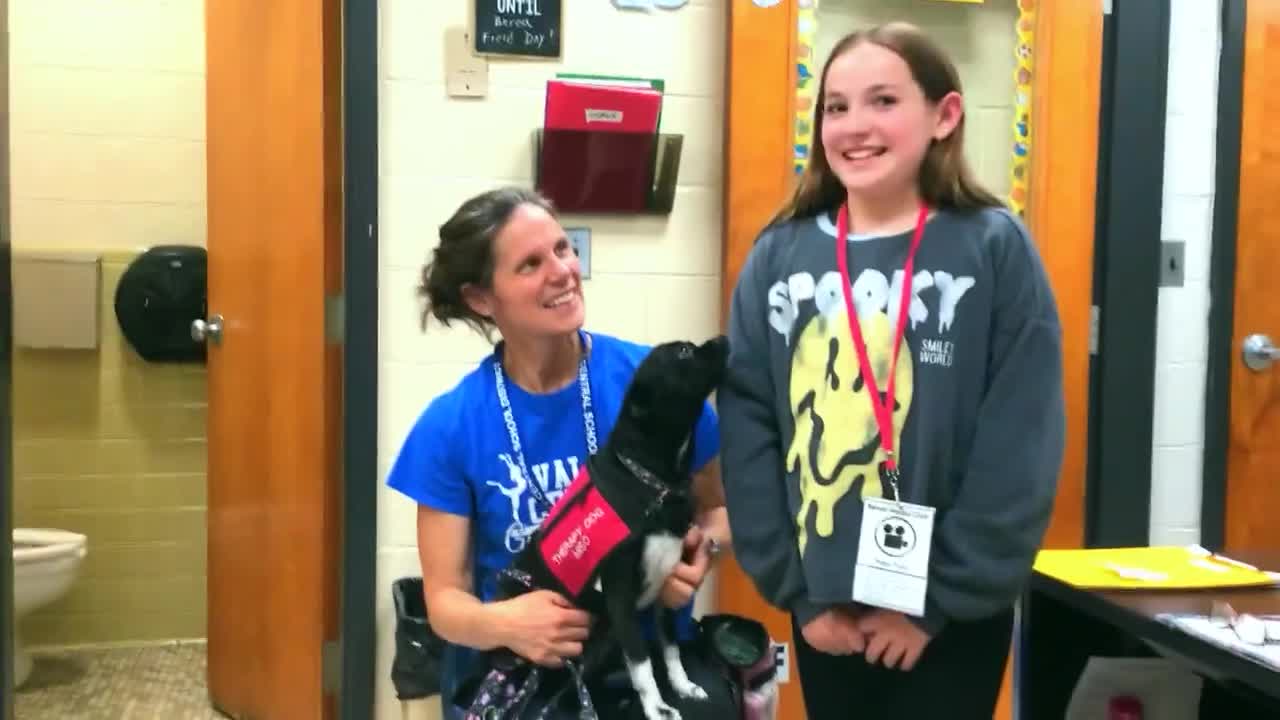
Summary
A handler described how Neesa, a rescue dog, completed positive-training and therapy-dog classes and began school visits after about a year of training; the dog was rescued from Texas and is about 2 years old and 19 pounds.
In a brief interview, a handler described how a rescue dog named Neesa completed nearly a year of training to work as a therapy dog in school settings.
The handler said, "Okay. So Neesa is a rescue pup. So I was looking to try to find a new dog, and I wanted, to have a dog that I could take to school to work with children." The handler added, "She actually came from Texas from a rescue there, and then they, brought her and her siblings and her mom to Long Island and we picked her to yeah."
The dog’s birthdate and size were given: "Mysso's birthday is January 13, and she's 2 years old. So she was born in 2023. So she's 2, and this is probably the size she's gonna be because she's it's pretty old grown. She's about 19 pounds." The handler also described Neesa’s favorite rewards: "these are her most favorite... a little piece of dried meat, dried chicken."
On training, the handler said Neesa began with positive-training classes to learn leash manners and basic commands, then entered therapy-dog courses once she was old enough. "Once she was a year old... I figured I'd I'd go bring her to a therapy dog, course. And the teachers there had to observe me so, and they had to observe me and, had to make sure she would be a good fit for a therapy dog," the handler said. The handler estimated the whole process took "almost a full year by the time we started learning our positive training classes and then finishing therapy school and then actually starting our therapy stuff in the school."
During the interview the interviewer prompted demonstrations of basic tricks, and the handler directed Neesa through spins, sits and “down,” saying, "That's an easy 1 for her... Now spin, twirl. Good. Come. Come." The handler noted some behaviors still under practice — "No rolling over yet. We're practicing that."
The conversation included both demonstration and explanation of the steps the handler took to prepare Neesa to work with children, including observed sessions in different places and repeated classwork and tests. The interview did not identify any formal affiliation with a district program or a certification body beyond the therapy-dog classes and observations described by the handler.
The interview contained no formal motions, votes or policy actions; it was a discussion of the dog’s background and training.