Get Full Government Meeting Transcripts, Videos, & Alerts Forever!
Get email alerts on the Economic Development topic
No spam. Unsubscribe anytime.
Mesa council staff review details of Medina Station development agreement and $6.4 million sales-tax cap
Summary
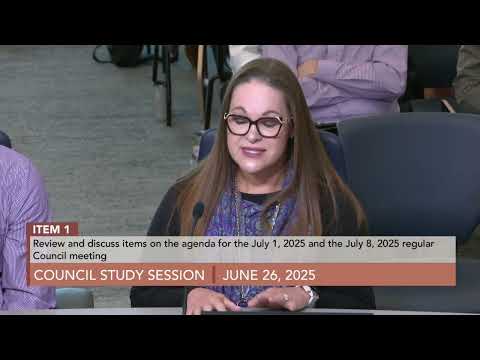
Mesa City Council members spent a portion of their June 26 study session reviewing a proposed development agreement for Medina Station that would reimburse up to $6,400,000 in sales‑tax revenues to the project developer.
Mesa City Council members spent a portion of their June 26 study session reviewing a proposed development agreement for Medina Station that would reimburse up to $6,400,000 in sales-tax revenues to the project developer.
City staff explained the proposed reimbursement mix would include full (100%) reimbursement of construction sales tax attributable to the project’s non‑dedicated sales taxes, while retail sales taxes attributable to the project’s retail anchors and a five‑restaurant “restaurant row” would be reimbursed at 50% of the non‑dedicated retail sales taxes collected. Staff said the 10‑year economic incentive period begins once all conditions precedent are satisfied and that the incentive period would end sooner if the $6.4 million cap is reached.
Council Member Duff pressed staff for clarity on what types of sales taxes are included and how the retailer‑specific reimbursements are measured. Staff said retail reimbursements apply only to taxable activity the city can collect from those particular retailers and restaurants when they file returns; those receipts are then eligible for the 50% reimbursement. Staff also said that construction sales tax is credited for the whole project while the retail rebate only applies to taxes tied to the designated anchor retailers and restaurants. Council members asked for the final revenue analysis; staff said an updated analysis was being rerun and expected back the same day, and that the developer will appear at the next study session to answer additional questions.
Council members discussed other agreement details, including the involvement of Target, which staff said owns a parcel within the project and is included in the agreement so its retail and construction sales taxes can be attributed to the public‑infrastructure reimbursement. Council members also asked whether the project could require local restaurants or public art; staff said design guidelines for Restaurant Row already include public‑art requirements and that the restaurant incentives include qualitative requirements intended to attract higher‑end or out‑of‑market restaurant concepts.
No formal action was taken during the study session. Staff said it will provide the final revenue analysis prior to any final vote and that the developer will appear at the next regular meeting to answer outstanding questions.
The council’s additional questions touched on annexation, infrastructure costs and the city’s maintenance obligations for new infrastructure, and on whether alternative, non‑annexation strategies might better encourage development on sites already served by infrastructure. Staff said those broader policy questions would be addressed in other redevelopment discussions scheduled for coming meetings.
For now, the council’s direction was procedural: staff will return the updated analysis and the developer will present to council for further review prior to final action.