
Zoning board approves seasonal bar and food-truck plan at O'Connell Boatyard with conditions
Get AI-powered insights, summaries, and transcripts
Subscribe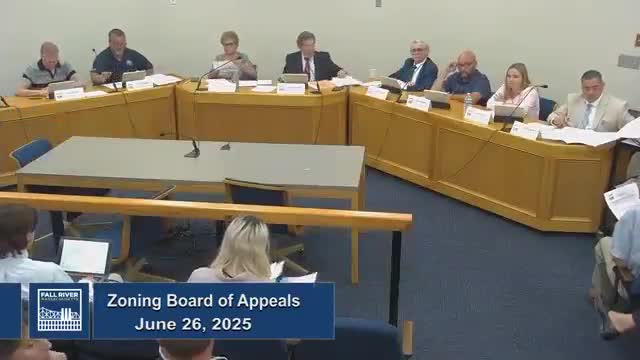
Summary
The Fall River Zoning Board of Appeals approved a special permit allowing a seasonal bar and single food truck at O'Connell Boatyard (180 River St.) after the applicant cut capacity, added parking and agreed to conditions addressing emergency access and licensing.
The Fall River Zoning Board of Appeals on Thursday approved a special permit allowing a seasonal bar and one food truck at O'Connell Boatyard, 180 River St., after the applicant reduced proposed capacity and added permanent and overflow parking.
The board granted the permit for the property in the Commercial Mill (CMD) district by recorded vote, subject to site-plan review and operational conditions designed to address traffic, emergency access and licensing. The applicant, Kyra O'Connell, reduced the proposal from 200 to 150 patrons and revised the plan to show 189 permanent and overflow parking spaces, a single controlled entrance and granite blocking to surround the service area.
The change mattered to the board because emergency responders had raised concerns about access. In a written memo read into the record, Bethany Barnes, chief of Fall River EMS, said the bridge on Collins Street “does not meet the height requirements for ambulance access” to the River Street entrance and recommended Clark Street as an alternate route. Deputy Chief J.T. Hoare of the Fall River Police Department noted historical incidents where emergency vehicles could not reach properties on River Street but recommended “clear no parking signs along the critical sections of the roadway” and joint enforcement by police and the traffic department. Fire Chief Bacon reported a site review with the applicant and concluded the “site provides adequate access for emergency vehicles” and supported operations so long as on-site parking remains available and, if needed, a residential-parking restriction is later pursued.
Attorney Jeffrey Maderas, representing the applicant, told the board the plan was revised after meetings with the building inspector, police, fire and EMS. He said the food truck would be within the enclosed patio area and that the building inspector preferred a single entrance and granite barriers. “We have reduced the number of people from 200 to a 150,” Kyra O'Connell said during her presentation, and “you can see from the plan…we have 189 parking spots.”
Board members pressed the applicant on details the city will enforce through licensing and site-plan review, not zoning. Planning staff and the board emphasized that any on-street parking restrictions (for example, “resident only” signs on River Street) would require separate approvals through traffic and, possibly, the City Council. The building inspector noted that the parking shown on the plan “shall be 100% available when this facility is open for the entire season,” and that failure to keep those spaces available would violate the decision.
The board approved the special permit on a recorded roll call (majority recorded as yes), with the motion including conditions: (1) limits on hours and seasonality as proposed (applicant stated hours as 11:30 a.m. to 10 p.m., seven days per week, from mid-May through October; the applicant later specified May 15–October 31), (2) applicant to provide and maintain the on-site permanent and overflow parking shown on the approved plan, (3) a single, controlled entrance/exit and physical barriers (granite or similar) around the patio area, (4) compliance with building-department and licensing requirements for alcohol service and food service, and (5) site-plan review and any additional permits (conservation, health) required before operation.
The board and staff emphasized enforcement avenues beyond zoning: licensing complaints could lead to temporary shutdowns if conditions were violated, and the applicant must secure required permits before opening. Several neighbors and users of the boatyard supported the application at the public hearing; a few abutters and longtime nearby business owners raised concerns about narrow streets and parking congestion during peak events. The board said it would expect the applicant to follow through on the commitments that formed part of the decision.
The decision was recorded as approved; the board noted the permit is tied to the site plan and that additional permitting steps remain for building, licensing and safety reviews.