Get Full Government Meeting Transcripts, Videos, & Alerts Forever!
Get email alerts on the Budget Water Sewer topic
No spam. Unsubscribe anytime.
Bluff City leaders review water and sewer budget as treatment-plant outage looms
Summary
City officials reviewed the proposed water and sewer budgets, discussed anticipated bids and a likely multi‑week shutdown of the water treatment plant that could require purchasing water, and debated where staffing and costs should be charged across funds.
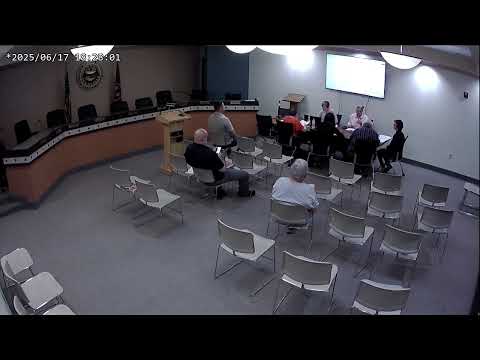
Bluff City officials spent a large portion of their meeting reviewing water and sewer appropriations, discussing an upcoming water treatment plant shutdown, the potential cost of purchasing replacement water, and how personnel and retirement costs should be allocated among funds.
The discussion matters because the treatment plant is scheduled for work soon and officials said the plant could be "down for several weeks," which would force the city to buy water and could materially affect the city’s budget numbers for the fiscal year.
At the meeting, council members identified page 7 of the budget packet as the start of the water and sewer section and walked through line items. "I I believe we're on page 7, which starts water security," one member said when the group returned to budgeting. Council members and staff noted an existing capital or operating grant that may require the city to pay out about $800,000 up front and be reimbursed later by the Tennessee Department of Environment and Conservation (TDEC), and they discussed an item listed in the budget as $2,530,000 tied to the city manager's allocation.
City staff confirmed the water treatment plant will be taken out of service for contractor work soon and acknowledged that the city will likely need to purchase water while the plant is offline. "When they start working on our water plant out there, that water plant's gonna be down in a couple of weeks. It is. We're gonna be buying water," a council member said. Staff said bids for the plant work were approved and that advertising for bids would go out that weekend; two meetings were scheduled to consider bids on the eighth and the seventeenth.
Officials asked for data to estimate the cost of buying water if the plant is offline. One council member directed public works staff to provide a per‑day purchased‑water cost so the council could model scenarios for two, three and four‑week outages: "He could base it on, first off, what it is per day, and then do it times 10 days, and then we have that number, and then extend it out for another week. And then we have another number there… I just suggest that we look at anywhere from 2 weeks to 4 weeks." The council asked Alan (public works staff) to produce those figures.
The group also reviewed recurring operating line items. Staff identified purchased water shown in the budget at about $110,000 and electric costs for the plant; councilors pointed to recent chemical spending of $28,716.27 year‑to‑date, noting the budgeted $30,000 would likely be insufficient. After discussion, the council agreed to budget $10,000 (noted in the packet as "10") for a line item under consideration, with the understanding they could revisit the number if expenditures ran over projections.
Members parsed how personnel costs appear across funds. The packet shows a 35% allocation of the city manager's costs to the water and sewer fund; a council member said "that's, $2,530,000 dollars" in the related explanation. There was back‑and‑forth about which salaries appear under which fund (water treatment plant, sewer treatment plant, wastewater distribution), and the council instructed staff to remove duplicated retirement line items from the specific fund pages to avoid double‑counting.
Council members also confirmed staff names and vacancies tied to the public works roster (for example, a trades position listed as vacant and identified as Chris Arnold) and asked staff to clarify exactly which employees are charged to each fund in the final budget.
The council did not adopt a final water rate change at the meeting; instead members directed staff to obtain the purchased‑water cost estimates and the bids for plant work, then return with updated projections. "So what I'd like to see is the bids come back," a council member said. "We can plug a number in there for how long we think it's gonna be down. Sure. But chances are once we get to that point, we're probably gonna end up having the appropriate ones too."